


|
Getting your Trinity Audio player ready...
|
A mother was in her kitchen in Venezuela’s capital making coffee around dawn one day in 2017 when, she said, she saw police officers through the window carrying long and short weapons. Moments later, she said, one of them was forcing the gates of her house open with a metal bar.
Before long, the woman’s 20-year-old son was dead, killed in murky circumstances. Neighbors reported hearing police firing gunshots hours after the raid, as if to stage a shootout, according to a lawsuit filed Tuesday
The woman’s son, now known in court records as “John Doe 3,” was one of at least 1,300 people killed by an elite Venezuelan security force between 2017 and 2020 during a major police surge launched by President Nicolás Maduro, ostensibly to fight crime, the lawsuit says.

Police raided homes in lower-income neighborhoods, forced men and boys to their knees and shot them, according to evidence gathered by human rights groups. Houses were ransacked, and anything of even modest value was pilfered.
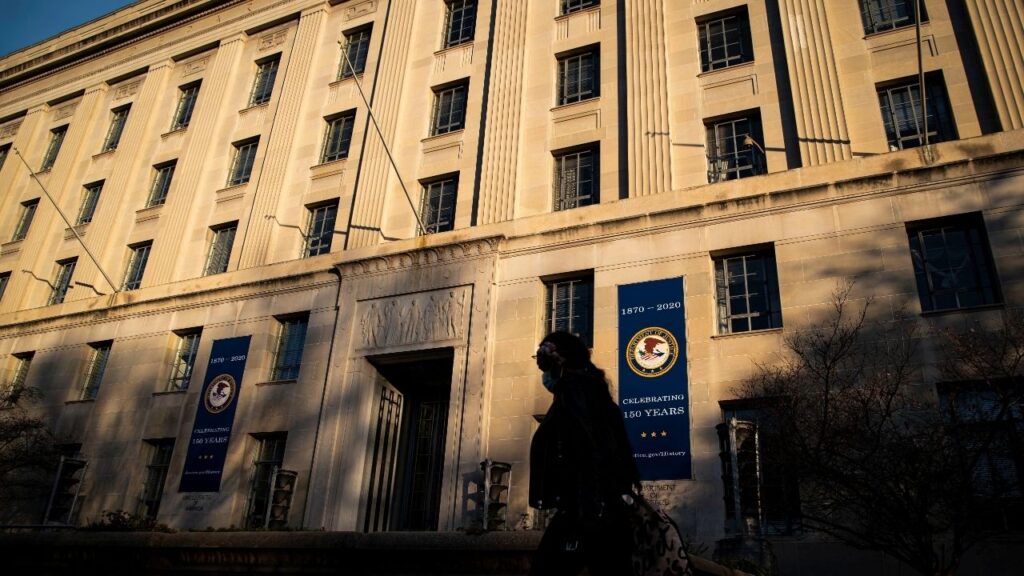
Now, nearly a decade after those raids in Caracas, the Venezuelan capital, family members of five slain young men have filed a federal lawsuit in New York City accusing Maduro of authorizing the killings.
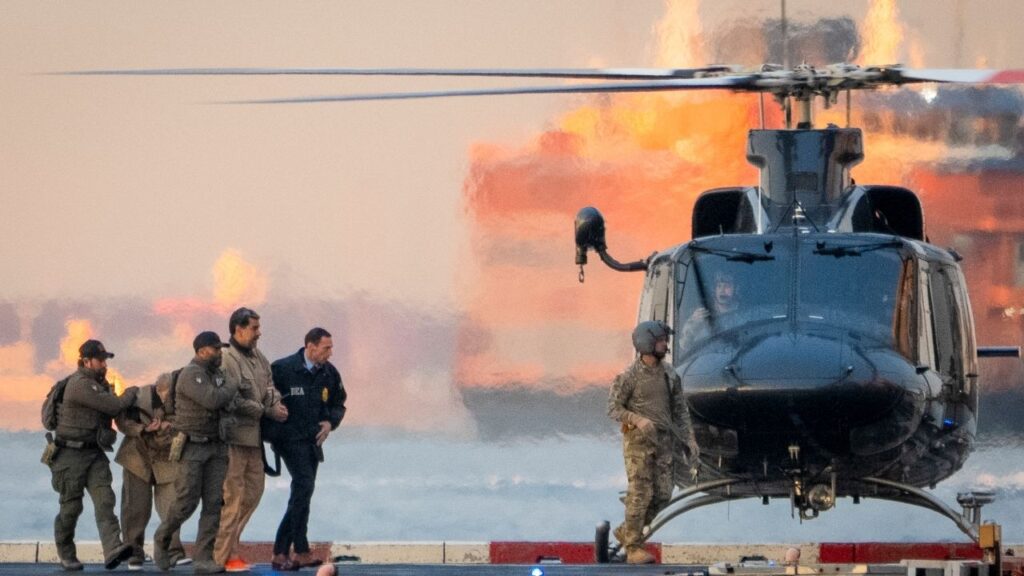
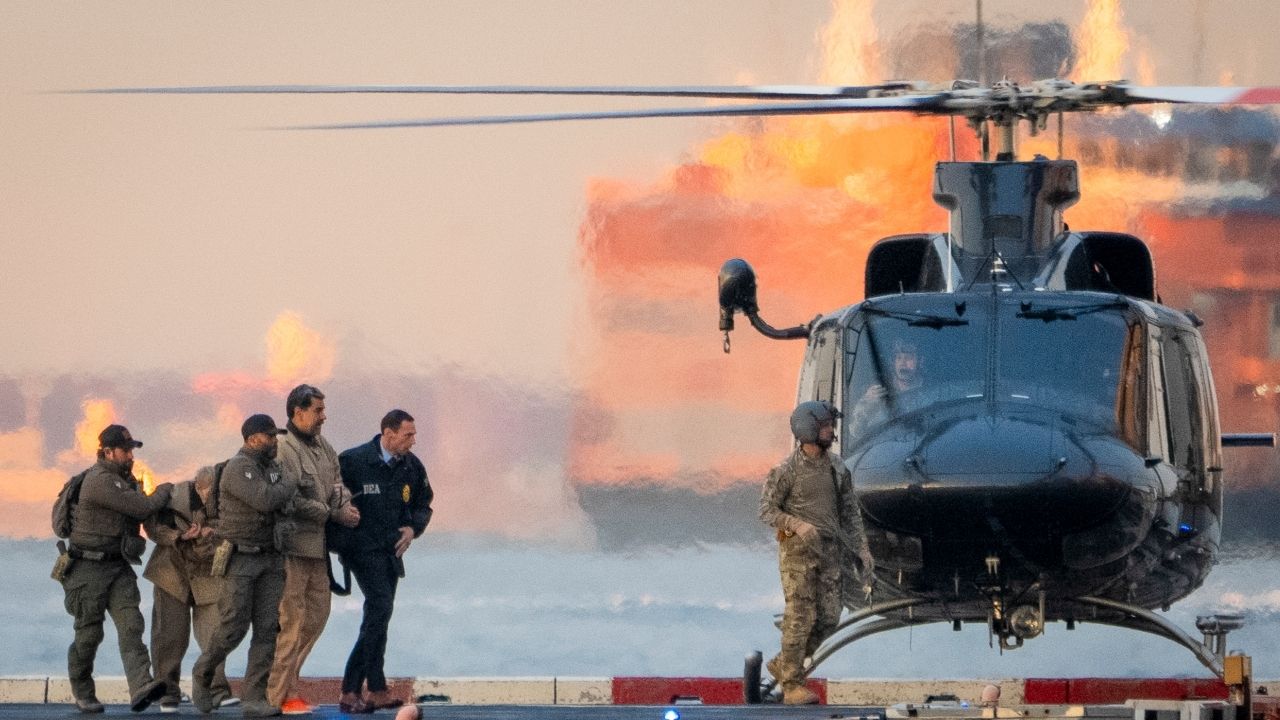
Maduro is incarcerated at a federal jail in New York, where he was taken after the U.S. military raided Venezuela in January and seized him on drug charges.
The plaintiffs sued under the Torture Victim Protection Act, a 1991 law that allows the filing of civil suits in U.S. federal court against people accused of committing torture or extrajudicial killings while acting in an official capacity in another country.
The case is a rare attempt to hold a head of state liable in a United States court. It is also a rare instance of a high-ranking member of Venezuela’s authoritarian regime possibly being held accountable for human rights violations.
“I’m not asking for anything, I’m demanding,” said the woman whose son was killed that 2017 morning, who is cited in the lawsuit as Jane Doe 1. “The state killed my son.”
To protect the families from retaliation, the lawsuit was filed using aliases. While many victims’ relatives have gone public in their campaign for justice, the plaintiffs’ lawyers fear for their safety now that they are taking aim not just at the low-level officers but also someone who was the leading member of the Venezuelan government.
The lawsuit was filed on behalf of three mothers and a father, as well as of a woman whose two brothers were killed during the police operation.
“I decided to file this lawsuit and report my son’s case and make it public because my son wasn’t a criminal,” said a plaintiff identified as Jane Doe 3. “My son was murdered in his own room.” She has since left Venezuela.
The police, she said, stole her granddaughter’s PlayStation and so many of her son’s clothes that she had to buy an outfit to bury him in.
The lawsuit was filed in U.S. District Court by the Guernica 37 Centre, an international nonprofit legal organization that seeks accountability for serious human rights violations through transnational legal actions.
“This complaint reflects the extraordinary determination of the victims’ families to confront abuses of power and affirm that no one is beyond the reach of the law,” said Michael Reed Hurtado, one of the lawyers. The lawsuit seeks punitive and compensatory damages.
The same legal center recently sued a Venezuelan lieutenant colonel who had been living in South Florida and working as a soap opera extra.
The killings the lawsuit focuses on began after the Maduro regime announced an “Operation to Liberate and Protect the People,” a series of militarized campaigns. After human rights groups denounced the violence, Maduro rebranded the squad under the name Special Action Forces, more commonly known by its acronym in Spanish, FAES.
Maduro’s lawyer, Barry Pollack, was unavailable for comment after the suit was filed Tuesday.
A report by the United Nations said that Venezuelan security forces killed at least 6,856 people in just one 18-month period in 2018 and 2019. Then they altered the crime scenes by planting guns or drugs or by firing weapons into the wall to make it look as if the victims had resisted arrest, the report said.
Even as complaints poured in, Maduro continued to praise the special forces.
“All our support to you, logistical and physical,” he said in 2019, a few weeks after the scathing U.N. report was issued. “All our support to the FAES in their daily work of providing security to the people. Long live the FAES!”
The Venezuelan government did not respond to requests for comment about the lawsuit. In 2019, the country’s deputy foreign minister, William Castillo, insisted that the report from the U.N. High Commissioner for Human Rights did not “reflect the reality in our country.”
“We demand that its contents be corrected, and we urge you to act in a balanced and respectful way,” Castillo told the U.N.
Because Maduro was president when the killings took place, he is likely to seek immunity as a head of state from the claims in the lawsuit.
“He will claim it, but the case law is on our side,” said Almudena Bernabeu, one of the lawyers who brought the case. “We filed this complaint because behind unjust and abusive leaders there are always humans who are ignored.”
In Venezuela, dozens of low-level police officers were arrested after the killings, but the cases dragged on or were overturned. And at times, prosecutors were sidelined if they appeared to put too much effort into the cases, said another one of the plaintiffs in the lawsuit, identified as John Doe 4. His son died when police stormed his house without a warrant in the fall of 2020, he said.
“Our real motivation for taking this step is the impunity in our country,” said another plaintiff, identified as Jane Doe 2, whose son was stopped on the street, beaten and shot in 2018. “If that weren’t the case, we wouldn’t have had to resort to international courts.”
—
This article originally appeared in The New York Times.
By Frances Robles/Vincent Alban
c. 2026 The New York Times Company