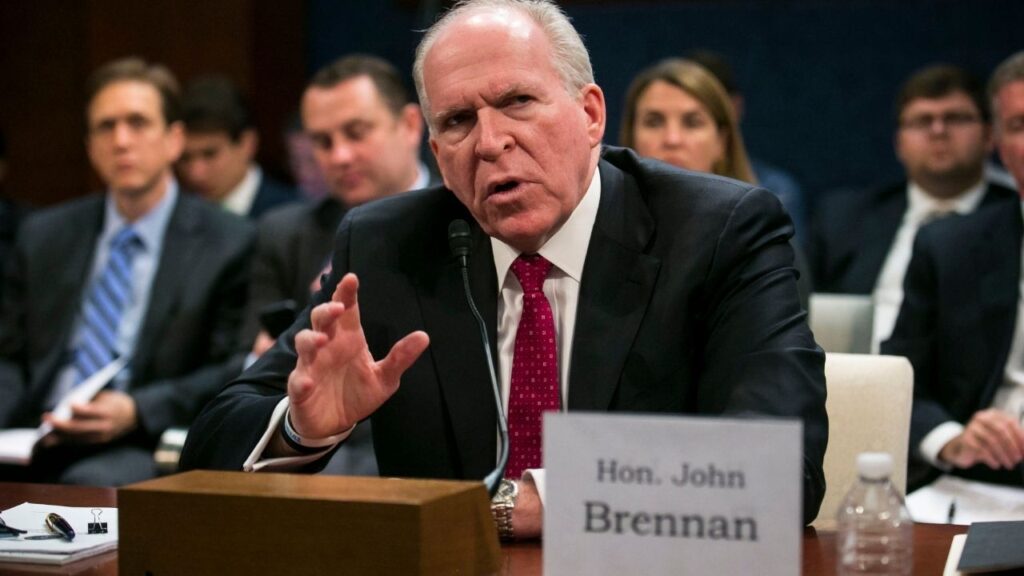
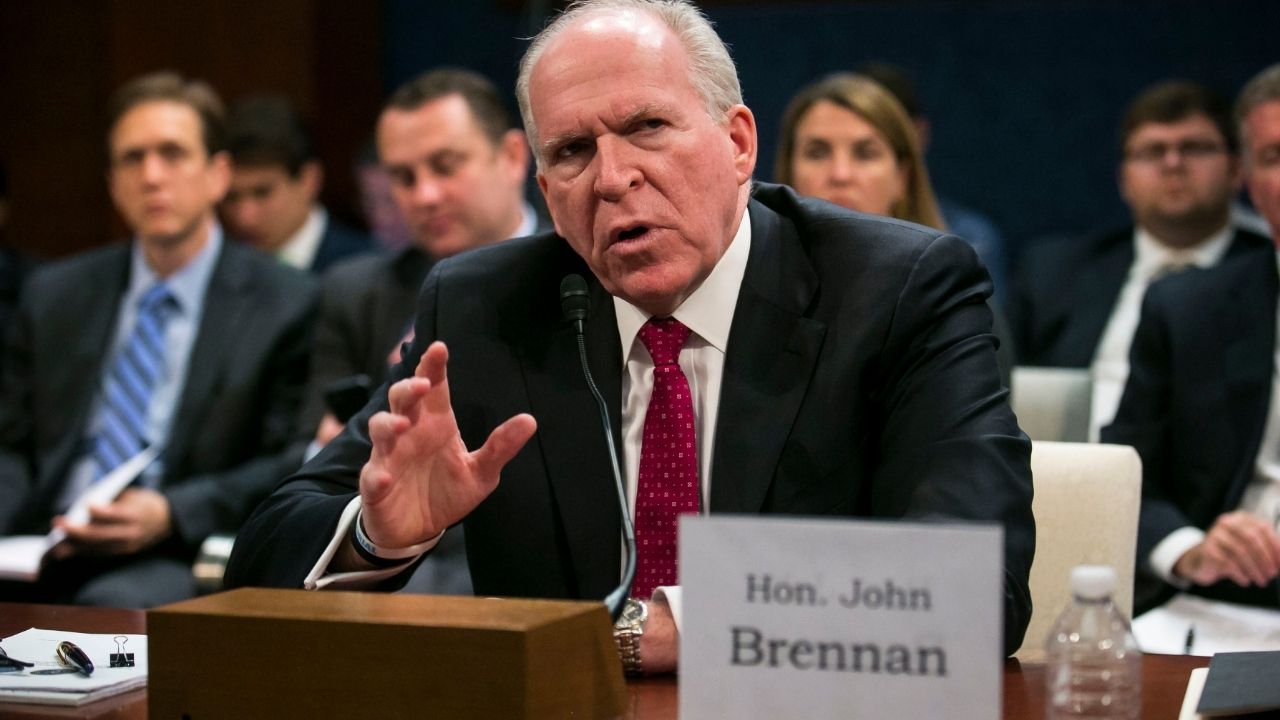

Since late last year, senior officials at the Justice Department and their allies in the news media have been unabashedly discussing a pair of investigations into John Brennan, the former CIA director, who has long been one of President Donald Trump’s most reviled political enemies.
On Wednesday, Brennan’s lawyers publicly fired back, putting the Trump administration on notice that if prosecutors bring charges against their client, they intend to fight them by claiming they are an act of vindictive retribution.
The warning came as part of a lawsuit filed in U.S. District Court in Washington that asked a judge to force Trump and top officials at the Justice Department to preserve any records or communications they might have related to the inquiries into Brennan. The lawyers said they want the materials saved in anticipation of bringing a motion for vindictive and selective prosecution if charges against Brennan are ultimately filed.

The request for a judicial order requiring officials to keep records about a case that has not even been filed was somewhat unusual. And yet it reflected just how abnormal Trump’s revenge campaign has become in recent months. As the president’s attempts to use the courts to go after his adversaries have become more aggressive, so too have the reciprocal efforts by defense lawyers who have sought to fight the inquiries at ever earlier stages of the investigative process.
Almost everything about the inquiries into Brennan, who ran the CIA during the second Obama administration, has been unorthodox, suggesting that prosecutors focused first on him as a target and only then set about looking for a crime with which he might be charged. In the end, department officials appear to have settled on two separate theories of the case.
The Washington-based investigation has focused narrowly on the question of whether Brennan lied to Congress about his involvement in a January 2017 intelligence assessment that concluded that Russia was trying to help Trump win the 2016 election.
The inquiry in Florida is much more expansive, hinging on a so-called grand conspiracy that seeks to link the Russia investigation to later inquiries into Trump’s attempts to overturn the 2020 election and his hoarding of classified materials after he left office in 2021. Prosecutors in that case have been pursuing a far-fetched theory that all of these disparate investigations stem from a single “deep state” plot to deprive Trump of his constitutional rights.
As Brennan’s lawyers noted in their filing in Washington, the Justice Department tried unsuccessfully to get a series of prosecutors to lead the investigations before ultimately handing the cases to Jason A. Reding Quiñones, a Trump loyalist who serves as the U.S. attorney for the Southern District of Florida. Officials then sought to steer the proceedings to one of the district’s judges, Aileen Cannon, a Trump appointee who issued rulings favorable to Trump during the classified documents case.
Not long after, the department removed from the cases the career prosecutor, Maria Medetis Long, who had been overseeing them. Medetis Long was quickly replaced by another Trump loyalist, Joseph diGenova, who has publicly called Brennan “evil” and a “traitor,” his lawyers pointed out.
All of this, the lawyers said, was proof that the efforts to indict Brennan were driven not by a normal assessment of the facts and the law, but rather by Trump’s ire at the man who ran the CIA during parts of the Russia investigation and then emerged as one of his most vocal critics after leaving office.
“There is more than ample evidence that any charges arising from the criminal investigations into Director Brennan derive directly from the president’s and prosecutors’ vindictive desire to punish Director Brennan for his lawful exercise of discretion as CIA director,” they wrote, “and for his equally lawful exercise of the First Amendment right to criticize the president as a private citizen.”
Until now, Brennan’s lawyers have said little in public about the twin investigations. In December, they wrote a letter to the chief judge in U.S. District Court for the Southern District of Florida, Cecilia M. Altonaga, asking her to prevent Cannon from handling the cases. The request was apparently rejected.
Still, their request for a court order to force the administration to preserve all records related to the inquiries was in keeping with the efforts of lawyers in other criminal cases who have also sought to stop or slow investigations before charges were filed by arguing that officials improperly used their powers to go after people Trump wanted to target.
Last week, a federal judge in Minnesota ruled that the department had issued a flurry of grand jury subpoenas to Gov. Tim Walz and other elected Democrats in an effort to retaliate against them for standing up to Trump’s immigration crackdown in the state. That decision followed a similar one in March by a federal judge in Washington who quashed subpoenas issued during an investigation into Jerome Powell, the Federal Reserve chair, saying they had been sent only to “harass and pressure” Powell into yielding to Trump’s desire for lower interest rates.
Brennan’s lawyers mentioned these cases — and more — in their filing in an effort to suggest that the Justice Department should no longer be afforded the benefit of the doubt that courts have traditionally conferred on it, known in legal parlance as the presumption of regularity.
“In light of this Justice Department’s highly irregular conduct, courts now recognize that it no longer deserves the presumption of regularity in certain categories of cases, and in particular in those against the president’s perceived adversaries,” they wrote.
The lawyers also argued that administration officials could no longer be trusted to preserve records and communications stemming from criminal investigations — and so a court order was needed.
The department will now get to respond to these claims in its own court filings in the next several days.
—
This article originally appeared in The New York Times.
By Alan Feuer/Al Drago
c. 2026 The New York Times Company