


|
Getting your Trinity Audio player ready...
|
A key surveillance power expired early Saturday amid a congressional stalemate over renewing it, despite warnings from President Donald Trump, members of Congress and current and former intelligence officials that its lapse would cause the United States to “go dark” to foreign terror plots, crippling cyberattacks and other grim threats.
But the reality is more complicated. A legal quirk would most likely allow the program authorized by the law — Section 702 of the Foreign Intelligence Surveillance Act, or FISA — to continue operating well into next year, although technology companies that cooperate could resist doing so, potentially leading to some gaps in intelligence collection.
That dynamic — and the existence of other legal tools for surveillance that will still be on the books — has prompted some lawmakers and privacy experts pressing for changes to the law to maintain that the deadline is little more than a mirage intended to generate a false sense of urgency to assure its survival with minimal changes.

Here’s what you need to know as Section 702 lapses for an extended period for the first time since it was enacted in 2008.
The lapse imperils one of the nation’s most powerful surveillance tools.
As Congress tried and failed over the past couple of weeks to reach a deal to extend the law, proponents suggested the stakes could not be any higher.
Its expiration comes during a war with Iran and as the United States begins to host World Cup matches and prepare for its semiquincentennial celebration this summer — huge events that will require heightened security.
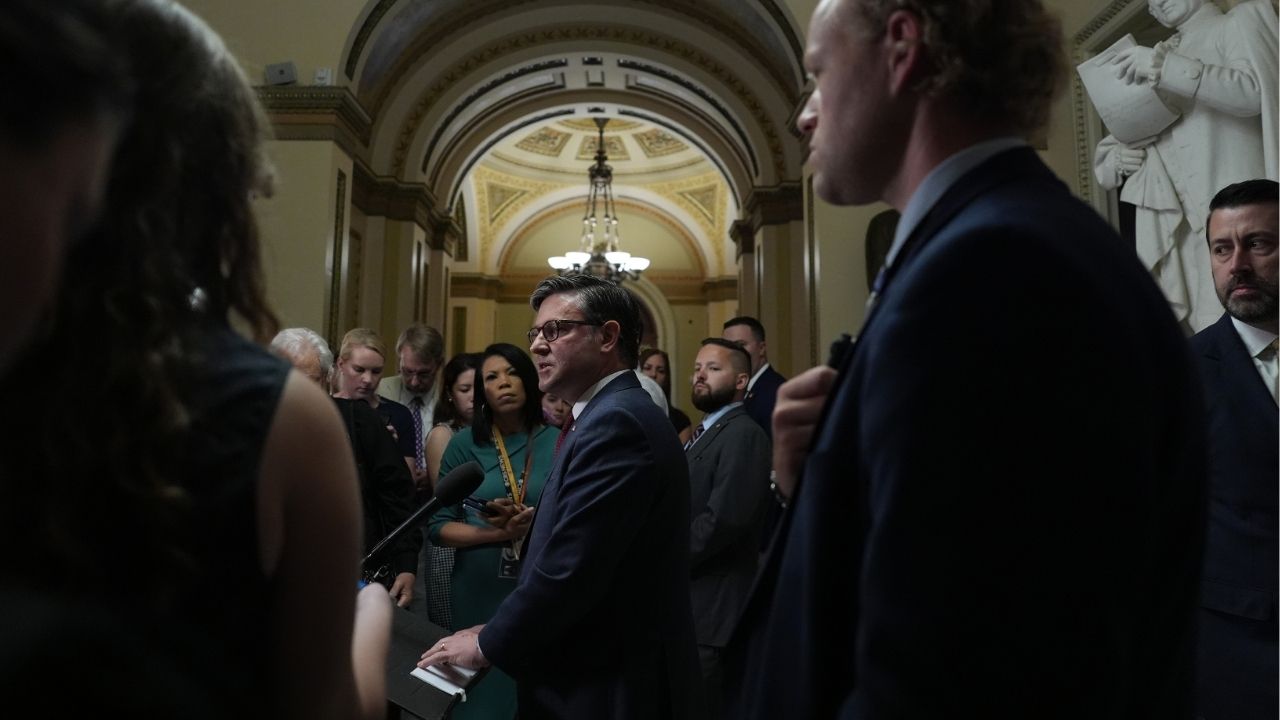
Failing to extend the statute risks “catastrophe in our national security,” said Sen. John Cornyn, R-Texas. Speaker Mike Johnson accused Democrats, some of whom objected to renewing the program because of opposition to Trump’s selection of a loyalist, Bill Pulte, as acting director of national intelligence, of risking a “serious calamity on our shores.”
Section 702 lets the government collect from U.S. companies like Google and AT&T the private messages of foreigners abroad, even when the targets are communicating with Americans. The gathering of U.S. data without a warrant has long drawn bipartisan scrutiny and calls for changes, but never before has Congress allowed a lengthy lapse to occur.
Virtually everyone in Congress agrees the spy program that Section 702 authorizes is vital to U.S. national security, though Trump, whose administration is pushing for its renewal, has in the past condemned it and FISA more broadly. Officials at the National Security Agency, the eavesdropping agency that serves as the main hub for data obtained by the government under the law, have said it contributes on average to about 60% of classified intelligence found in the President’s Daily Brief, a compendium of the sharpest security insights furnished by all U.S. spy agencies.
A court order allows the surveillance to continue for nearly a year even without the law.
The electronic spying program is annually certified by the secretive Foreign Intelligence Surveillance Court, which last recertified it in March. That means the NSA could legally continue its operation through March 2027 even after the statute’s expiration, according to former U.S. officials and surveillance law experts. Those certifications approve categories of foreign surveillance that can occur under Section 702, such as threats related to terrorism or weapons of mass destruction.
Some opponents of a clean extension of the program have cited the legal technicality and the existence of other surveillance powers, including a Reagan-era executive order that grants broad spying powers to intelligence agencies, to argue that renewing the law is not as urgent as proponents have claimed.
“FISA does NOT go completely dark on Friday,” Rep. Keith Self, R-Texas, a member of the ultraconservative Freedom Caucus, which favors more privacy protections on Section 702, wrote on social media this week. “While Section 702 would lapse, the United States would still retain numerous authorities and capabilities to identify, monitor, and disrupt foreign threats against our nation and its citizens. Claiming otherwise to justify warrantless surveillance of Americans is a weak argument.”
With the law expired, companies could resist complying.
U.S. officials have said that certain companies that are compelled under the law to participate in the Section 702 program have again indicated in recent weeks that they may stop complying should it expire. Even a momentary blip in surveillance coverage from one or two providers could lead to the NSA missing intelligence about an urgent threat, proponents say.
Sen. Mark Warner of Virginia, the top Democrat on the Intelligence Committee, said Thursday that some companies that furnish data under the law may halt compliance and that relying on the court’s certifications to keep the program functioning without interruption “is, obviously, a high-risk proposition.”
Glenn Gerstell, the former top lawyer at the NSA, said that the annual certifications would remain in effect but that it was still possible intelligence collection could be interrupted during any ensuing litigation.
The FISA court has up to 30 days to decide whether to grant a government motion to compel compliance with Section 702 in the event a provider stopped sharing data, but nothing prevents the court from acting immediately.
“It’s entirely possible that some internet or telecom companies will insist on an explicit court order before complying with the government’s request to hand over customers’ communications,” Gerstell said. “There’s precedent for that, and some have already informally told the government that it shouldn’t take compliance for granted.”
He added: “Even if it’s not a big risk, why are we taking chances with national security?”
The lapse could last for weeks.
Warner is among the many Democrats who in the past have warned about the risks of allowing Section 702 to lapse. But he and others in his party who had been working with Republicans on a potential compromise renewal bill walked away from those efforts last week over opposition to Trump’s selection of Pulte, the top housing official, as acting director of national intelligence.
Democrats have demanded that Pulte, who has used his perch as director of the Federal Housing Finance Agency to exact retribution against Trump’s perceived political enemies, not be installed in the intelligence post even temporarily. Republican congressional leaders also told the president that the Section 702 renewal most likely could not move as long as Pulte was in line for the job, but Trump has not backed away from his choice.
On Thursday, after members of Congress had already departed Washington failing to renew the law, Trump said he would nominate Jay Clayton, the U.S. attorney in Manhattan and a former chair of the Securities and Exchange Commission, as his permanent pick for spy chief.
Republicans were moving quickly to get Clayton confirmed, but with the House in recess until June 23, an extension bill was unlikely to move before then. Even then, bipartisan concerns about the measure — including a push to require that the FBI obtain a warrant before searching Section 702 communications — could still hamper its swift renewal.
–
This article originally appeared in The New York Times.
By Dustin Volz/Salwan Georges
c.2026 The New York Times Company