

|
Getting your Trinity Audio player ready...
|
President Donald Trump’s waivers allowing foreign-flagged ships to move oil and fuel between U.S. ports have had little impact on high domestic gas prices due to elevated shipping rates and the relatively small fuel volumes transported so far, a Reuters analysis found.
In March, Trump issued a waiver to the Jones Act, a century-old law that requires shippers to use vessels built, owned and crewed by Americans to transport commodities between U.S. ports.
The policy, aimed at supporting the domestic maritime industry and national security, has also resulted in higher shipping costs within the U.S.

Trump waived the act to facilitate fuel transport around the U.S. coastline, primarily from Gulf Coast refiners to the East and West coasts, regions that rely on imports due to insufficient local refineries and pipeline connections to meet demand. The waiver represents the broadest suspension of the Jones Act in its history and offers a real-world test of whether easing the restrictions can reduce fuel transportation costs.
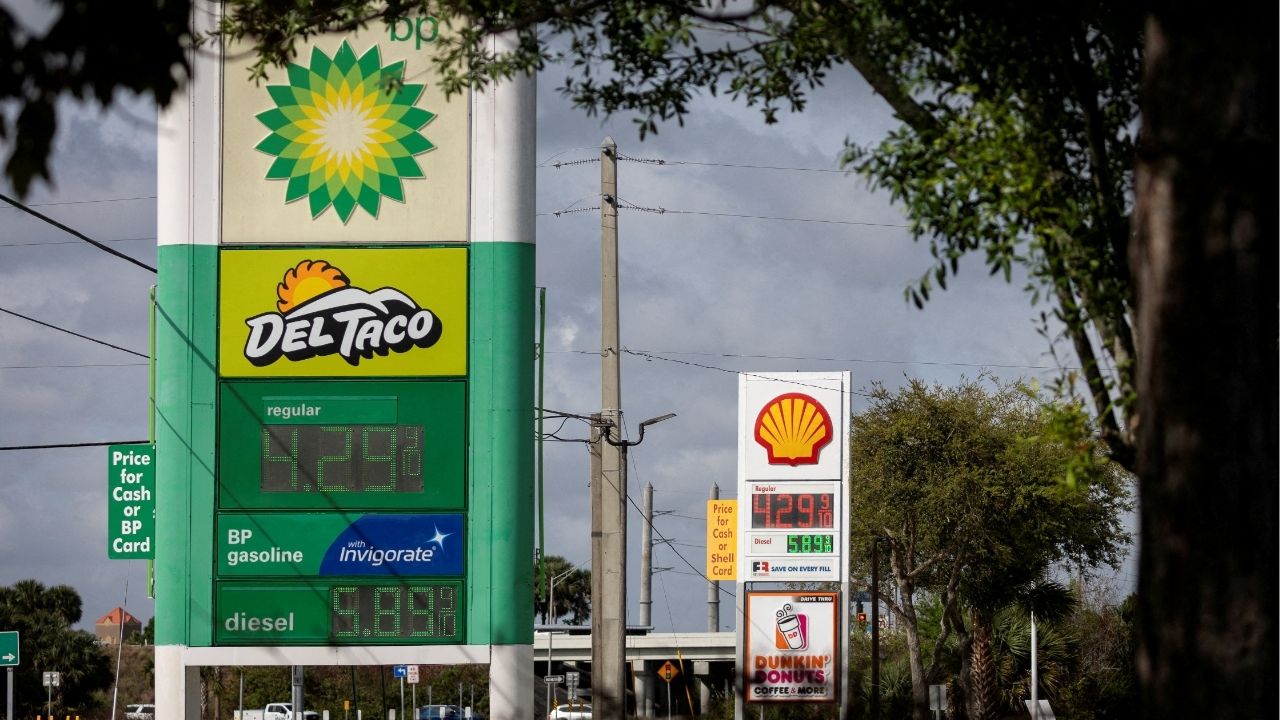
Gasoline prices have spiked higher since the U.S.-Israeli war on Iran began in late February, and the waiver is one of several measures Trump has taken to try to control fuel prices, which are feeding inflation. Pain at the pump could hurt Republicans campaigning to retain control of Congress in November’s midterm elections.
National gasoline prices averaged $4.49 per gallon on Tuesday, according to AAA, compared to under $3 before the war. California prices averaged $6.11 per gallon.
“This waiver is not delivering on what (Trump) was told it would do: lower prices at the pump, and materially increase the flow of product across the country,” said Jennifer Carpenter, president of the pro-Jones Act group American Maritime Partnership.
The White House said data compiled since the initial Jones Act waiver showed that significantly more supply was able to reach U.S. ports faster. Administration officials are pleased with the waiver’s results and have told the oil industry they are open to future extensions if conditions require it, two sources said.
During the first two months of the waiver, refiners including Valero and Phillips 66 used the exemption about 50 times, moving 2.6 million barrels of crude and 7.5 million barrels of gasoline, diesel and jet fuel, federal data showed.
Those volumes were only a fraction of daily U.S. consumption, and rates for available foreign-flagged tankers were high because many ships were trapped inside the Strait of Hormuz.
“Freight rates are much, much higher than they typically would be,” said Ryan Kellogg, an energy policy professor at the University of Chicago. “International vessels were just really hard to get.”
Jones Act critics say the law creates inefficiencies and that the use of international ships under the waiver signals demand for more tankers.
“The fact that waivers have been used 50 times to move energy suggests that this was the best option, and if this didn’t exist, a more expensive, costlier option would have had to be used,” said Colin Grabow at the conservative think tank Cato Institute, which has long called for the law to be repealed.
California, the nation’s top oil and fuel importer, received over 60% of gasoline and blend stock cargoes moved under the waivers — about 3 million barrels, or 2.1 million gallons a day. That is roughly just 6% of the 36 million gallons Californians consume daily.
Foreign vessels also carried gasoline to Alaska, Florida, South Carolina and Oregon, data showed. Combined, shipments totaled about 84,000 barrels per day, a fraction of the 8.75 million barrels consumed daily nationwide.
Shipping on an international vessel from the U.S. Gulf Coast to the West Coast would have saved about 6.6 cents a gallon, or 1% of California’s current prices, compared with a Jones Act tanker, according to price reporting firm Argus. On the East Coast, high demand for foreign ships to Asia meant it was actually cheaper to ship on a Jones Act tanker.
As international tanker rates fall, companies are likely to use the waivers more in coming weeks, industry experts said.
The waiver also appeared to reshape shipping patterns, raising concerns about tight U.S. tanker markets. At least one U.S. tanker shipped Alaskan crude to South Korea in April, its first recorded international voyage since 2014. Valero recently sought a Jones Act tanker to move fuel to Mexico, two sources said.
Industry sources said that could be an unintended consequence of the waiver: If foreign vessels undercut domestic routes, more U.S. ships could pursue international business, straining domestic tanker availability. Tax uncertainty over waiver voyages also deterred companies from chartering foreign tankers for U.S. routes, a shipping source said.
—
(Reporting by Arathy Somasekhar in Houston, Jarrett Renshaw, additional reporting by Shariq Khan in New York; Editing by David Gregorio)