
|
Getting your Trinity Audio player ready...
|
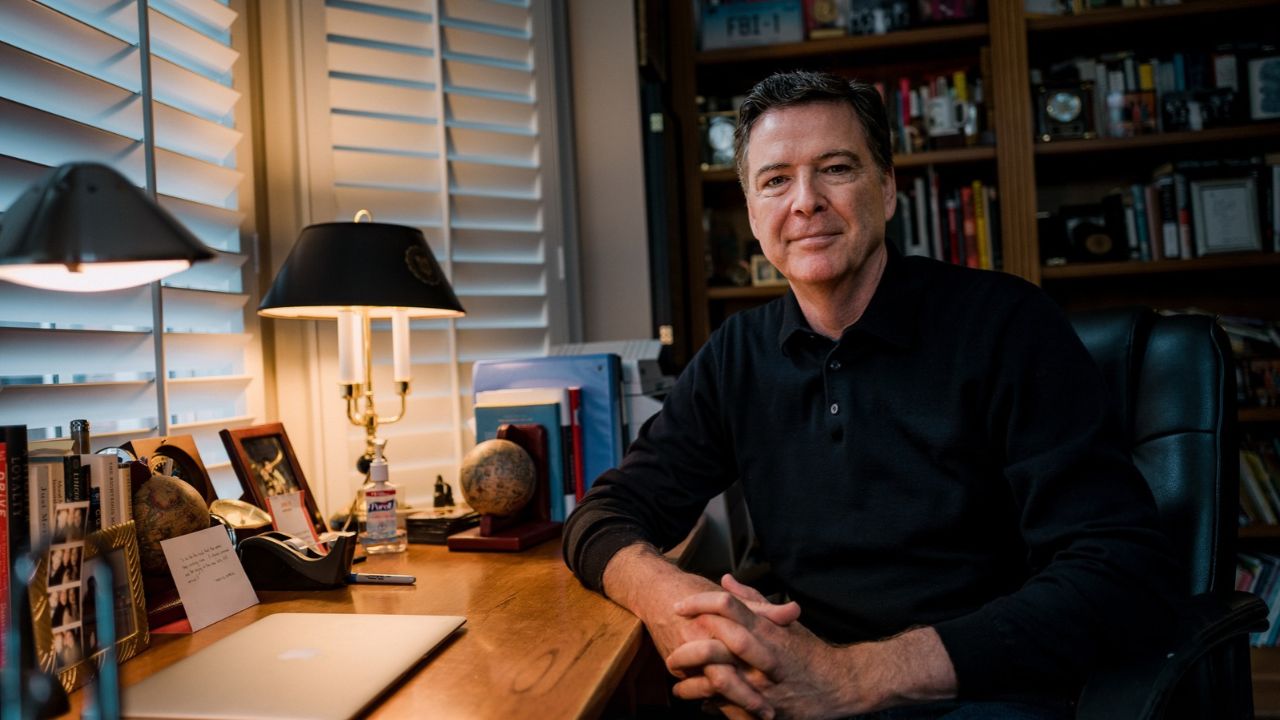
James Comey is accused of sending a coded threat to murder President Donald Trump by posting an image of seashells on Instagram. The case against him is nearing a crucial turning point.
Comey, the former FBI director fired by Trump in his first term, was indicted in April for posting a photograph of seashells arranged to form the number 8647. The Justice Department contended that “86” means “kill.” Everyone agrees that “47” refers to Trump. The four digits together, prosecutors said, amounted to a threat to kill the president.
Comey’s lawyers have asked the judge to dismiss the indictment in motions that “are now ripe for decision,” Judge Louise Wood Flanagan wrote late last month. Unless she grants one of them, the case will go to trial next year.

Judge Flanagan, who was appointed by President George W. Bush, has been hard to read. She has not scheduled oral arguments on the motions and may rule based only on the written briefs. In June, moreover, she said she would not accept friend-of-the court briefs.
That seemed odd to me, as the case presents serious free-speech issues with implications beyond the particular dispute. But some law professors who had hoped to submit briefs told me that the judge may have made a defensible choice to avoid a flood of distracting and duplicative filings.
First Amendment scholars have written that the government’s allegations about Comey’s seashell threat is problematic as a matter of language, precedent and common sense. The most common dictionary definitions of “86,” for starters, are to throw out, eject, get rid of or refuse service to.
Comey’s lawyers said that there is a fundamental problem at the heart of the case: The image of the seashells, they say, cannot amount to a threat.
In response, the government’s main argument was that a jury, rather than Flanagan, should decide whether the image conveyed a true threat. A cynic might think that the administration was more interested in prolonging the prosecution than in resolving the legal questions since it will take much longer to have a jury to weigh in than letting Flanagan rule.
The briefs clarified one commonly misunderstood point. The case is not about whether the seashells sought to incite violence against Trump by others. The government’s brief gestured in that direction in passing, but the laws Comey is charged with violating and the relevant precedents require something else.
The question for Flanagan is whether an objective observer would understand the image of the seashells to be a serious expression of Comey’s own intent to kill the president. Only such a message would amount to a “true threat,” which is a category of speech unprotected by the First Amendment and the basis for the charges against him.
The Supreme Court has said that speech much more direct than seashell formations did not qualify as a true threat.
In 1969, it threw out a case against a draft protester charged with threatening President Lyndon B. Johnson. “If they ever make me carry a rifle,” the protester said, “the first man I want to get in my sights is L.B.J.”
The court ruled that the remark was “political hyperbole” and not a true threat because it was conditional, made at a rally and greeted by laughter.
Prosecutors could have charged Comey with inciting others to commit violence — but they did not. Incitement, like a true threat, is not protected by the First Amendment. But the Supreme Court has defined incitement quite narrowly. The message at issue, the court has said, must be both intended to produce imminent violence or lawlessness and also likely to do so.
In 1969, in Brandenburg v. Ohio, the Supreme Court unanimously overturned the conviction of a leader of a Ku Klux Klan group under an Ohio statute that banned the advocacy of terrorism. The Klan leader, Clarence Brandenburg, had urged his followers at a rally to “send the Jews back to Israel” and to “bury” Black people, using a racial slur.
Because Brandenburg’s words fell short of calling for immediate violence in a setting where such violence was likely, the Supreme Court ruled that he could not be prosecuted for incitement.
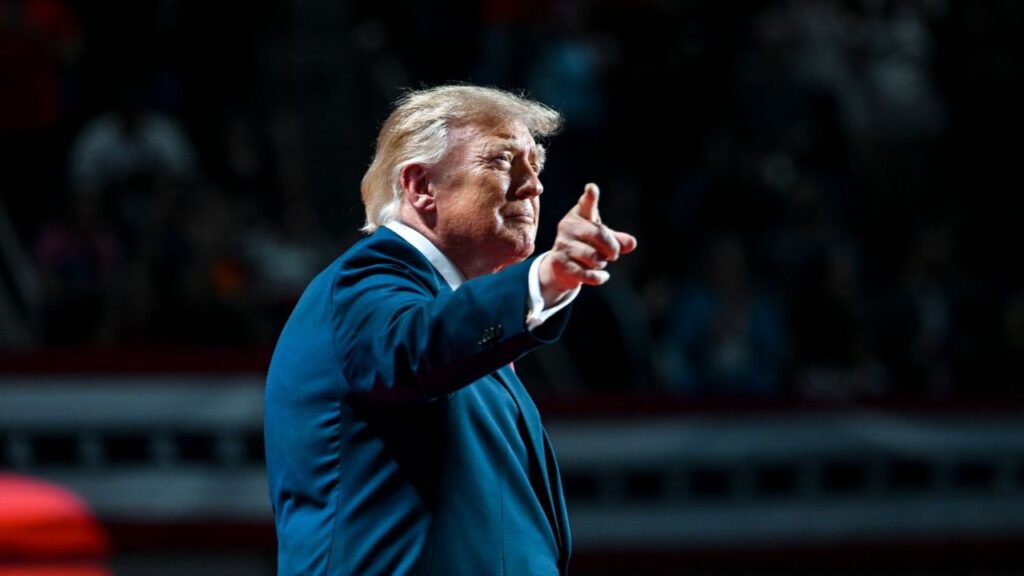
Trump has been the beneficiary of that ruling. When he was running for president in 2016, he pointed to some protesters at one of his rallies and told the crowd to “get ’em out of here.”
The protesters, who said they were then viciously assaulted by others in the crowd, sued Trump for inciting a riot. Trump won the suit. A federal appeals court, referring to Brandenburg, ruled that his exhortation was protected by the First Amendment.
In the Comey case, prosecutors said they would demonstrate to the jury that “86” was “a term of art in the context of organized crime.”
John Gleeson, a former federal judge and mafia prosecutor, submitted a sworn statement debunking that idea based on his many hundreds of hours of listening to the surreptitiously recorded conversations of gangsters and to the accounts of cooperating witnesses.
He made clear that he was not submitting the statement as a professional courtesy to a fellow former prosecutor. He and Comey had butted heads while serving in different U.S. attorney’s office in New York City, he said. “Mr. Comey and I am not friends and never were,” Gleeson wrote.
But Gleeson scoffed at the government’s theory. A mobster might “whack” or “clip” someone, he wrote.
But “the claim that ’86’ is mafia jargon for ‘kill’ is preposterous,” Gleeson wrote. “If it weren’t made in the context of seeking to deprive a man of his liberty, it would be laughable.”
An Update on Jack Smith’s Report
A couple of weeks ago, I wrote about the 11th Circuit’s puzzling postponements of arguments over the release of a report from Jack Smith, the special counsel who tried to prosecute Trump on charges that he had mishandled classified documents. The appeals court first scheduled the arguments for June 2026 and then repeatedly postponed them, tentatively settling on the week of Jan. 18, 2027.
Last week, the court had a change of heart, setting the case down for argument on Nov. 2. As night follows day, a lawyer for Trump on Monday asked the appeals court to put the argument off again — asking that it once again be pushed into next year.
“Given President Donald Trump’s extensive commitments, including travel and other obligations in advance of the Nov. 3, 2026, federal midterm elections, counsel will not have sufficient opportunity to meaningfully confer with her client,” the lawyer, Kendra Wharton, wrote.
In a response filed Tuesday, two watchdog groups seeking the report — the Knight First Amendment Institute at Columbia University and American Oversight — urged the appeals court to get on with it.
“Time is of the essence in this appeal,” they wrote. “Appellants seek public access to a document of singular historic importance — one that concerns the character of the nation’s highest elected official.”
—
This article originally appeared in The New York Times.
By Adam Liptak/Ryan Christopher Jones
c. 2026 The New York Times Company