
|
Getting your Trinity Audio player ready...
|
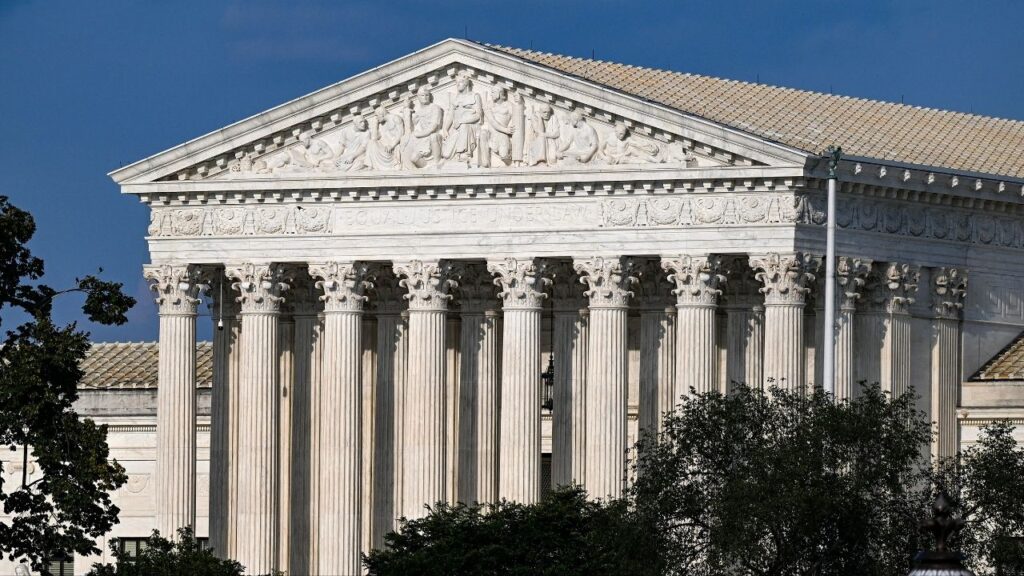
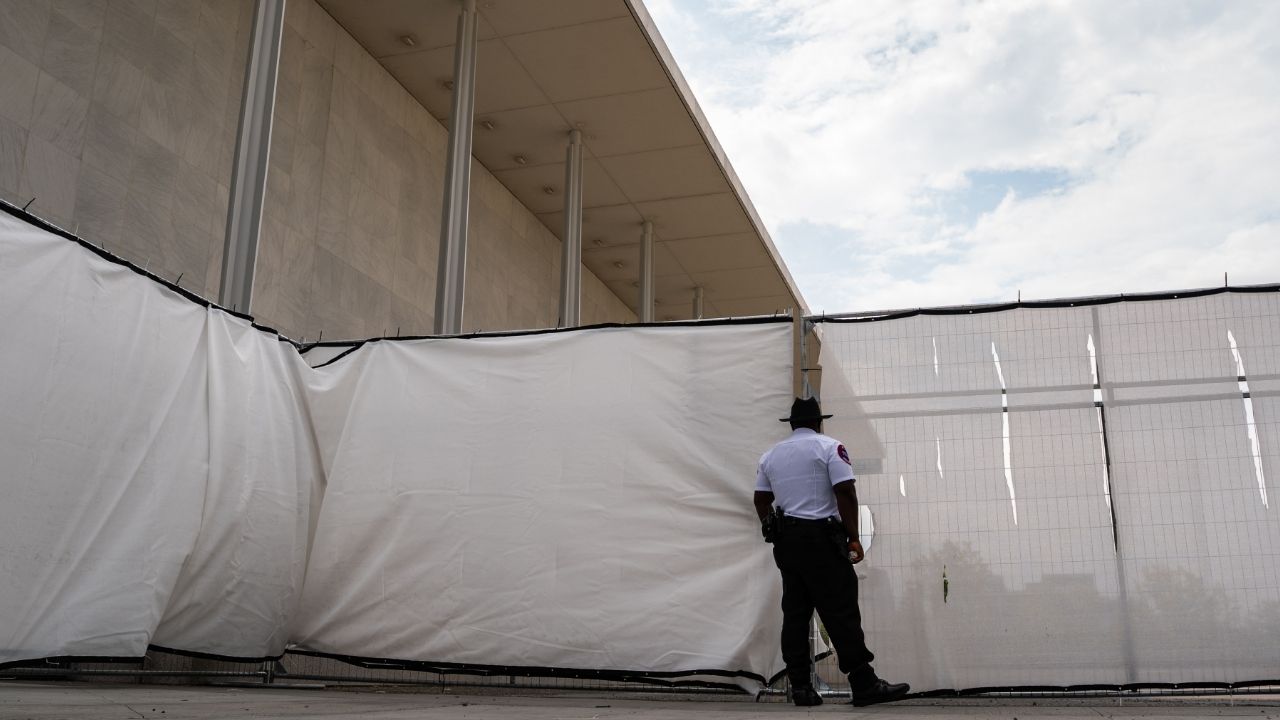
Former employees of the John F. Kennedy Center for the Performing Arts say that center officials canceled a plan to start overhauling its leaking infrastructure months ago, despite those officials now asserting the leaks pose an urgent safety risk requiring the building to close.
On Thursday, a lawyer for the former employees sent internal documents and a letter that detailed their concerns to Congress amid mounting scrutiny of President Donald Trump’s reign over the Washington arts institution.
The center’s main building remains closed because of what officials have characterized as escalating structural deterioration that was never properly addressed by former leadership. But in the letter to Congress sent via a lawyer, the former employees said it was clear that the problems had been exaggerated because, given the chance, the center deferred responding to them over the past year.

In a statement Friday, the center disputed the whistleblowers’ assessment, saying that in recent months, new reviews of the leaks revealed more pronounced problems than officials had previously known.
“The safety of our patrons, artists, and staff comes first,” Matt Floca, the center’s executive director, said in the statement. “The Kennedy Center has known for years that the roof overhang leaked. What we did not know until this summer was how far the damage had spread inside it.”
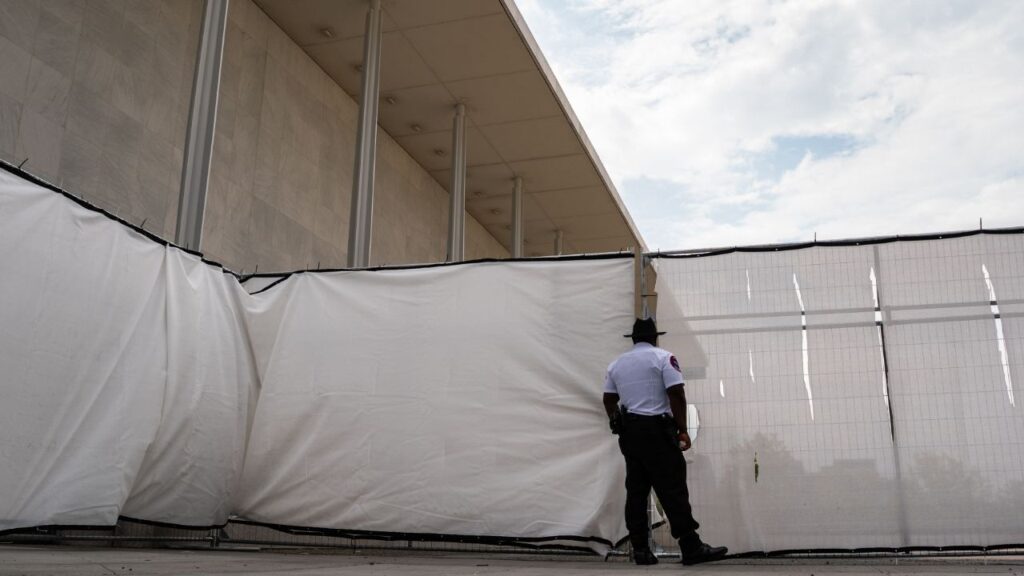
For months, Trump has been championing a two-year closure of the center, which he has called dilapidated and dangerous, to renovate it with $257 million allotted by Congress. The closure has so far been blocked by a federal court. But last week, officials announced that the center would be shutting down temporarily to address “acute risks to public safety” in the main building, while a smaller annex is kept open for limited programming.
Democratic lawmakers have accused officials of using the maintenance issues as a pretext for a shutdown that is actually necessitated by the center’s financial and artistic decline under Trump.
Floca, whom Trump appointed to lead the center, has justified the closure in part by pointing to serious leaks that he says are degrading the center’s roof overhangs and posing a safety risk to people walking underneath them. After a 5-foot section of plaster fell from the ceiling of the center’s Grand Foyer during a storm this month, Floca told the center’s board that the roof overhang leaks might have contributed to the problem, though he said the investigation was continuing.
In a letter to lawmakers on two Senate and House committees that oversee the center’s affairs, David Seide, a lawyer for the unidentified whistleblowers, wrote that the evidence showed that the specific water intrusion problems Floca cited were known to center officials for years. But, he wrote, “they were not treated as priorities nor as acute risks to public safety.”
The letter said Floca had secured $9.3 million to address the roof problems in the major domestic policy law that Trump signed in July 2025. The next month, Floca signed off on allotting $295,000 for a firm to design a replacement for the roof overhangs.
“Yet six months ago — with the funds in hand — he stopped the remediation process from moving forward,” Seide wrote.
The letter included a screenshot of internal Kennedy Center communications in which an employee reported that the request for funding was canceled at the direction of Floca in April. The reasoning was not made clear.
Floca said that the cancellation was made because the contractor’s price had come in three times higher than the projected cost and that the work was part of a more comprehensive plan that was still being pursued.
“The premise that we delayed the design work is incorrect,” the center said in a broader statement of response.
The firm hired to manage the renovation project submitted a $250 million plan for renovations in June that included $14 million in structural work that would address the leaks. “That was a change in the approach to procuring and delivering the work, not a determination that the work was unnecessary,” Floca said in the statement.
The plan addresses an array of other problems: an outdated heating, ventilating and air conditioning system; malfunctioning elevators; an aging electrical system and theater infrastructure in need of replacement.
Last week, Trump, reacting after a federal judge ruled for a second time that his name could not go on the building, declared the renovations would not proceed unless the decision was reversed on appeal. Shortly after, he was photographed on Air Force One reviewing a poster of what appeared to be a rendering of the demolition of the Kennedy Center, stoking fears about his plans.
Sen. Sheldon Whitehouse of Rhode Island, the top Democrat on the Environment and Public Works Committee, which received the whistleblower submission, wrote to the Kennedy Center later Thursday that the documents indicated that leadership “hoarded” the federal funding “while blaming previous leadership for the state of repairs.”
Whitehouse’s office has repeatedly demanded an official accounting of the center’s finances, which have taken a major hit under Trump, as artists and patrons have fled the institution.
The Kennedy Center has repeatedly blamed past leadership for its financial problems, and Trump has portrayed himself as the only person capable of lifting the institution out of turmoil. But internal financial documents show that ticket sales steeply declined after Trump’s takeover of the institution and that they plunged even further after his name was added to the building, according to a submission received by Whitehouse.
—
This article originally appeared in The New York Times.
By Julia Jacobs/Salwan Georges
c. 2026 The New York Times Company