
|
Getting your Trinity Audio player ready...
|
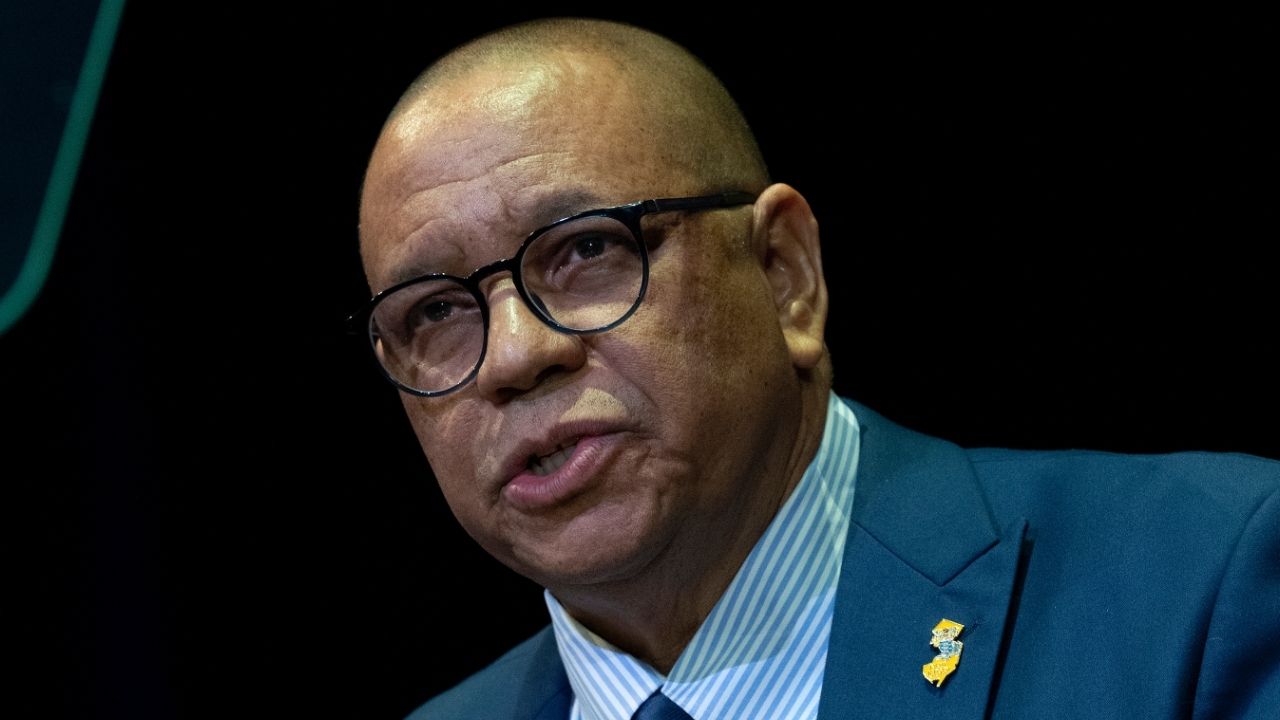
Lt. Gov. Dale Caldwell of New Jersey said Friday he was stepping down, a day after investigators concluded he had tried to use his position to secure a promotion for a girlfriend and dates for himself.
Caldwell, 66, had been in the role for only eight months. And he and his lawyer, Thomas Calcagni, had pushed back strenuously against the findings in a report commissioned by his boss, Gov. Mikie Sherrill. Investigators who interviewed 17 people concluded that Caldwell’s behavior constituted sexual harassment and violated workplace standards.
“I’m not resigning because of the report,” Caldwell said in an interview. “It’s false. I’m resigning because I don’t want to be a distraction to the administration.

“I’m supportive of the Sherrill administration,” he added. “I want her to be as successful as possible.”
Sherrill, a first-term Democrat, had called on Caldwell to resign by Friday, citing a pattern of behavior and unsuccessful attempts to get him to adhere more closely to the state’s ethics guidelines and code of conduct. She had scheduled a Friday afternoon news conference, where she is expected to formally announce Caldwell’s resignation.
The investigation began after an anonymous letter, sent in May, accused Caldwell of being “particularly shameless in handing out his state business cards and asking women out on dates.” The letter, from a “Concerned NJ Resident,” also detailed three times when Caldwell had brought nonpaying guests to events.
“The woman he brought with him demanded to be seated at the head table even though she arrived unexpected and without a ticket” to an April women’s leadership luncheon in West Orange, New Jersey, the letter stated. “This incident was disruptive to the event.”
Lawyers for a firm Sherrill hired to investigate the claims also found that Caldwell, a former president of Centenary University, had used sexually charged language while riding with a female aide in his state vehicle. He had also recommended that a woman he was dating be promoted, according to the report, but did not disclose that the two were in an on-again, off-again romantic relationship.
“No one was pushing anybody,” he said, noting that, in an email about the promotion, he also stated: “Please share her information as you see fit.”
“I was told they wanted good people,” Caldwell said. “I said, ‘Here’s a good person.’”
Sherrill seemed particularly troubled that at least some of the incidents took place after Caldwell had been retrained on the state’s ethics guidelines.
“The ethical lapses persisted despite multiple warnings and trainings,” she said Thursday in a statement as she released the 61-page report.
“I’ve seen firsthand how a hostile culture can undermine everyone’s ability to succeed,” she added. “It’s insidious and ruptures the trust within an organization.”
Caldwell and his lawyer had both suggested that the claims were overblown. Late Thursday, in a strongly worded, two-page rebuttal to the report’s finding, Calcagni intimated that the staff member who recounted the tale in Caldwell’s car had ulterior reasons for reporting the incident. She had told investigators that Caldwell, after being rebuffed for a date with her friend, had complained that ambitious women were misguided in their search for “young sperm.”
Caldwell denies ever making the statement.
“The accuser’s motives were never tested,” Calcagni wrote, “and the lieutenant governor’s and other eyewitnesses’ accounts were discounted if not entirely disregarded.”
In May, in a written response to the anonymous letter, Caldwell, who is Black, had suggested that race and gender were at play. “Unfortunately, in this current political environment, false accusations, especially against people of color, seem to be commonplace,” he wrote.
Neither he nor his lawyer restated that claim this week. But as the political standoff brewed, some of the state’s most powerful Democratic politicians began publicly endorsing Sherrill’s decision to seek Caldwell’s resignation.
The state’s two Democratic senators, Cory Booker and Andy Kim, urged Caldwell to resign, as did the mayor of Jersey City, New Jersey, and members of New Jersey’s House delegation.
“Governor Sherrill is absolutely right,” Booker, who is also Black, wrote on social platform X. “The conduct described in the investigative report is totally unacceptable. For the sake of our state Lt Governor Caldwell should resign.”
The investigation, and questions about how it had been handled, have engulfed state politics for weeks.
The position of lieutenant governor was created by referendum in 2005, and Caldwell was only the fourth person to serve in the role. He stood in as governor when Sherrill was away and also oversaw the Department of State, which is responsible for all elections.
Those responsibilities made the timing of the inquiry particularly problematic for Sherrill, a former Navy helicopter pilot who has said that she hoped to use her decisive victory last year to influence national Democratic politics before this fall’s midterm elections.
Even after she initiated the inquiry, Sherrill repeatedly left Caldwell in charge when she traveled, a decision that privately drew criticism from her Democratic allies in New Jersey. Last month, Sherrill had appeared in Massachusetts and New Hampshire with fellow veterans that she had endorsed as she talked about using her moderate brand of politics to reinvigorate the Democratic Party.
But she had not left the metropolitan New York region since Sept. 4, when the investigation into Caldwell was first revealed by The New Jersey Globe.
—
This article originally appeared in The New York Times.
By Tracey Tully/James Estrin
c. 2026 The New York Times Company