
|
Getting your Trinity Audio player ready...
|
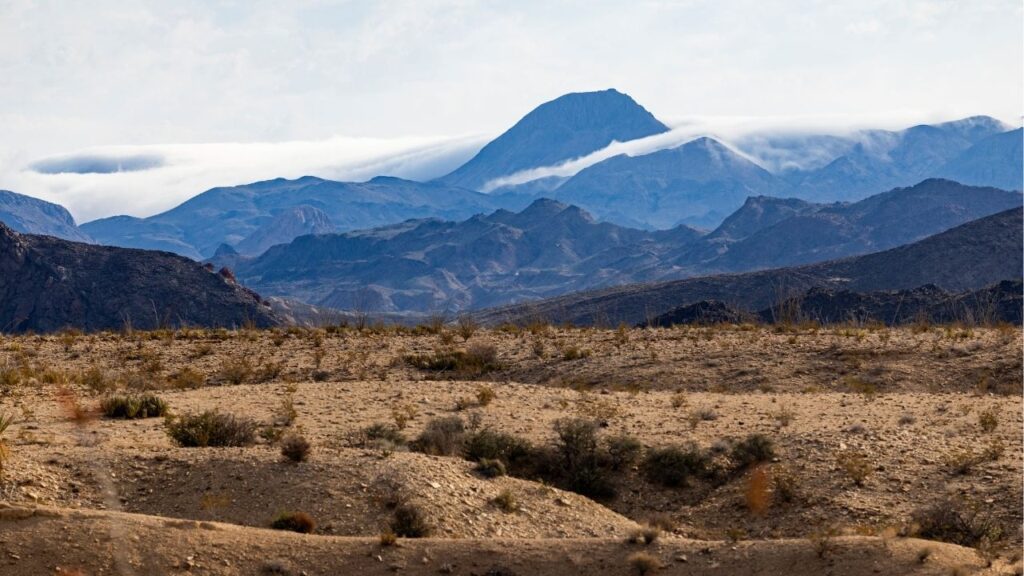
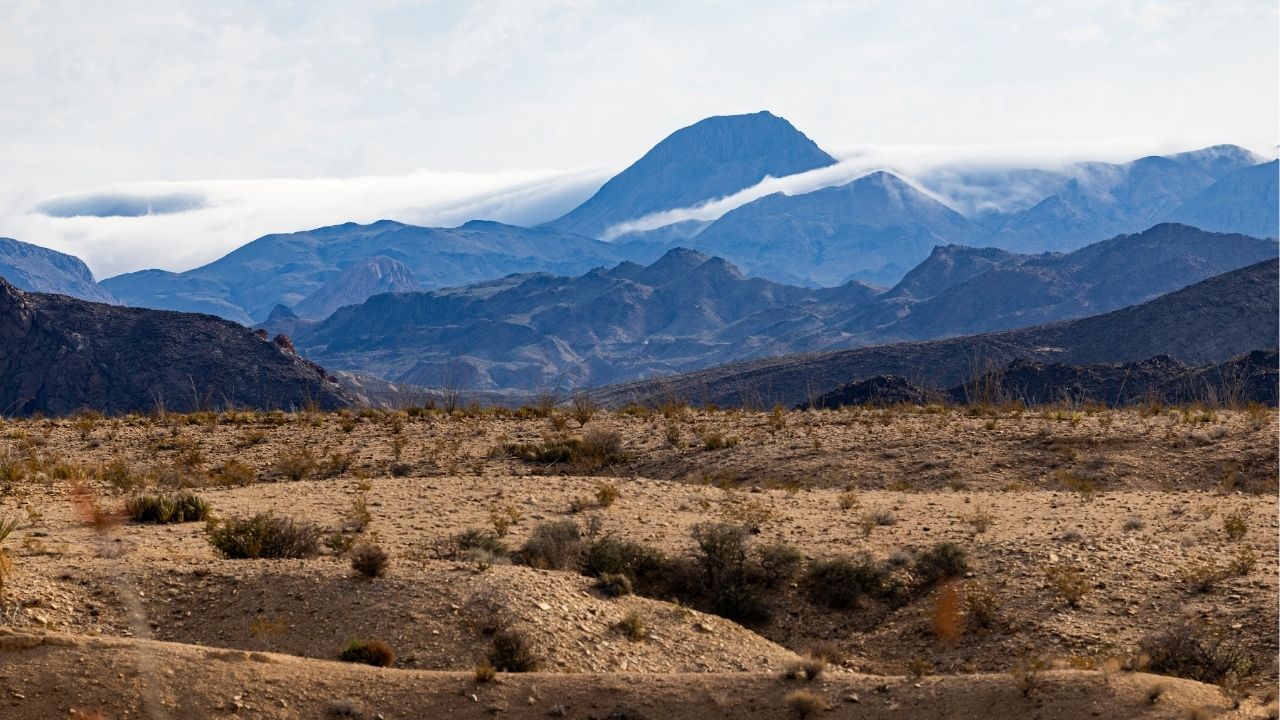
Texans were caught off-guard several months ago when the Trump administration appeared poised to construct a 30-foot wall through Big Bend National Park, a rugged expanse of moonlike desert that is a point of pride for many in the state.
But after bipartisan opposition grew, the wall was removed from the federal government’s border construction map. Many exhaled, believing that the West Texas park, with its towering mountains and cliffs, would be spared.
Then the bulldozers arrived this month.

The sight of these earthmoving machines along the Rio Grande near the Santa Elena Canyon, one of the park’s major attractions, pointed to the most significant evidence of border barrier construction in the park. Contractors ripped through mesquite trees and brush and leveled the ground for more than 1 mile of what appeared to be a future roadway.
Big Bend is beloved by Texans and many across the country, even those who are not among its more than 500,000 annual visitors. It is a place to feel the immense and inhospitable wilderness of West Texas, where the stars at night actually are big and bright.
The construction sparked a fresh wave of anger and outrage from all sorts of people — environmentalists, former park officials, local sheriffs — who again insisted that such infrastructure was unnecessary in a border region so remote and dangerous that people have rarely tried to cross there, even at the peak of unauthorized migration.
Both John Cornyn, the state’s outgoing Republican senator, and James Talarico, the Democrat running to replace him, expressed concern this month about the start of construction inside the park.
“My constituents believe that the 1,000-foot riverbank cliffs and remote Big Bend terrain offers its own source of deterrence,” Cornyn said in a letter to Homeland Security Secretary Markwayne Mullin.
Other Republican state leaders, including Gov. Greg Abbott and Attorney General Ken Paxton, who defeated Cornyn in the Senate primary, have not weighed in directly on the construction.
On Friday, a local nonprofit and an outdoor recreation business represented by state Sen. Roland Gutierrez, a Democrat, filed a federal suit to try and halt the project. A day earlier, a bipartisan group of Texas legislators sent Abbott a letter urging him to ask federal officials to stop the construction.
“It’s gotten to the point where people are picking up the torches and marching in the street right now,” said Tex Toler, a former tourism director for Marfa, Texas, northwest of the park. “This is one of Texas’ and the country’s last wild places.”
After days of confusion among West Texas residents, senior Trump administration officials explained their plans and rationale Thursday. There would be no wall, but there would be construction.
“CBP is building one new access road, improving existing roads, installing detection technology and placing vehicle barriers in limited, strategic locations,” Rodney Scott, the U.S. Customs and Border Protection commissioner, said in a statement.
The park consists of 118 miles of land on the U.S.-Mexico border, and a patrol road is slated to run along much of it. A few areas would have miles of 4- to 6-foot-tall vehicle barriers.
The bulldozers and excavators have been engaged this month in “survey and design work,” Scott said.
Fewer than six migrants a day have been encountered crossing from Mexico in recent months in the entire Big Bend patrol sector, which includes the park and hundreds of miles of border, federal statistics show.
Officials have said that while unauthorized crossings are currently at record lows, they could increase in the future.
The Trump administration has been furiously building new border barriers, and Scott said the Big Bend construction was necessary to fill in gaps. Southwest Valley Constructors, one company currently at work in the region, was awarded a $1.7 billion contract. The company directed questions to federal officials.
“We will not leave Big Bend as an opening for cartels to exploit by shifting their routes and tactics,” Scott said in the statement.
Many of those who oppose a wall are also against building a patrol road. They include local sheriffs who have insisted that major border infrastructure projects are not necessary.
“What security problem are we trying to solve?” Sheriff Thaddeus Cleveland of nearby Terrell County, a Republican and a former Border Patrol agent, wrote on social media. “Can the same security objective be accomplished more effectively another way?”
On Wednesday, people gathered for a demonstration against the construction at the Santa Elena Canyon. Many carried signs protesting the construction — “Stop the Steel,” “No Wall” — or held handmade depictions of javelinas and other wildlife that could be affected by the construction along the river. Some feared the road plan would require building bridges and blasting along Mariscal Mountain, a remote peak.
“There will be no coming back,” said Michael Ryan, a former Big Bend park ranger who attended the protest. “They’re taking taxpayer dollars to ruin this national park.”
–
This article originally appeared in The New York Times.
By J. David Goodman/Emily Elconin
c.2026 The New York Times Company