
|
Getting your Trinity Audio player ready...
|
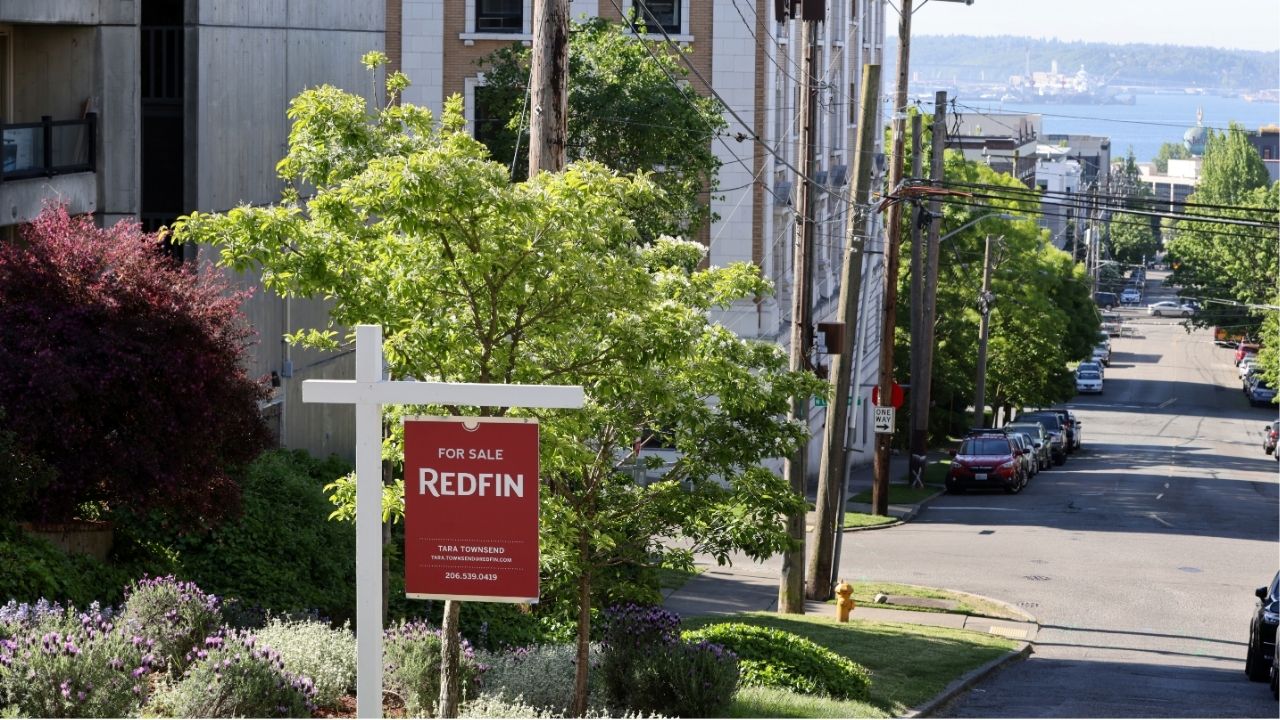
U.S. existing home sales fell for a second straight month in July as higher mortgage rates and house prices because of tight supply pushed out potential buyers from the market.
Mortgage rates have risen amid the Middle East conflict, which raised oil prices, and are likely to limit any rebound in home sales. Higher mortgage rates are also discouraging some homeowners from selling, worsening the housing shortage.
“No one who has a home already can afford to sell it, people with ultra-low COVID-era mortgages cannot afford to give them up,” said Carl Weinberg, chief economist at High Frequency Economics. “If no one is selling, no one can be buying, and inventories are low. Prices were falling right up to the oil price shock.”

Home sales dropped 1.7% last month to a seasonally adjusted annual rate of 4.06 million units, the National Association of Realtors said on Tuesday. Economists polled by Reuters had forecast home resales slipping to a rate of 4.05 million units.
Existing home sales are counted at the closing of a contract. Last month’s sales likely reflected contracts signed in May and June when mortgage rates resumed their upward trend after briefly pulling back amid the ongoing conflict in the U.S.-Israeli war with Iran.
The average rate on the popular 30-year fixed-rate mortgage has jumped 71 basis points since the war started in February, data from mortgage financing firm Freddie Mac showed. It averaged 6.69% last week, the highest level since July 2025. Many homeowners have mortgages with fixed rates below 5%.
The home sales pace has remained below 5 million units for four years. Sales fell in the Midwest and South. They rose in the Northeast and were unchanged in the West. Sales increased 0.7% on a year-over-year basis in July.
“Right now, being in the housing market can feel like being in stop-and-go traffic,” said Mary Lee Blaylock, president of Coldwell Banker Affiliates. “A dip in mortgage rates or the end of the school year will get people moving for a minute, until rate increases and the end of summer vacation causes them to hit the brakes once again.”
Houses priced $250,000 and below have accounted for the weakness in sales amid an acute shortage of starter homes.
Houses priced from $750,000 and above have enjoyed double-digit growth, underscoring what economists call a K-shaped economy, where higher-income households are doing well relative to their middle- and lower-income counterparts. Higher-income households have seen their wealth boosted by a stock market rally.
The inventory of previously owned homes decreased 1.9% to 1.54 million units in July. It was down 0.6% from a year ago. At July’s sales pace, it would take 4.6 months to exhaust the current inventory of existing homes, unchanged from June and a year ago. The median existing home price last month increased 2.0% from a year ago to $434,100.
Small Businesses Plan to Boost Hiring
First-time buyers accounted for 29% of sales, down from 33% in June and slightly up from 28% a year ago. A 40% share in this category is needed for a robust housing market. The median number of days on the market for listed properties edged up to 29 from 28 in June and a year ago. Distressed sales, including foreclosures, were unchanged at 2%.
Residential investment, which includes homebuilding and sales, rebounded in the second quarter after declining for five straight quarters. Given the affordability challenges facing potential homeowners, however, economists saw the recovery as a blip.
But there was some encouraging news from the small business sector, where sentiment rose to an 11-month high in July amid a surge in the share of owners reporting plans to boost hiring. The rise in hiring plans suggested that last month’s surprise drop in nonfarm payrolls was probably temporary.
The National Federation of Independent Business said its Small Business Optimism Index jumped 2.4 points to 99.8 last month, the highest level since August 2025 and surpassing its 52-year average of 98.0. The survey’s employment index rebounded 1.9 points to 102.1 following four straight monthly declines.
The share of owners planning to create new jobs over the next three months jumped 9.0 points to 20%, the highest level since October 2022.
“This index, advanced by four months, has been a remarkably reliable leading indicator of the official estimates of private payrolls in recent years,” said Oliver Allen, senior U.S. economist at Pantheon Macroeconomics.
Those plans could, however, run into worker shortages. The share of owners reporting job openings they could not fill increased to the highest reading since June 2025. The unfilled positions were for both skilled and unskilled labor.
The government last week reported an unexpected decline in nonfarm payrolls in July, with big downward revisions to May and June’s data. Some economists attributed the decline in payrolls to worker shortages. The labor force has decreased by more than a million this year amid retirements and an aggressive crackdown on illegal immigration by President Donald Trump’s administration. Further declines are likely as hundreds of thousands of immigrants have lost their protected status.
From construction to agriculture, labor availability dominated comments from owners. Some said “finding or having qualified skilled labor applicants is nonexistent,” while others said “the labor workforce is getting slim, and it seems like quality people are getting harder to find in labor fields.”
(Reporting by Lucia Mutikani; Editing by Andrea Ricci)