
|
Getting your Trinity Audio player ready...
|
In the weeks leading up to the U.S. war with Iran, President Donald Trump cheered on the Iranian protesters rising up against their government, telling them that they should “save the names of the killers and abusers” and that he would come to their aid.
“HELP IS ON ITS WAY,” he promised.
But more than five months into the conflict, liberating the Iranian people has been one of the war’s most glaring unfulfilled objectives.

Iran has executed at least 26 people in connection with the January protests since Trump made his promise, with many more protesters potentially at risk, according to Amnesty International. U.S. officials believe Iran’s new supreme leader, Mojtaba Khamenei, is even more interested in pursuing a nuclear weapon than his father, who was killed in an airstrike on the opening day of the war.
And as Iranians remain locked in crisis, Trump is looking for a way out. Negotiators are working on a deal to restart shipping traffic in the Strait of Hormuz, which Iran has effectively shut down, as Trump tries to extricate the United States from a conflict that has lasted far longer, and proved far more costly, than he anticipated.
In an interview this summer, Trump acknowledged that he never really believed that the uprising he encouraged would happen anyway because Iranian security forces would crush the demonstrators.
“I never thought, unless they could be completely armed, I never thought they’d have that kind of uprising, because these people are violent,” Trump told conservative podcaster Hugh Hewitt.
But for Iranians who listened to Trump’s early promises, the sense of betrayal is real.
“I genuinely thought that help was on the way, but I was so wrong,” said Vahid, a 35-year-old from Tehran who works at a startup company, echoing a sentiment expressed by numerous Iranians in interviews with The New York Times. All spoke on the condition that the Times identify them only by their first names, out of fear of reprisals from their government.
Maryam, a 36-year-old from Tehran who participated in the January anti-government protests, said Trump took advantage of a citizen uprising to further his own agenda.
“I feel that Trump and the U.S. are deceitful, and Trump is a showman,” Maryam said. “They used the language of human rights toward only their own benefit.”
Sajad, a 27-year-old from Tehran who works in cinema, was more blunt, saying he had no trust in Iran or the United States.
“I don’t think any of them care about the interests of the people of Iran,” he said. “In one word, I despise Trump, the U.S. and all the rest of them.”
‘Let the Oil Flow!’
The White House declined to answer questions about Trump’s promise to help liberate the Iranian people. Instead, officials cited Trump’s goal — which, as yet, is unmet — of ensuring that Iran never has a nuclear weapon, saying that objective would benefit the Iranian people as well.
“For 47 years, American presidents and countless other world leaders talked about the threat posed by Iran, but no one had the courage to address it,” Anna Kelly, a White House spokesperson, wrote in a statement. “President Trump took decisive action to ensure that Iran could never harm our homeland, our troops or our allies again. A denuclearized Iran means that the entire region and its people will be safer and more stable.”
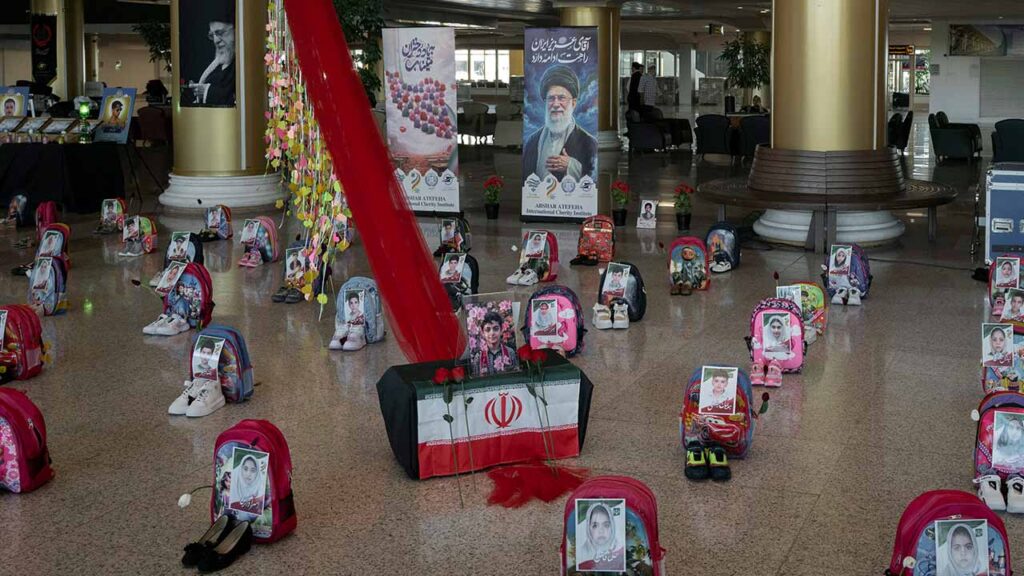
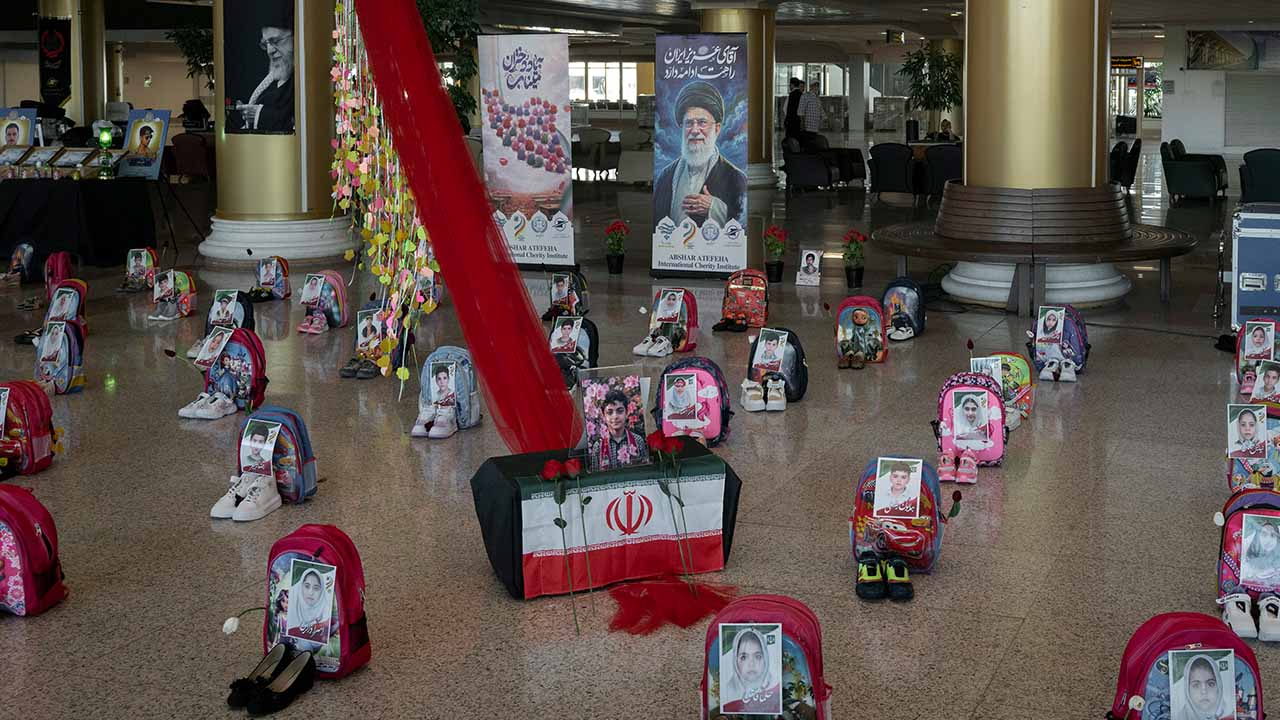
More than 1,700 Iranian civilians have died in the war, according to the U.S.-based Human Rights Activists News Agency. That figure includes at least 175 people — most of them children — who died in an airstrike that hit a school on the first day of the war.
Privately, U.S. military officials have acknowledged that U.S. forces carried out the school strike and cast it as an intelligence failure. But Trump has brushed aside questions about who was responsible, saying in June, “Mistakes are made. War is nasty.”
His references to the horrors facing Iranian civilians during the war have been mostly in passing, and they have grown less fervent as the months go by.
When he announced that the U.S. and Israeli attacks had killed Ayatollah Ali Khamenei on the first day of the war in February, he called the killing “the single greatest chance for the Iranian people to take back their Country.” In April, he boasted about having saved eight Iranian women from death sentences, though the Iranian government disputed that they had been sentenced to execution.
In May, Trump hinted that he might send weapons to protesters. In June, he claimed that as part of a preliminary deal, Iran would use its unfrozen assets to buy corn and soybeans and other goods from American farmers — a situation he characterized as a benefit to the United States and a way to address hunger that Iranians were suffering as a result of the war.
For the most part, however, Trump has focused on other things, especially the disruption in the Strait of Hormuz, which has caused fuel prices to spike and disrupted global markets.
When Trump announced the framework of a deal with Iran in June — which has since collapsed — he made no mention of the Iranian people.
Instead, he said, “Ships of the World, start your engines. Let the oil flow!”
And one stipulation stood out to Iranians as particularly contradictory to Trump’s initial pledge: that the two countries respect each other’s sovereignty and “refrain from interfering in each other’s internal affairs.”
Trump went on to praise Iran’s new leaders as well — a striking moment, given that the country’s theocratic rule has remained intact.
“The current Iranian leadership are very rational people,” Trump said. “They are nice to deal with. They are strong and smart people. They are not radicalized, and they are looking to help their country.”
One of the Iranian officials dealing with the United States, Mohammad Bagher Ghalibaf, is a veteran commander of Iran’s Revolutionary Guard who is known for showing little tolerance for domestic dissent. Since the war started, the Guard has claimed an even more prominent role in government decision-making.
It is also responsible for repressing protests at home.
‘Worst of All Worlds’
Richard Fontaine, the CEO of the Center for a New American Security and a former foreign policy adviser to Sen. John McCain, noted that it was not the first time in history that an American president had called for an uprising, only to leave people hanging in the balance.
The most starkly similar example was in 1991, when President George H.W. Bush publicly encouraged Iraqi Shiites to rebel against the government and then allowed U.S. forces to stand by while the uprising was suppressed by Saddam Hussein’s helicopter gunships and execution squads in a bloodbath that claimed tens of thousands of lives.
Since then, U.S. presidents have practiced restraint in encouraging foreign revolts. President Barack Obama drew bipartisan backlash in 2009 when he resisted calls to encourage the “Green Movement” protests in Iran, for fear that it would result in demonstrators getting slaughtered. He later said that his caution may have been a mistake.
Fontaine said that of all of Trump’s promises to the Iranian people, helping to liberate them was the “big one,” given that the killing of Iranian protesters in January appeared to be the catalyst for a more aggressive approach by the U.S. military against Iran.
“The biggest losers in everything that’s happened this year are the people of Iran,” Fontaine said. “Now they have a war-torn, broken country whose economy is even worse than it was before, but with the same predatory, essentially tyrannical government ruling over them that they had before. So it’s in some ways sort of the worst of all worlds.”
Maryam, a 27-year-old nurse in Tehran, said she took part in anti-government protests in 2022, when she was beaten with batons, and watched people bleeding in the streets. That year, she protested in solidarity.
This year, she took to the streets because she wanted retribution for what the regime has done to her people — not because Trump told her to. Now she said she is resigned to “fear and hope.”
“Fear that the blood that has been shed will be disregarded and forgotten,” she explained. “We don’t lose hope because, in our view, despair would be a betrayal of our children’s blood.”
She trusts that Trump, as well as Prime Minister Benjamin Netanyahu of Israel, may still have a plan for Iranian people. But ultimately, she said, Iranians can count on only one another.
“Our uprising was our own choice — a response to the regime’s crimes and a movement to overthrow the system,” she said. “Whether Trump helps now or not, it makes no difference to our determination. We are grateful for his support, but our struggle does not depend on it.”
—
This article originally appeared in The New York Times.
By: Erica L. Green, Zolan Kanno-Youngs, Sanam Mahoozi and Yeganeh Torbati/Emile Ducke
c.2026 The New York Times Company