


|
Getting your Trinity Audio player ready...
|
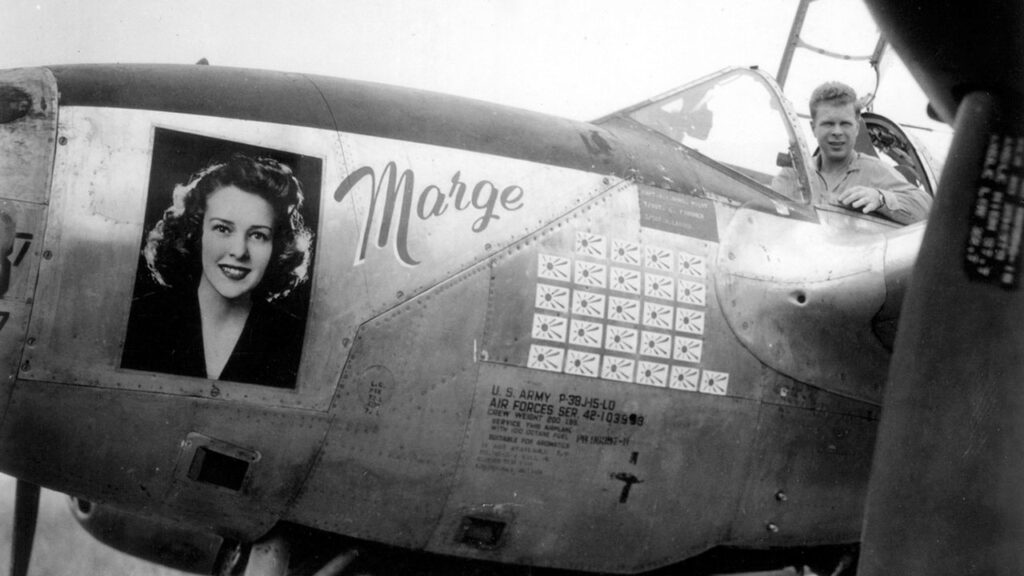
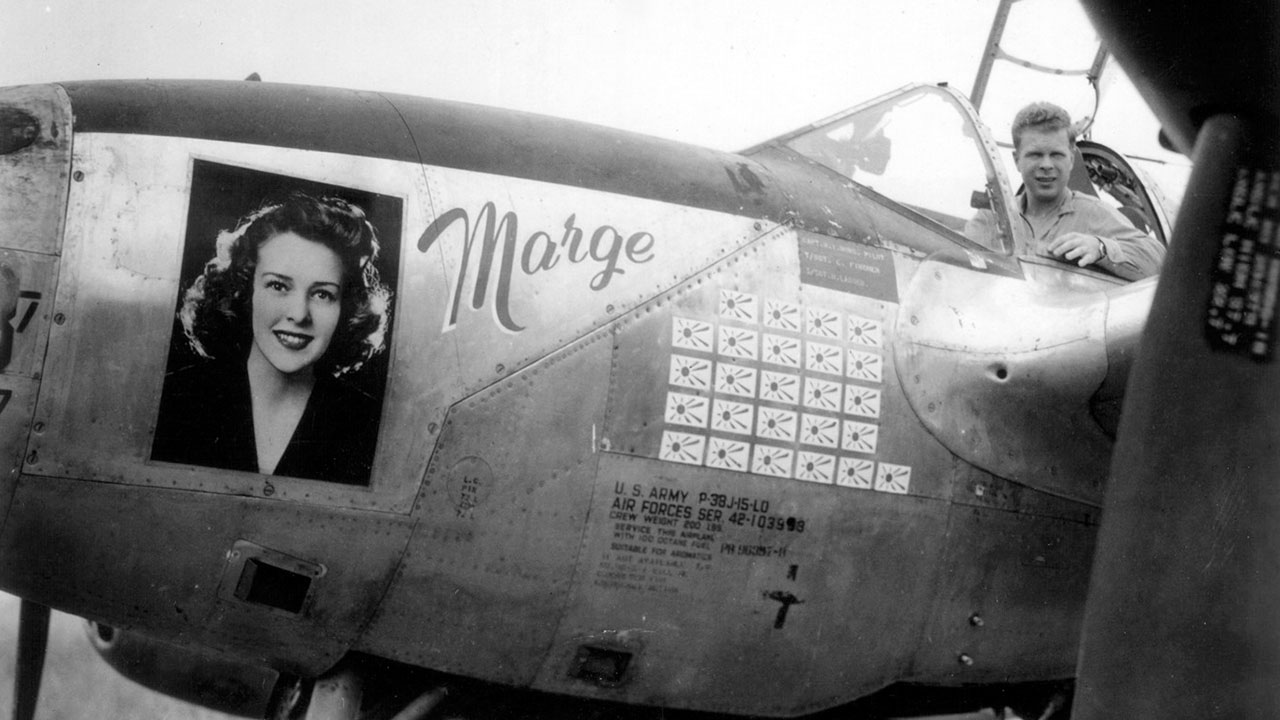
Flying in a P-38 Lightning fighter plane, eventually named “Marge” after his sweetheart back home, Maj. Richard Bong shot down more planes than any other American in World War II.
But Marge crashed in 1944, piloted by a different airman who ejected safely, during a weather-survey mission over Papua New Guinea. For 80 years, the thick jungle grew around and shrouded the wreckage on a hillside in Madang province.
Until 2024. That’s when Justin Taylan, founder of a nonprofit called Pacific Wrecks that searches for World War II aircraft, located the plane. Now, a wing of Marge has been returned to Wisconsin, Bong’s home state. It is set to go on display this month at the Richard I. Bong Veterans Historical Center in Superior, about 17 miles from Poplar, a small town in northwest Wisconsin where Bong was born and raised.

“I didn’t know what to feel,” Mitch Erickson, Bong’s nephew, said of Taylan’s discovery after having visited the crash site this year. “Who dreamed he would even find it?”
After he secured his war record as the Ace of Aces in April 1944, Bong appeared in newspapers with the original “Marge,” Marjorie Vattendahl, whom he’d marry, according to Briana Fiandt, curator of collections and special sections at the Bong Center.
Fiandt said the idea to bring his plane back home struck her and she couldn’t let it go. Bong, the World War II hero, is easily the most famous person to hail from Poplar, a town of 626 people, according to the latest census.
She reached out to Taylan in September 2023. About six months later, he found the wreckage, Fiandt said.
“I downloaded the pictures, and there was the wingtip with the red paint with the serial number on it,” she said. “He had only been looking for it a few days, and I was not expecting it to happen that quickly.”
The Bong Center paid for the excavation, but Fiandt emphasized that the trip was a collaboration between the museum and Pacific Wrecks.
Taylan said he had obtained records showing the plane’s flight path, estimated travel time and flight duration. The research helped him narrow down the crash site to Madang province, home to lush jungles and plenty of other war relics.
He and others also interviewed local residents about the region and found people who knew of two wrecks in that area. But, finding Bong’s famed aircraft was like searching for a “needle in a haystack,” Taylan said, because Papua New Guinea is home to hundreds of crash sites. Japanese and Allied forces engaged in brutal warfare over the island nation.
The speedy discovery was fortuitous in another way.
“A lot of pressure was on me at that time, because I realized we had one shot with this,” Taylan said. “If we were not successful, we’re small organizations with shoestring budgets.”
Taylan and his crew climbed ravines and descended into valleys filled with tall grass. They trekked under a dense canopy, their feet crunching on dry leaves, when Taylan spotted a twisted metal sheet edged in black and covered in moss.
His crew hacked at overgrown shrubs and uncovered other mangled metal bits. They found a plane’s wing with a stenciled serial number. The identifier matched the number assigned to Bong, Taylan said.
After his initial find two years ago, Taylan brought Bong’s descendants and others to collect the plane’s wing last month. He also worked with local Papua New Guinea officials to gain permission to retrieve the wing.
While hiking, Erickson said he could picture soldiers slicked with sweat from the humidity and engaged in combat amid the dense greenery.
“It was a step back in time for me,” Jim Bong, another nephew of Bong, said. “I would touch a piece thinking about my uncle and my Aunt Marge.”
Richard Bong died in 1945 while flying a fighter plane as a test pilot in Burbank, California. He was trying to get out of the plane when it crashed. He was 24.
He flew more than 500 combat missions against Japanese forces, in that P-38 named Marge and other planes, and downed a record-breaking 40 airplanes. Gen. Douglas MacArthur presented him with a Medal of Honor, one of 20 decorations.
The plane’s wing was taken to Milwaukee and an air show in Oshkosh. Then, it was brought to Poplar. Fiandt hopes to photograph, catalog and have the broken plane wing displayed by next week. The museum is raising money for a new exhibit offering an immersive jungle experience, mimicking the crash site.
“It’s a little bit like bringing a piece of Bong back,” she said, “and reminding people of who he is.”
—
This article originally appeared in The New York Times.
By: Ishani Desai
c.2026 The New York Times Company