
|
Getting your Trinity Audio player ready...
|
As the war with Iran continues to upend energy markets, many of the world’s biggest oil companies are reporting their highest quarterly profits in years.
International oil prices averaged about $96 a barrel in the second quarter, up 45% from the same period last year. That rewarded the companies that remained able to extract oil and ship it around the world despite the fighting in the Middle East.
Exxon Mobil, the largest U.S. oil company, said Friday that it had earned $14.53 billion in the April through June period, more than twice as much as it did in the second quarter of 2025. Chevron’s second-quarter profit soared to $12.07 billion, from $2.49 billion a year earlier.

The longer the war drags on, the more profitable this year is likely to be for oil companies, which generally benefit when energy is scarce and prices are high.
“While we didn’t anticipate the current situation, we were prepared for it,” Darren Woods, Exxon’s CEO, said on the company’s earnings call.
Shares in Exxon fell roughly 2% in morning trading as Chevron’s climbed 1%.
The war with Iran has also been profitable for Europe’s biggest oil companies, from Equinor of Norway to Shell. Shell’s second-quarter earnings tripled from 2025, hitting $10.82 billion, the London company said Thursday.
Not everyone is faring quite so well. The world’s most valuable oil company, Saudi Arabia’s Aramco, has been more affected by the war because most of its operations are in its home country, near the heart of the fighting. Still, Aramco’s second-quarter earnings, due out next week, are expected to have climbed roughly 27% from last year, according to analysts surveyed by FactSet.
The collapse in July of the ceasefire between the United States and Iran, along with the tussle for control over the Strait of Hormuz and its access to the Persian Gulf, has prolonged those disruptions. A new wave of attacks in the Red Sea, an alternative shipping route, happened after the second quarter ended but has pushed energy prices higher again.
International oil prices, which were around prewar levels of $72 a barrel at the start of July, had rebounded to about $87 by Friday.
“The situation has remained, to say the least, extremely volatile, with the Strait of Hormuz being an intermittent battleground,” Patrick Pouyanné, CEO of the French oil giant TotalEnergies, said on an earnings call in July. The company’s second-quarter profit more than doubled to $5.44 billion.
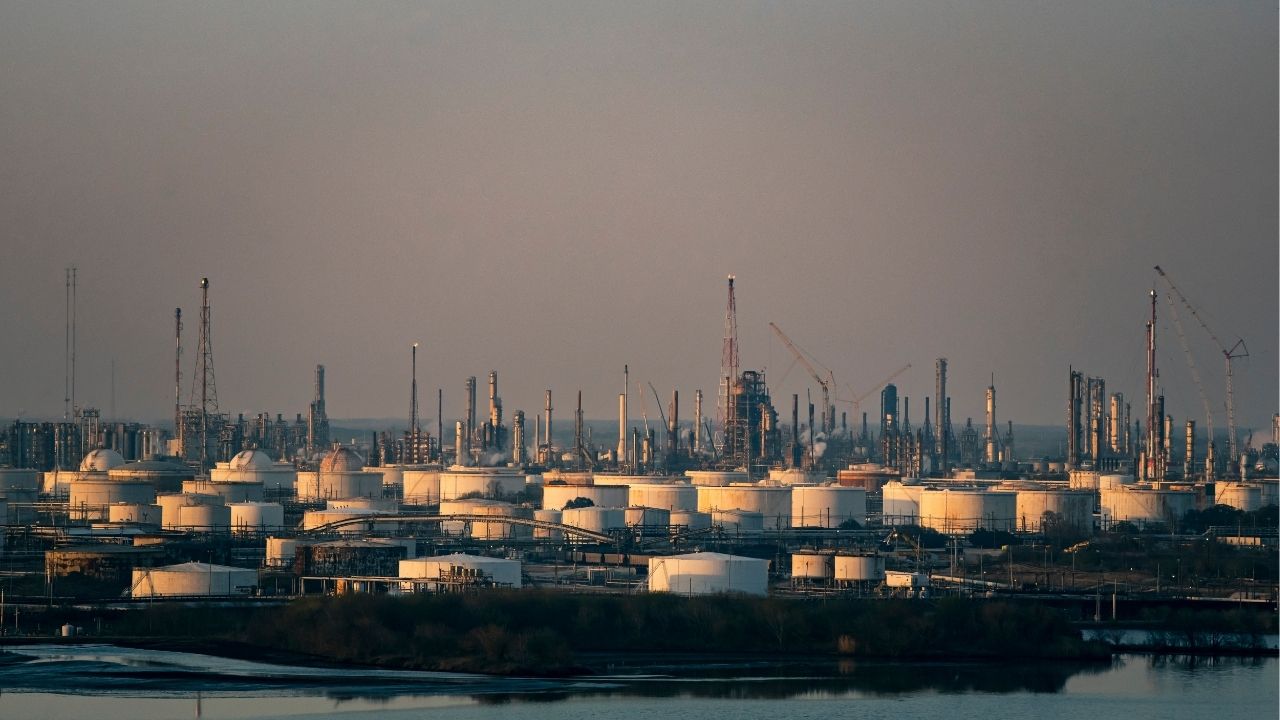
The business of converting crude oil into gasoline and other transportation fuels has been especially lucrative for many companies. Prices at the pump remained high this spring even after oil prices plunged because fighting damaged refineries in the Persian Gulf and Russia, making fuels harder to come by.
For now, oil companies generally are hanging on to their extra cash rather than reinvesting it in pumping a lot more oil and gas, according to Wood Mackenzie, an energy consulting firm. In fact, the industry is poised to spend less on producing oil and gas this year than it did in 2025 as companies remain skittish about the trajectory of the war with Iran.
“There’s just so much uncertainty with respect to prices and how this is all going to play out,” said Tom Ellacott, a senior vice president of corporate research at Wood Mackenzie.
A big question is whether the world will turn away from oil and natural gas because of this year’s energy shock. Chevron CEO Mike Wirth said he was seeing little sign that the war would hurt demand for oil and natural gas over the long term.
“Demand destruction is not obvious to me at any significant scale,” Wirth said on a call with analysts.
Bumper oil profits have angered not only environmental groups and European finance ministers but President Donald Trump, who in June accused oil giants of gouging consumers at the gas pump.
Members of the European Union imposed a temporary tax on what are often called windfall profits in 2022 after Russia’s invasion of Ukraine. Oil company earnings generally have been lower during this crisis, which for all the upheaval has not caused oil or natural gas prices to climb as high in most of the world.
The United States had a similar levy in place after the oil crises of the 1970s. But any effort now to tax windfall profits would face much longer odds, especially as Republicans, who tend to be sympathetic to oil and gas companies, control both chambers of Congress.
Eimear Bonner, Chevron’s chief financial officer, said the company was focused on what it could control, which included increasing oil and gas production 5% from the first quarter and processing more oil than ever in the refineries that it operates.
—
This article originally appeared in The New York Times.
By Rebecca F. Elliott/Meridith Kohut
c. 2026 The New York Times Company