
|
Getting your Trinity Audio player ready...
|
State prosecutors charged a journalist with terrorism over his reporting. A court ordered a columnist to delete an article linking a candidate to criminal networks. A judge barred a newspaper from mentioning a governor unless its content was reviewed by a court monitor.
These examples from the past year are part of a rising trend across Mexico: Politicians and officials are increasingly weaponizing the country’s laws to sue, fine and harass critics and journalists, according to press rights groups tracking legal cases. Civil, criminal and electoral cases have accused journalists of violating terrorism statutes, regulations on artificial intelligence or laws intended to shield female politicians from discrimination, among other things.
Mexico has long been one of the world’s most dangerous places for journalists, with nearly 180 killed since 2000. Now, through lawsuits and court orders, the Mexican press faces a new obstacle — less visible than death threats and bullets but also capable of silencing critics.

The tactics, experts and journalists said, have caused some people to self-censor or avoid covering certain topics or political figures entirely for fear of financial ruin, endless litigation or imprisonment.
“What we are seeing is officials activating the judicial apparatus to intimidate,” said Leopoldo Maldonado, a director at Article 19, a media watchdog group. “Not to repair some alleged damage to their honor, reputation or image, but rather to subject journalists to a prolonged period of attrition.”
Supporters of the laws often say that their use is legitimate. The senator behind much of Mexico’s legal framework against gender-based violence, for example, rejected the idea that these protections were being misused by female politicians to silence dissent.
“There is a kind of journalism that is very true to its principles,” said Sen. Martha Lucía Mícher, a member of Mexico’s governing party, Morena. “But there is also a kind of journalism — with all due respect — that is very misogynistic.”
Mícher said she would be open to reviewing how cases are being resolved. “We are not abusing these laws,” she said. “We are victims.”
Yet, earlier this year, the Inter American Press Association, an advocacy group representing media organizations across the hemisphere, for the first time placed Mexico in the “high restriction” tier of its freedom of expression index, citing a spike in officials’ use of lawsuits and other legal tools “in an attempt to silence criticism.”
Sixty-nine such cases were documented by Article 19 in 2025, a record high and more than triple the figure from the previous year. Most of the legal disputes against the media were driven by political parties, candidates or public officials. Last year, Article 19 tracked the approval of at least eight local and federal laws that stifle freedom of expression.
Mexico is experiencing “the blatant abuse of these legal tools,” said Paulina Gutiérrez, the executive director of R3D, a Mexican digital rights group. “And because the legislation is so poorly drafted, it gives judges and public figures the leeway to exploit them.”
A Fraught Relationship
The relationship between Mexican authorities and the press has long been a complicated one.
Under the one-party government that ruled Mexico for many decades, many journalists didn’t check power — they facilitated it in exchange for cash bribes or government handouts. A more independent press emerged in the 1990s, said Andrew Paxman, the author of “Mexican Watchdogs: The Rise of a Critical Press Since the 1980s.”
In the decades that followed, that freedom brought escalating friction as journalists confronted government corruption and organized crime.
Under some administrations, the government spent hundreds of millions of dollars a year in public money on advertising, becoming so important to the bottom lines of media outlets that officials were capable of suppressing investigative articles, directing front pages and intimidating newsrooms that challenged it.
Spending on official advertising fell sharply during the administration of Andrés Manuel López Obrador, who was elected in 2018. Instead, he started hosting near-daily livestreamed morning news conferences. From that platform, he connected with his base and set the news agenda, but also routinely discredited, mocked and exposed journalists who questioned his policies or published investigative reports — even releasing their personal income or doxing them.
His successor and protege, Claudia Sheinbaum, has struck a less combative tone. She often defends press freedom and says her party, Morena, opposes any form of censorship.
“If a journalist has committed a crime, they should be treated just like any other person,” she said in January. But, she added, “We must always prioritize freedom of expression above everything else.”
And yet she has also defended Morena members who use the justice system against reporters, and in May she called on people to boycott a media conglomerate that refused to pay taxes and had covered her administration negatively.
“It is not censorship, it is an opinion,” Sheinbaum said about her call to boycott. “I am not using the power of the state to censor a television station.”
The stigmatization from the country’s top leaders has emboldened others to pursue legal retaliation, experts say. More vulnerable to that kind of harassment, said Paxman, are journalists who might not have the resources or the reputation to defend themselves.
A New Tool for Censorship
It started with a one-minute audio cartoon. Three siblings asked their influential father to buy them candidacies for the upcoming 2024 elections, squabbling over who got to run for which party.
The satirical spot broadcast on Radio Teocelo, the local community-run radio station that also produced the ad, did not mention names, actual political parties or locations.
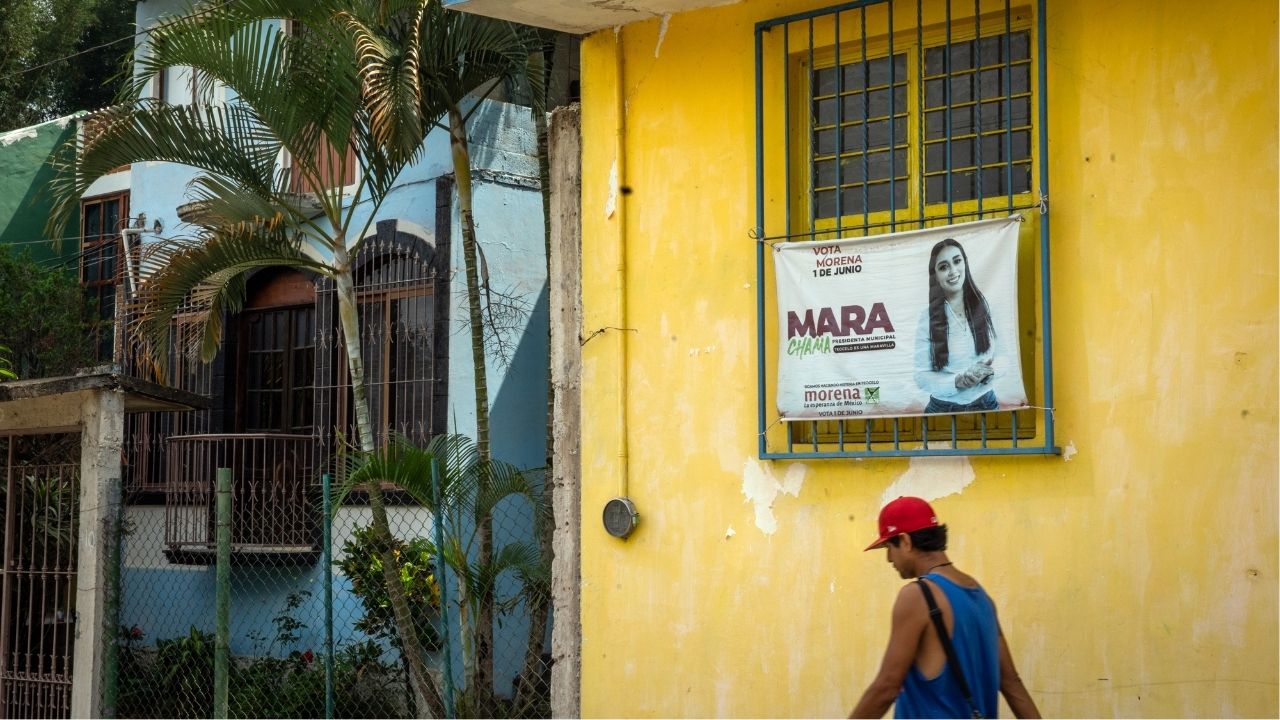
But Mara Chama Villa, who was running to represent the area in Congress with Mexico’s Ecologist Green Party — and whose father had been the mayor of Teocelo, a coffee-producing town in Veracruz state, the deadliest for journalists — felt targeted. She filed a complaint against Radio Teocelo and reporters from other outlets who had previously covered her failed attempt in 2021 to succeed her father as mayor.
Their coverage, she argued in legal filings reviewed by The New York Times, minimized her career and hurt her chances to win the election.
In April 2025, a federal court found five reporters guilty of gender-based political violence because they had “minimized” Chama Villa “by subordinating her to a male figure with political power,” the court said in its ruling.
Chama Villa did not respond to specific questions but said that her case “reflects situations that, unfortunately, many of us as women continue to face in politics.”
The penalties were sweeping: fines exceeding a month’s salary, mandatory public apologies, the deletion of the radio spot and all denounced articles and placement on a national registry of gender-violence offenders. When journalists, analysts and organizations across Mexico criticized the outcome, the dispute ballooned into a nationwide case targeting about 70 people.
“We hear all this talk about freedom of expression and the right to information, but it’s a dead letter,” said Élfego Riveros, the Radio Teocelo reporter who wrote and produced the spot. “The moment we point our finger at powerful groups and expose them to public scrutiny, they retaliate.”
‘The Fear Hasn’t Left Me’
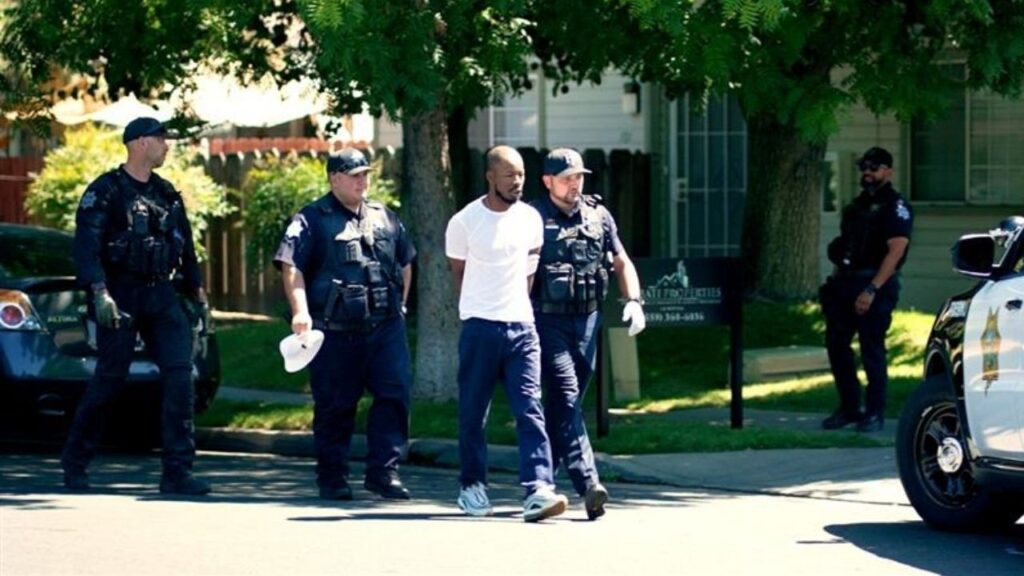
Last Christmas Eve, Rafael León, a crime reporter in the port city of Coatzacoalcos, thought he was being kidnapped when unmarked vehicles blocked his path and armed men dragged him from his car.
He was being arrested.
Veracruz state prosecutors charged him with terrorism, claiming his reporting on cartels caused public panic. They also accused him of obstruction, because he routinely beat police officers to crime scenes, and of taking cartel bribes. After Sheinbaum publicly questioned the legal basis for the prosecution, the terrorism charges were dropped.
The Veracruz attorney general’s office did not respond to a request for comment.
León, who denies the accusations against him, spent nearly a month under house arrest. He still faces other charges, and has stopped chasing stories as frequently.
“The fear hasn’t left me,” León said. “People notice it. They say I’m not the same.”
–
This article originally appeared in The New York Times.
By Emiliano Rodríguez Mega/Paulina Villegas/Marian Carrasquero
c.2026 The New York Times Company