
|
Getting your Trinity Audio player ready...
|
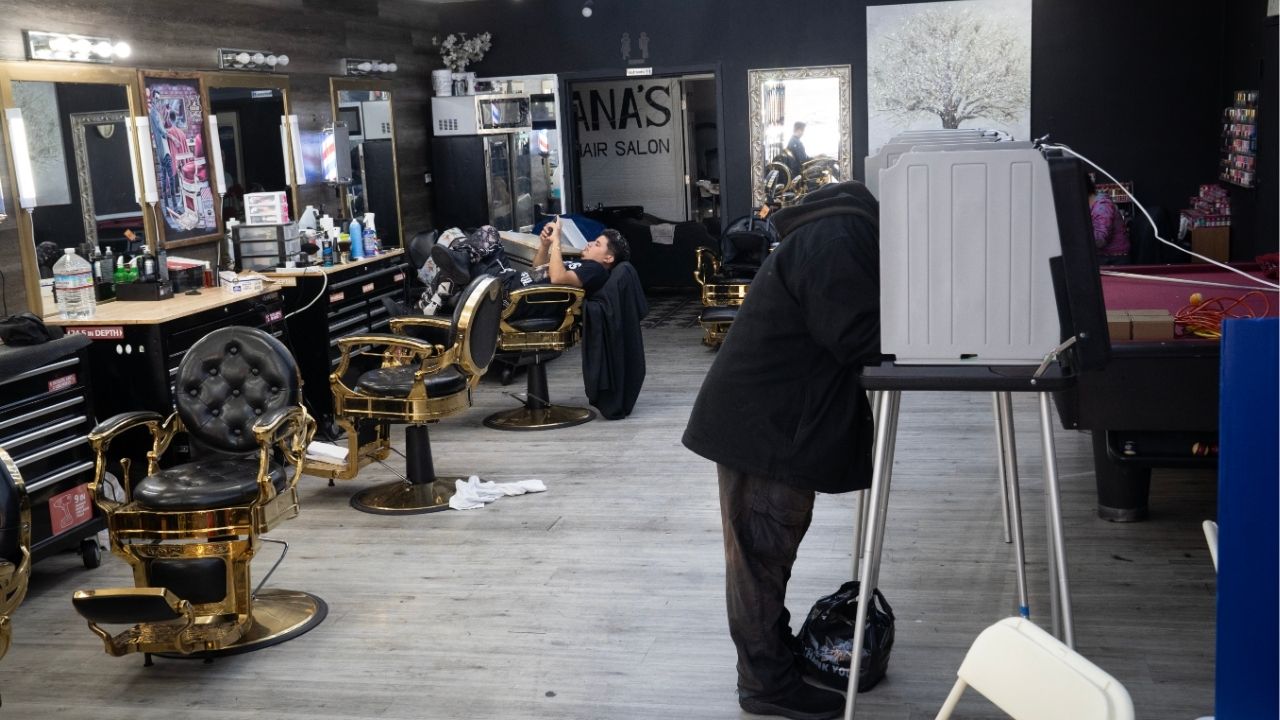
Californians say they can’t afford housing. They find gas prices too high. And when they were asked at the polls this month to pay higher taxes, fewer voters than usual were willing to do so in the liberal state.
In Riverside, residents voted against a sales tax increase that would have funded the Fire Department and other public services. In the Bay Area, voters in Contra Costa County rejected a sales tax hike to fund healthcare.
With most of the votes counted, the pass rate for about 90 local measures statewide has hovered around 60% — notably lower than the 75% that was typical, according to analysis by the California Taxpayers Association, a research group backed by California businesses, and Michael Coleman, a longtime chronicler of local tax measures.

The June results could be a concerning sign for California governments planning to ask voters to approve higher taxes in November, including one to sustain the Bay Area Rapid Transit system.
“Part of affordability is the affordability of taxes,” said Mark Baldassare, survey director at the Public Policy Institute of California. “People are now at the point of weighing the consequences of paying higher taxes and being more selective about what taxes they’ll want to pass.”
For years, a majority of Californians preferred a government that charged higher taxes and provided more services than a slimmer one with lower taxes, according to Baldassare’s polling. But that dynamic flipped in 2023, and the gap has only widened since, with that preference apparently growing even across party lines and regions of the state, Baldassare said.
In the June election, the tax and bond passage rate was lower than in almost any election in California dating back at least 20 years, according to data from Coleman, a municipal finance consultant who tracks tax measures. The only election with a lower passage rate was in March 2020, amid global panic about the COVID-19 pandemic and its effects on the stock market.
At the same time, poll after poll has shown that California voters care about affordability more than any other issue. A Public Policy Institute of California poll in May found that cost of living was the No. 1 issue for residents by far, with 44% saying so, compared with 5% each who said homelessness, immigration or threats to democracy were their top concerns.
“People are really voting based on their own particular situation,” said Dennis McLin, 43, a social worker who lives in Pomona, California. “For some, it’s ‘I’m going to eat today, or I’m not going to eat today.’”
Later this year, voters are expected to decide on whether to increase sales taxes in five Bay Area counties to avoid drastic cuts in Bay Area Rapid Transit, the massive rail system that has lost ridership and revenue since the pandemic. In one of the five counties, John Gioia, who sits on the Contra Costa County Board of Supervisors, said he was concerned about the BART measure after what happened in this month’s election.
Not only did Contra Costa voters reject the sales tax proposal, but they spurned a community college bond measure. And in the progressive city of El Cerrito, only 30% of voters supported a parcel tax to build a new library.
“This was the worst election cycle for tax measures that I’ve seen in a long time,” Gioia said. “I think we’re seeing voter fatigue on tax measures.”
Joel Kotkin, an urban studies professor at Chapman University said that Californians are not only concerned about affordability but have a growing distrust of government.
“I think there’s a sense of, particularly in certain areas, that government doesn’t do its job,” he said.
Still, Jeff Cretan, a spokesperson for the campaign behind the BART measure, said that in the five Bay Area counties, about three-quarters of tax proposals on the June ballot received at least 50% support. Some of those measures may fail because they needed 55% or more to pass, but the BART measure, he noted, only needs a majority to pass.
“There is still support for measures like this,” he said. “There’s support for public transit.”
In Los Angeles, a half-cent sales tax measure to help fund healthcare services squeaked by, with 50.6% of the vote in the heavily Democratic city.
Louise McCarthy, president of the Community Clinic Association of Los Angeles County, said that Measure ER was needed to prevent hospitals and clinics from cutting hours, laying off staff or even closing entirely after President Donald Trump cut federal healthcare funding last year, she said.
McCarthy, who backed the measure, said she knew proponents were competing with the price of gas — currently more than $5.50 per gallon in Los Angeles County — and general affordability concerns.
–
This article originally appeared in The New York Times.
By Soumya Karlamangla/Minh Connors
c.2026 The New York Times Company