
|
Getting your Trinity Audio player ready...
|
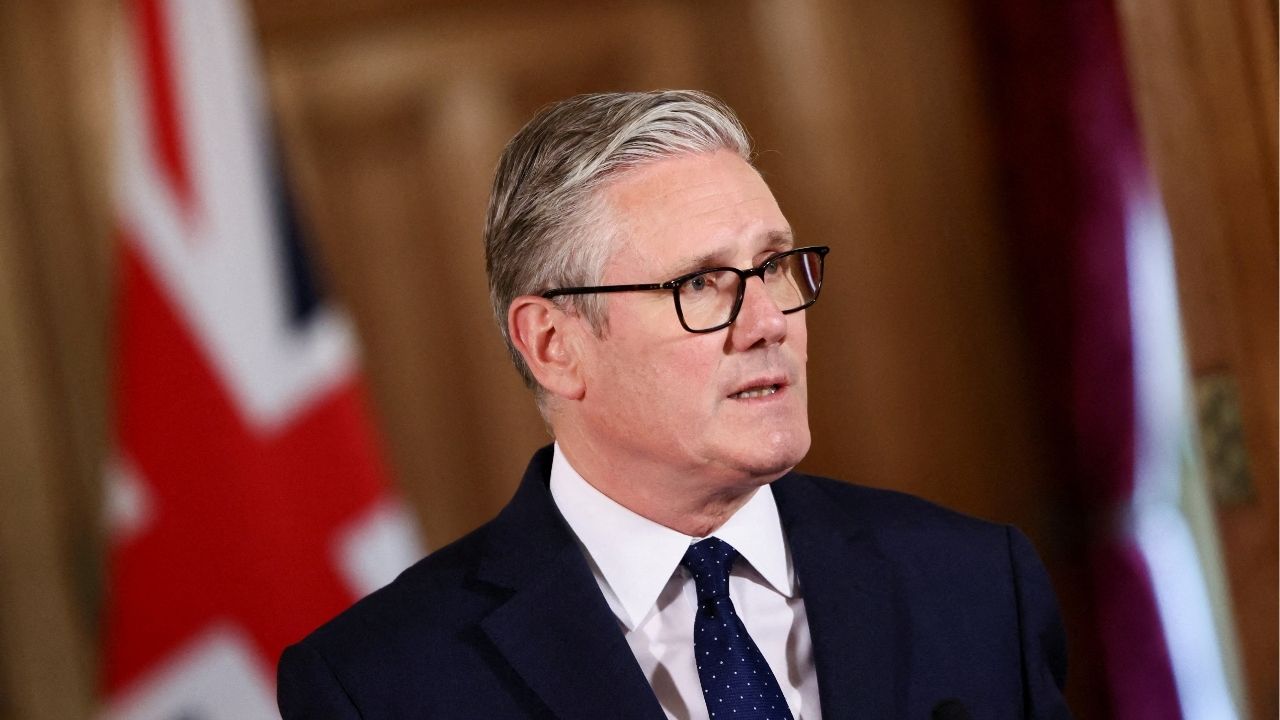
Keir Starmer came under renewed pressure on Monday when four ministerial aides stepped down and more than 60 Labor lawmakers publicly called for the British prime minister’s resignation after his appeal for another chance seemingly fell on deaf ears.
At an address to the party faithful in London, Starmer had made an impassioned plea to both his party and voters to stick with him and avoid a leadership contest he said would only bring chaos, promising to be bolder.
But his speech, in which he all but admitted he had been too timid in tackling the myriad of problems besetting Britain since he won a large majority in 2024, did little to ease the anger felt over one of the worst defeats for Labor in last week’s local elections.

Four ministerial aides said they were resigning, believing that Starmer, 63, was not the man to lead Labor into the next national election, due in 2029, and hoping to trigger a leadership contest that could last weeks, if not months.
PM Has Lost Authority, Says Ministerial Aide
“It is clear to me that the prime minister has lost authority not just within the parliamentary Labor Party but across the country and that he will not be able to regain it,” said Tom Rutland, a ministerial aide to the environment minister, in his resignation letter.
Catherine West, a little-known former junior minister who broke cover at the weekend to threaten to seek a leadership contest if Starmer failed to offer radical change, told Reuters she had received 80 responses supporting her demand that the prime minister set out a timetable for his departure.
She called for a leadership election to happen in September.
Two of Starmer’s closest allies, environment minister Steve Reed and defense minister John Healey, entered the prime minister’s Downing Street office late on Monday, according to Sky News. Officials did not respond to a request for comment on whether it was a scheduled meeting.
Earlier, Starmer had tried to change the narrative about his premiership, arguing that he would now offer a “complete break” with the decision-making of the past that led to the “status quo”.
On any leadership bid, he said continuity was more important now with a global backdrop of conflicts in Ukraine and Iran.
Starmer promised to govern with the “hope” and “urgency” required to improve living standards and produce a “stronger, fairer” Britain to try to crush the challenge posed by the populist Reform UK party on the right, and the Greens from the left before the next national election.
‘I Will Prove Them Wrong’
“Our response this time must be different, a complete break. We must make this country stronger and take control of our economic security,” Starmer said earlier on Monday.
“I know that people are frustrated by the state of Britain. Frustrated by politics, and some people are frustrated with me,” he said. “I know I have my doubters and I know I need to prove them wrong. And I will,” Starmer told an audience of party faithful, who offered him several standing ovations.
The applause was a long way from the messaging groups of Labor lawmakers, where talk about removing Starmer has stepped up a gear after the party lost hundreds of seats in elections to councils in England and the parliaments in Scotland and Wales.
While there were few Labour lawmakers who were prepared to publicly endorse Starmer, the prime minister’s closest allies again warned against removing a leader this early into his premiership, saying it would only further harm Britain.
“Changing leader just leads to chaos. We saw what happened under the Tories. Let’s learn from their mistakes, not repeat them,” Reed said on social media, referring to the opposition Conservative Party.
Angela Rayner, former deputy prime minister seen as a potential challenger for the leadership after criticizing Starmer’s operation on Sunday, told a union conference the government “will be judged on actions and not just our words”.
Starmer has long said he would not leave his job voluntarily, and his team said the speech was a way of showing the often quietly spoken former lawyer was resolute in delivering not only for his party, but the wider country.
In it he promised to build closer ties with Europe, to nationalize a key steel business and to do more to help young people get into work.
“I’m not going to walk away,” Starmer said.
“I think what we witnessed with the last government was the chaos of constantly changing leaders,” he said, referring to Conservative governments which saw five different leaders in just over six years.
(Reporting by Elizabeth Piper, Andrew MacAskill and Sam Tabahriti; additional reporting by Alistair Smout, Sarah Young and Muvija M; writing by Elizabeth Piper; Editing by Michael Holden, Alex Richardson, Kate Holton and Daniel Wallis)