
|
Getting your Trinity Audio player ready...
|
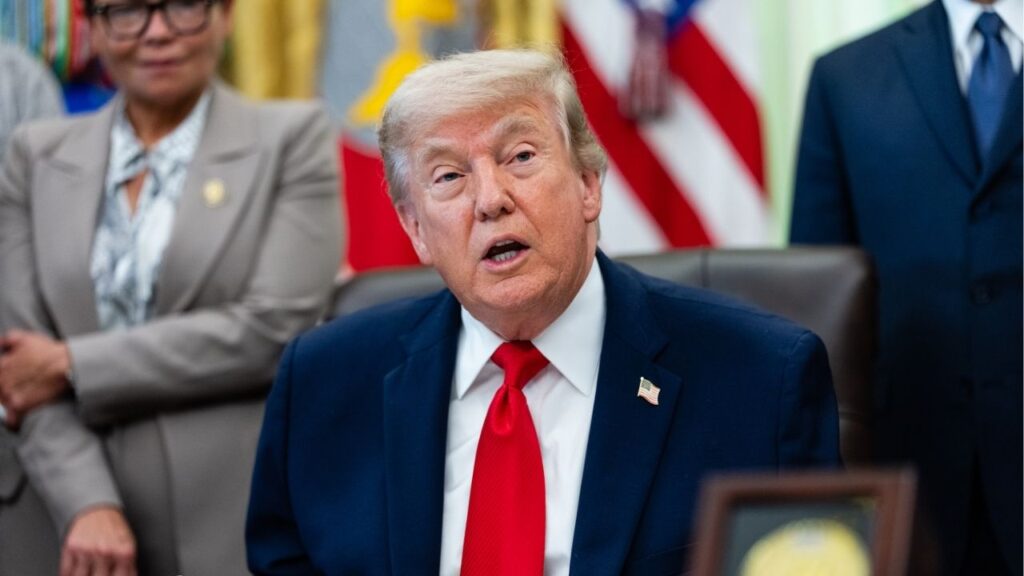
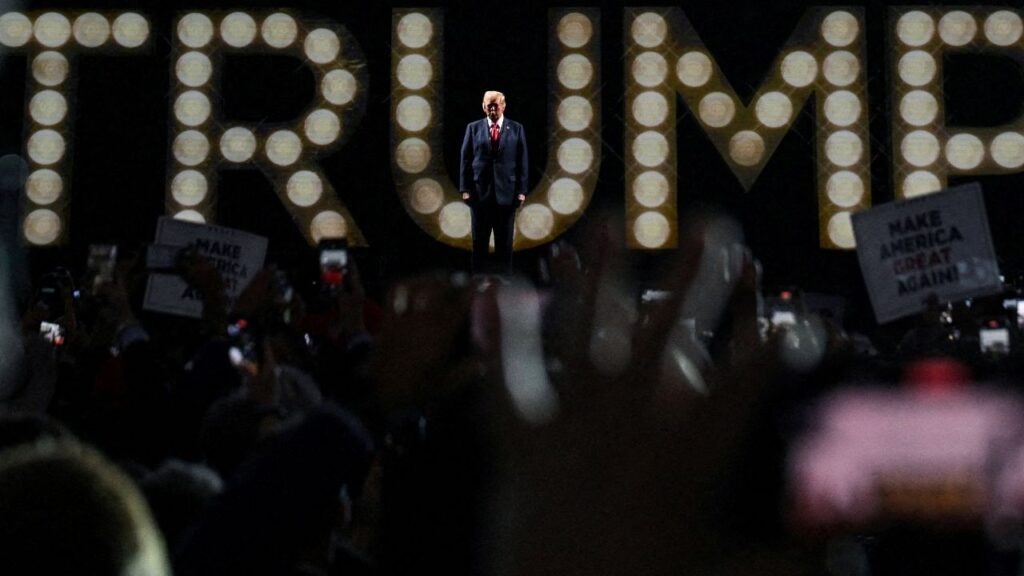
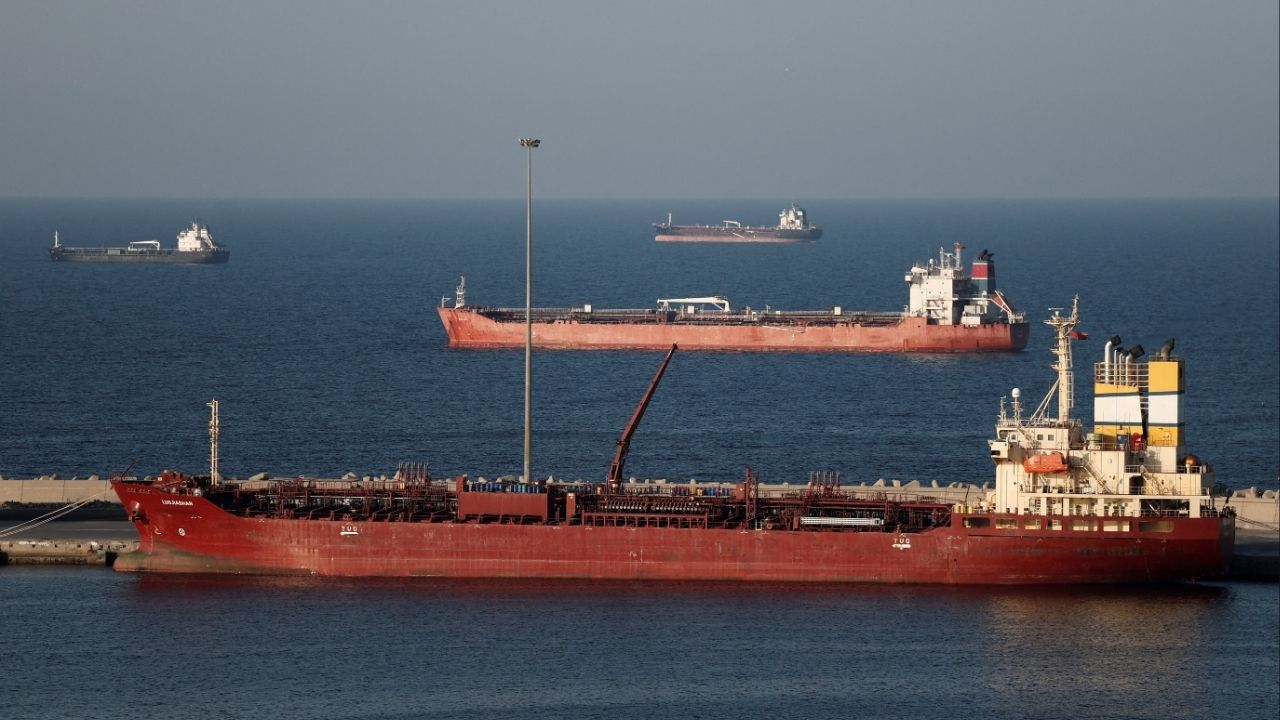
President Donald Trump said on Thursday the U.S. was willing to escort ships through the Strait of Hormuz to protect them from Iranian attack, as his administration searches for ways to ease high oil prices fueled by the U.S.-Israeli war on Iran.
Trump issued a temporary waiver for some purchases of sanctioned Russian oil, a move that drew criticism from U.S. allies in Europe for potentially helping Russia fund its war with Ukraine.
Prices have been whipsawing on Trump’s changing comments on the likely duration of the Iran war, which has prompted Iran to attack vessels in the strait, the conduit for a fifth of the world’s oil.

Trump has previously said the war is “complete”, and also promised to guarantee the safety of vessels in the strait.
“We would do it if we needed to. But, you know, hopefully things are going to go very well. We’re going to see what happens,” Trump said in a Fox News interview that was recorded on Thursday and aired on Friday.
Iran’s attacks on shipping were “a last-ditch effort,” he said, and the U.S. would continue to hit Iran “very hard over the next week.”
Crude oil prices climbed higher on Friday. Brent futures were up 2.68% to 103.14 a barrel. [O/R]
War on Iran Extends Across Middle East
After nearly two weeks of war, 2,000 people have been killed, most of them in Iran, but many also in Lebanon and a growing number in the Gulf, which has for the first time in decades of Middle East conflicts found itself on the front line.
Several million people have been displaced from their homes. As Israeli warplanes pounded Beirut’s suburbs with air strikes, Lebanon’s interior minister said authorities were unable to accommodate the hundreds of thousands of people who have sought refuge in the capital.
Israel also dropped leaflets threatening Gaza-scale devastation as it deployed more troops to fight Iran-backed Hezbollah and warned of more attacks on Lebanon’s infrastructure.
U.S. forces have also suffered casualties. The U.S. military confirmed that all six crew members aboard a refueling aircraft that crashed in western Iraq were dead.
Iran fired more missiles and drones at Israel, and Iranian drones were reported flying into Kuwait, Iraq, the United Arab Emirates, Bahrain and Oman.
The Israeli military launched strikes across Tehran. It said its air force had struck more than 200 targets in western and central Iran over the past day, including ballistic missile launchers, air-defense systems and weapons production sites.
Iranian Press TV said a woman was killed by an airstrike close to a rally in Tehran for Quds (Jerusalem) Day, one of many across Iran in support of Palestinians living in Israeli-occupied territory.
Iranian President Masoud Pezeshkian, Foreign Minister Abbas Araqchi and security chief Ali Larijani all appeared in videos verified by Reuters openly attending the rally in a gesture of defiance, despite an assertion by U.S. Defense Secretary Peter Hegseth that the leadership was “cowering” underground.
“People are not afraid of these attacks. As you can see, people have come out in this rain, under these hardships,” judiciary chief Gholamhossein Mohseni-Ejei said at the march. “We will not back down in any way.”
Iran’s New Leader Vows to Keep Strait Shut
Iran’s new supreme leader, Mojtaba Khamenei, in his first public comments on Thursday, vowed to keep the Strait of Hormuz shut and urged neighboring countries to close U.S. bases on their territory or risk being attacked themselves.
Khamenei’s comments were read out by a television presenter and it was not clear why he had not appeared in person or recorded his comments.
Hegseth told a news briefing that the U.S. knew he was “wounded and likely disfigured”. An Iranian official told Reuters on Wednesday that Khamenei was lightly injured but continuing to work.
Hegseth said the U.S. has not seen clear evidence that Iran was laying mines in the Strait of Hormuz, but said the only thing preventing traffic in the key waterway was Iranian attacks on ships. He did not detail what Washington planned to do to secure it.
European powers are trying to work out how to defend their interests, and France has been consulting with European, Asian and Gulf Arab states over the past week with a view to putting together a plan for warships eventually to escort tankers through the strait, French officials said.
With gasoline and diesel prices rising at pumps in the United States and around the world, the U.S. on Thursday issued a 30-day license for countries to buy Russian oil and petroleum products already at sea – where it is not uncommon for consignments to be sold or change their buyer.
Vice President JD Vance on Friday said senior Trump officials were working on addressing rising oil prices as well as other effects of the Iran conflict.
“When the President takes action to make sure the American people are safe, we’ve got to do everything that we can to deal with the consequences of that economically,” Vance said during a visit to Rocky Mount, North Carolina.
The International Energy Agency said on Thursday the war was creating the biggest oil supply disruption in history.
The war has sparked a critical shortage of cooking gas in India, a country with longstanding ties to Iran. Iran has allowed two Indian-flagged liquefied petroleum gas carriers to sail through the Strait of Hormuz, four sources told Reuters.
Ukraine and Europe Angered by US Easing Sanctions
The U.S. waiver on Russian oil was welcomed in Moscow but left Kyiv and its allies angry.
“Six members of the G7 expressed a very clear opinion that this was not the right signal,” German Chancellor Friedrich Merz told a press conference in Norway. “We then learned this morning that the American government has apparently decided otherwise.”
Ukrainian President Volodymyr Zelenskiy said the move could provide Russia with $10 billion, adding: “It certainly does not help peace.”
Trump said he thinks Russian President Vladimir Putin may be helping Iran a “little bit” in the interview with Fox News Radio that aired on Friday.
—
(Reporting by Reuters bureaux; writing by Patricia Zengerle, Lincoln Feast, Kevin Liffey, Matthias Williams and Simon Lewis; Editing by William Maclean, Sharon Singleton and Cynthia Osterman)