



|
Getting your Trinity Audio player ready...
|
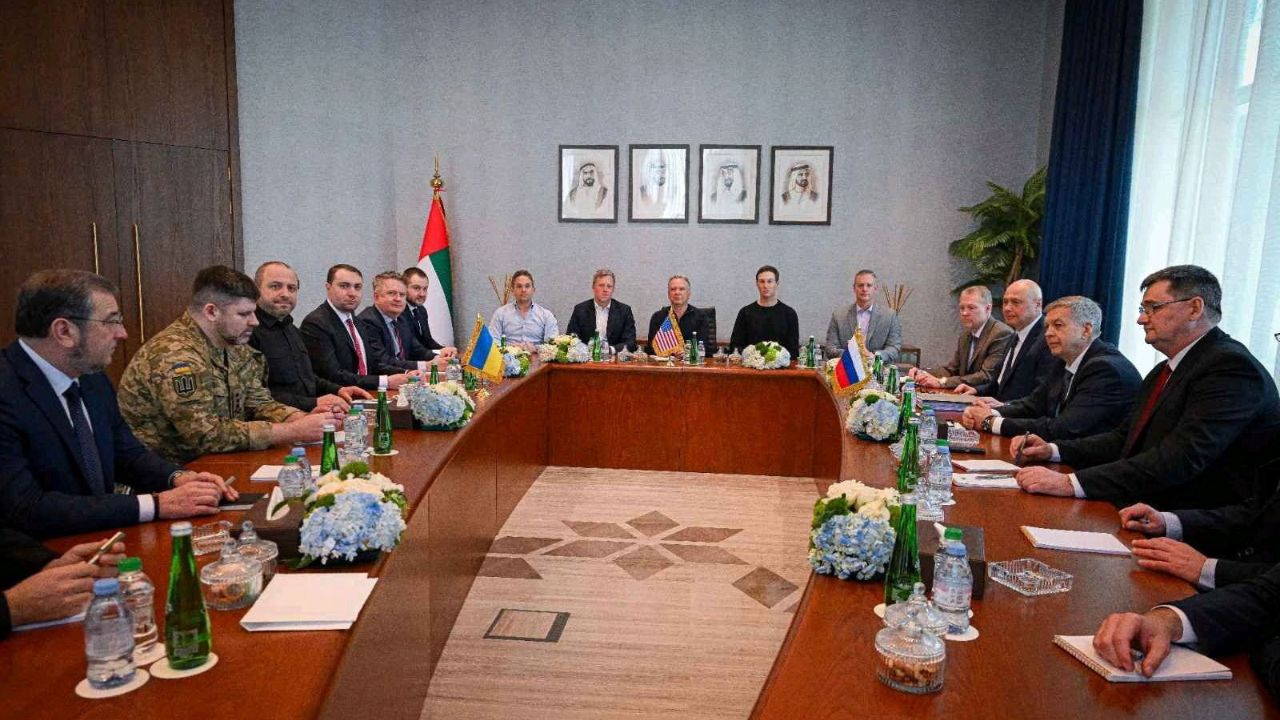
KYIV, Jan 24 – Ukraine and Russia ended a second day of U.S.-brokered talks in Abu Dhabi on Saturday without a deal but with more talks expected next weekend, even as overnight Russian airstrikes knocked out power for over a million Ukrainians amid subzero winter cold.
Statements after the conclusion of the talks did not indicate that any agreements had been reached, but Moscow and Kyiv both said they were open to further dialogue.
“The central focus of the discussions was the possible parameters for ending the war,” President Volodymyr Zelenskiy wrote on X after the meeting.

More discussions were expected next Sunday in Abu Dhabi, said a U.S. official who spoke to reporters immediately after the talks.
“We saw a lot of respect in the room between the parties because they were really looking to find solutions,” said the official, speaking on condition of anonymity.
“We got to real granular detail and (we feel) that next Sunday will be, God willing, another meeting where we push this deal towards its final culmination.”
A UAE government spokesperson said there was face-to-face engagement between Ukraine and Russia — rare in the almost four-year-old war triggered by a full-scale Russian invasion — and negotiators tackled “outstanding elements” of Washington’s peace framework.
Looking beyond next week’s negotiations in Abu Dhabi, the U.S. official voiced hopes for further talks, possibly in Moscow or Kyiv.
“Those sorts of meetings have to happen, in our view, before we get a bilateral between (Russian President Vladimir) Putin and Zelenskiy, or a trilateral with Putin, Zelenskiy and President Trump. But I don’t think we’re so far away from that,” the official said.
Bombardment of Ukraine Before Second Day of Talks
The bombardment of Ukraine’s capital Kyiv and its second-largest city Kharkiv by hundreds of Russian drones and missiles prompted Foreign Minister Andrii Sybiha – who was not at the talks – to accuse Putin of acting “cynically”.
“This barbaric attack once again proves that Putin’s place is not at (U.S. President Donald Trump’s) Board of Peace, but in the dock of the special tribunal,” Sybiha wrote on X.
“His missiles hit not only our people, but also the negotiation table.”
Saturday was scheduled to be the final day of the talks, billed by Zelenskiy as the first trilateral meeting under the U.S.-mediated peace process.
The UAE statement said the talks were conducted in a “constructive and positive atmosphere” and included discussions about confidence-building measures.
Kyiv is under mounting Trump administration pressure to make concessions to reach a deal to end Europe’s deadliest and most destructive conflict since World War Two.
U.S. peace envoy Steve Witkoff said at the annual World Economic Forum in Davos this week that a lot of progress had been made in the talks and only one sticking point remained. However, Russian officials have sounded more sceptical.
Russia Wants All Russia Wants All of Donbas
After Saturday’s talks, Zelenskiy said the U.S. delegation had raised the issue of “potential formats for formalising the parameters for ending the war, as well as the security conditions required to achieve this”.
The U.S. official said the proposed security protocols were widely seen as “very, very strong.”
“The Ukrainians and many of the national security advisors of all the European countries have reviewed these security protocols. And to a person, and this includes NATO, including (NATO Secretary General) Mark Rutte, they have expressed the fact that they’ve never seen security protocols this robust,” the official said.
Ahead of the discussions, Kremlin spokesman Dmitry Peskov said on Friday Russia had not dropped its insistence on Ukraine yielding all of its eastern area of Donbas, the industrial heartland grouping the regions of Donetsk and Luhansk.
Putin’s demand that Ukraine surrender the 20% it still holds of Donetsk – about 5,000 sq km (1,900 sq miles) – has proven a major stumbling block to any deal. Most countries recognise Donetsk as part of Ukraine. Putin says Donetsk is part of Russia’s “historical lands”.
Zelenskiy has ruled out giving up territory that Russia has not been able to capture in four years of grinding, attritional warfare against a much smaller foe. Polls show little appetite among Ukrainians for any territorial concessions.
Russia says it wants a diplomatic solution but will keep working to achieve its goals by military means as long as a negotiated solution remains elusive.
Umerov, the secretary of Ukraine’s National Security and Defence Council, said late on Friday that the first day of talks had addressed parameters for ending the war and the “further logic of the negotiation process.”
Meanwhile, Ukraine came under renewed Russian bombardment.
Ukraine’s air force said Russia had launched 375 drones and 21 missiles in the overnight salvo, which once again targeted energy infrastructure, knocking out power and heat for large parts of Kyiv, the capital. At least one person was killed and over 30 injured.
Before Saturday’s bombardment, Kyiv had already endured two mass overnight attacks since the New Year that cut electricity and heating to hundreds of residential buildings. Ukraine’s deputy prime minister said on Saturday that 800,000 people in Kyiv – where temperatures were around -10 degrees Celsius – had been left without power after the latest Russian assault.
Zelenskiy said on Saturday Russia’s heavy overnight strikes showed that agreements on further air defence support made with Trump in Davos this week must be “fully implemented”.
—
(Reporting by Max Hunder and Yuliia Dysa in Kyiv, Maha El Dahan in Abu Dhabi, Phil Stewart in Washington; writing by Max Hunder, Daniel Flynn and Phil Stewart; editing by Joe Bavier, Mark Heinrich, Sergio Non and Diane Craft)