
|
Getting your Trinity Audio player ready...
|
WASHINGTON — Weeks after voters lashed out at data centers in the midterms, Congress is debating a sweeping overhaul of federal permitting rules that could help tech companies more quickly build the facilities.
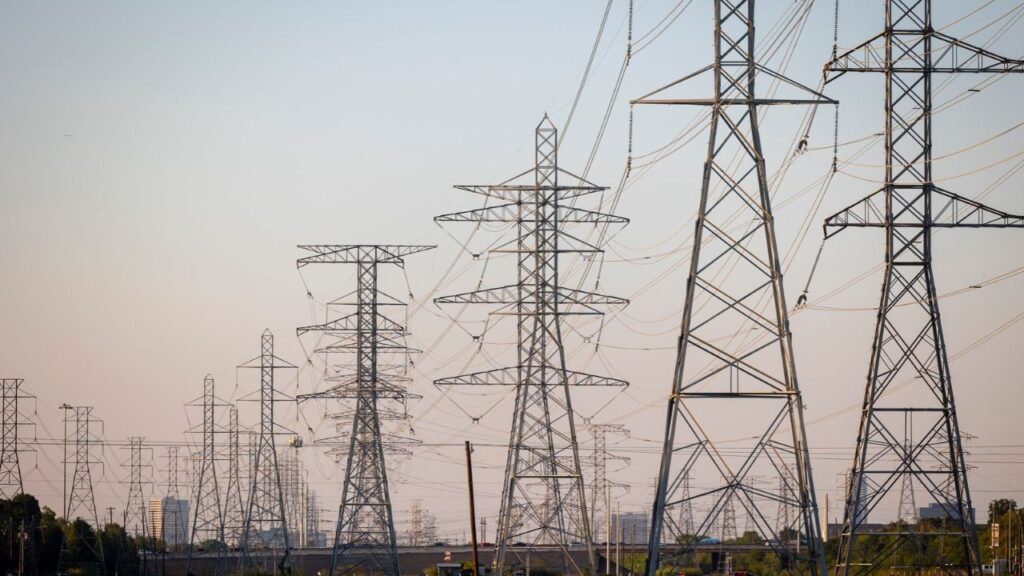
The bill would speed up federal environmental reviews of a variety of energy projects, including transmission lines and gas pipelines, making it easier for developers to get the power they need to run data centers.
But that help comes with a huge catch: Data centers would also have to pay much more for their electricity under a provision in the bill that would charge the facilities extra for access to the electric grid. That measure would upend decades of federal power rules and potentially save billions of dollars over the next decade for households and other ratepayers.

The push to impose higher costs on data centers underscores how thorny the politics around artificial intelligence has become in Washington. Massive, energy-hungry data centers are spreading rapidly across the country, straining electrical networks and triggering anger in many communities. Voters this month approved at least 40 local ballot initiatives to restrict the facilities.
Some environmentalists who oppose the permitting bill have cast it as a boon to tech companies, arguing that the legislation could accelerate the development of data centers powered by natural gas. The bill would pare back federal environmental laws to speed construction of many types of projects, including gas pipelines, wind and solar projects, high-voltage transmission lines, roads, public transit and housing.
By contrast, supporters have framed the bill as an opportunity to get tough on AI firms.
“The day of data center freeloading ends when this bill passes,” said Sen. Sheldon Whitehouse, D-R.I., a co-author of the bill. “Data centers now have to pay for the extra costs that they bring to the grid when they come online. They do not get to have all that extra cost dumped out onto the utility’s rate base and picked up by all of the other ratepayers.”
The data center industry, for its part, has stayed relatively quiet. While numerous business groups, labor unions and some Silicon Valley companies have endorsed the bill, a leading data center trade group has not. The Data Center Coalition, whose members include Amazon, Google, Meta and Microsoft, said it was still reviewing the legislation.
“We are continuing to evaluate its implications with our members, who are doing their part to address affordability and economic growth by investing hundreds of billions of dollars in the U.S. annually,” said Jon Hukill, a spokesperson for the coalition.
Many data centers being developed to train and run cutting-edge AI models can use as much electricity as small cities, which has triggered debates over who should pay for the billions of dollars in power plants and transmission lines they need.
Historically, utilities have spread the cost of electrical grid upgrades among all their customers. But as anger over data centers has swelled, President Donald Trump and various governors have urged tech giants to pick up the tab and not pass these costs onto households. Most AI companies have promised to do so, although these so-called ratepayer protection pledges can be difficult to enforce.
Tucked inside the 494-page permitting bill are several provisions aimed at putting teeth into those pledges.
One measure would direct the Federal Energy Regulatory Commission to issue new rules within 90 days that would charge data centers both the costs of any grid upgrades needed to serve them and the costs of using the existing electrical network.
That would overturn long-standing regulatory principles, dating back to 1994, that forbid utilities from charging customers twice for the same grid capacity. In effect, the bill says that large data centers are different and should be charged potentially double what they pay now.
“It’s a large shift away from how we’ve governed the grid to date, where the benefits of the grid are broadly shared and we socialize the costs,” said Robin Millican, director of research programs and strategic partnerships at Columbia University’s Center on Global Energy Policy.
Other provisions would give state regulators more leeway to charge data centers extra for the power plants they need and use the money to credit household bills. The federal government would also, for the first time, be required to track data center energy use.
Politicians have singled out data centers partly because the sheer scale of the AI boom threatens to overwhelm electric grids. Tech giants have also put a premium on speed and are often willing to pay more to get power sooner.
The federal grid rules alone could force data centers to pay an extra $35 billion over the next 10 years, according to a report from Grid Strategies, a consulting firm. That money could help offset transmission costs for other customers. It could also be enough to finance thousands of miles of new high-voltage power lines.
If states were to take full advantage of the bill’s other provisions, they could raise an additional $136 billion, the report estimated.
Still, there are questions about how the new rules would work in practice. For instance, Texas is one of the largest data center hubs, but the Federal Energy Regulatory Commission lacks authority over the main grid in Texas, ERCOT, and it’s unclear whether the measure would have an effect there. Some state utility commissions would also need to work through details on how to assign transmission costs.
One big unknown is whether charging data centers more for electricity might encourage tech companies to abandon the grid and build their own polluting power plants instead.
The permitting bill could make it harder for environmental groups to sue to block those projects by scaling back laws like the National Environmental Policy Act and the National Historic Preservation Act. It could also hinder future presidents from rescinding federal permits for data centers or imposing a moratorium on public lands.
But the bill would not affect many of the state and local permits that data centers need or prevent communities from imposing their own restrictions.
—
This article originally appeared in The New York Times.
By Brad Plumer/Annie Mulligan
c. 2026 The New York Times Company