
|
Getting your Trinity Audio player ready...
|
BEIRUT — A Saudi court has sentenced a domestic worker from Kenya to 100 lashes for giving birth outside marriage.
The ruling, issued last month, shows the limits of a decade of social and legal reforms in a kingdom where women can be jailed and punished for “illegal pregnancy.” The sentence is a harsh turn in what has been a terrifying ordeal for a mother who has tried for more than a year to return to Kenya with her child but has been blocked at every turn.
The mother, Esther Wanja Muthoni, is one of thousands of East African domestic workers who were recruited to work as housekeepers and nannies in Saudi Arabia. A New York Times investigation last year showed how Muthoni and others wind up trapped in a bureaucratic maze if they become pregnant.

Muthoni and her 1-year-old son, Abudy, are victims of an exploitative industry that recruits African women to Saudi Arabia in a labor pipeline from which top Kenyan government officials profit. Hundreds of Kenyan women have been killed, and reports of rapes and beatings are common.
For women who become pregnant, giving birth brings added punishment. The children of unwed mothers are routinely deprived of birth certificates in Saudi Arabia. Kenya’s diplomats, who could issue birth certificates and help mothers and children get home, instead frequently ignore them, insult them, and solicit bribes or sex.
“I am so afraid,” Muthoni, 40, said in a phone interview last month. “I don’t think I can endure those lashes.”
Under Saudi law, women are to be seated and clothed while lashed across the body with a bamboo stick.
Muthoni was working legally as a domestic worker through Maharah Human Resources, a Saudi corporation, when she became pregnant during a brief relationship with an Egyptian resident of the kingdom.
She gave birth in August 2025 in staff housing. After a supervisor discovered them and took them to a hospital, police officers detained her for questioning about the pregnancy. In statements to the police, Muthoni said that the father, a man named Mohamud, had left the country. (Court documents did not include a surname.)
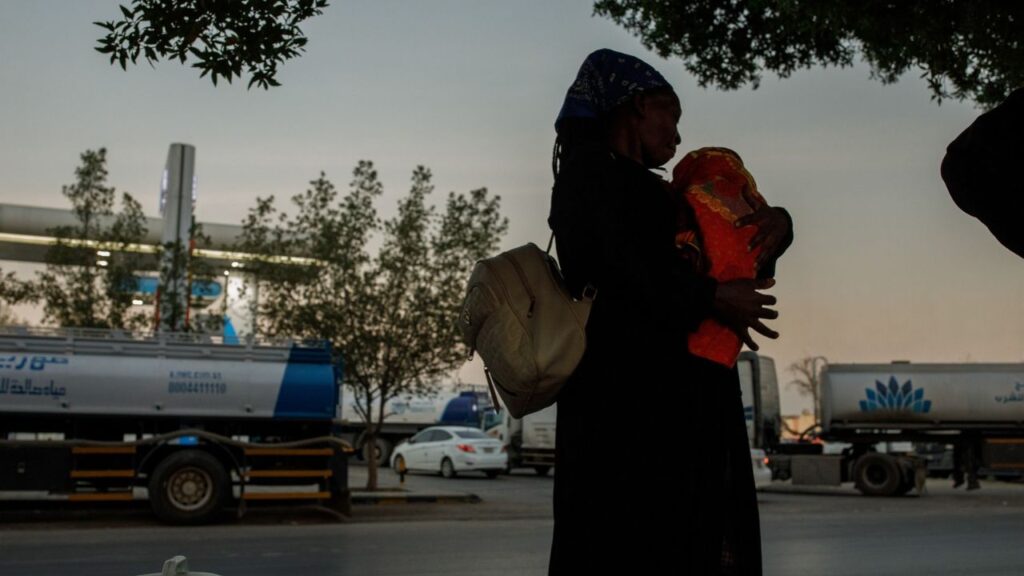
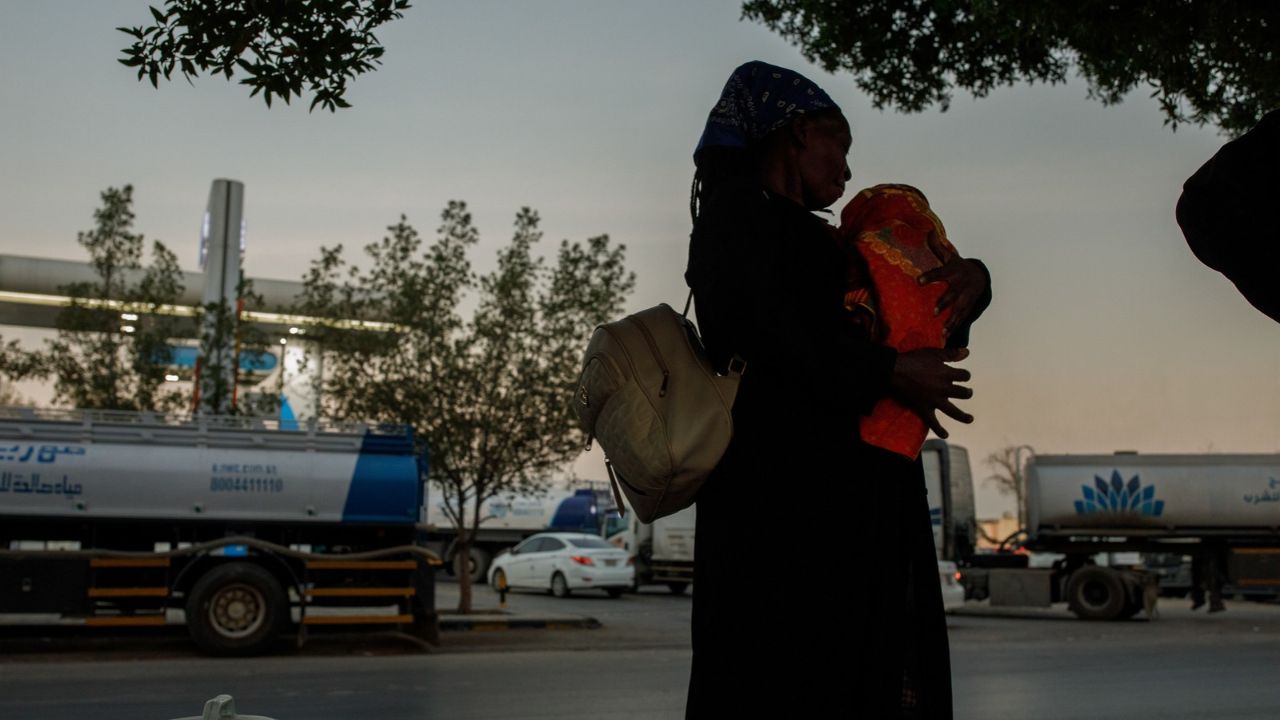
She was released but was turned away from staff housing and a shelter. She received no help from the Kenyan Embassy. She ended up living at a gas station that had become a gathering place for migrant mothers, many of whom hoped to be deported with their children.
After the Times coverage last year, Maharah provided her with lodging, and the Kenyan Embassy provided documents permitting her to depart the country. But she could not leave Saudi Arabia while the legal case against her was pending.
The Saudi and Kenyan governments did not respond to requests for comment, nor did representatives for Maharah.
Proceedings unfolded over multiple hearings during the summer before a three-judge panel at a criminal court in Riyadh, court documents show.
Muthoni said she had been provided with a court translator but not a lawyer. Court documents appeared to confirm her account, showing no evidence of legal representation.
Indigent defendants in Saudi criminal cases are entitled to state-sponsored lawyers. In practice, trials often proceed without them, even in some capital cases, according to experts.
Sex outside marriage and unwed pregnancy are effectively in a legal gray area. The Times interviewed many unmarried mothers last year who said they faced no repercussions. It is unclear why Muthoni was prosecuted while others were not. Her prosecution was underway before the Times published its report.
“I don’t deserve this,” she said of the lashings in a recent interview.
Saudi Arabia’s legal system is rooted in Islamic law, or Shariah, which forms the foundation of its judicial system. Because the kingdom has no written penal code, judges interpret Islamic law as they see fit. The boundaries of permissible behavior are fuzzy. Years of government efforts to draft a penal code appear to have stalled.
In October, the court found Muthoni guilty of having had sex outside marriage.
The judges relied on an orthodox interpretation of Islamic law that prescribes 100 lashes based on a verse in the Quran. The court judgment does not indicate that authorities pursued the father.
“This sentence of flogging does not align with international human rights standards,” said Ekaterina Porras Sivolobova, a labor migration analyst and founder of the nonprofit Do Bold, who has worked with stranded East African mothers across the Gulf.
She added: “It strips a mother of her dignity and does the opposite of protecting vulnerable women. It targets them.”
The sentence highlights inconsistencies in the kingdom’s reforms. Courts used to mete out lashes frequently, but in 2020, the government announced significant curbs to the sentence. State-owned media promoted it as a “landmark decision.”
Saudi and international news outlets gave the impression that flogging had been abolished. But the decision left a loophole for cases in which Islamic law prescribes flogging, including for sex outside marriage. Because judgments for morality crimes are not regularly published, it is impossible to say how often lashing is still ordered.
With no lawyer to help her, Muthoni, a mother of five, did not appeal. “It is the only way that can take me back home to my children,” she said.
It is unclear when the lashing will take place or what will happen next. The Kenyan exit documents have expired, so it is not clear whether or how she and Abudy will be allowed to return to Kenya.
In addition to the lashes, the court sentenced Muthoni to a year of banishment. Under Saudi rules, if a judgment does not specify a destination, the person is generally sent to another Saudi city. Courts can review such sentences if women have no male relatives to accompany them.
It was not clear whether this meant Muthoni would be deported to Kenya.
—
This article originally appeared in The New York Times.
By Abdi Latif Dahir and Vivian Nereim/Iman Al-Dabbagh
c. 2026 The New York Times Company