

|
Getting your Trinity Audio player ready...
|
For the second year in a row, Fresno County holds the title of top ag producer in the nation with crop values in 2025 approaching $10 billion.
The $9.6 billion reported across 300 commodities in the most recent crop report by Fresno County Ag Commissioner Melissa Cregan at the Nov. 3 Board of Supervisors meeting also includes another first — four crops exceeding more than $1 billion each.
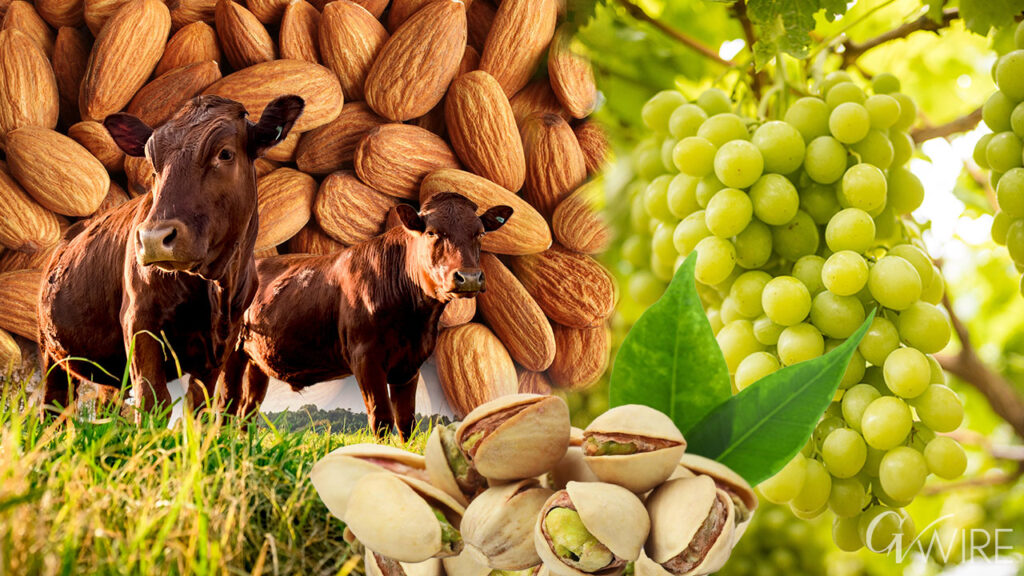
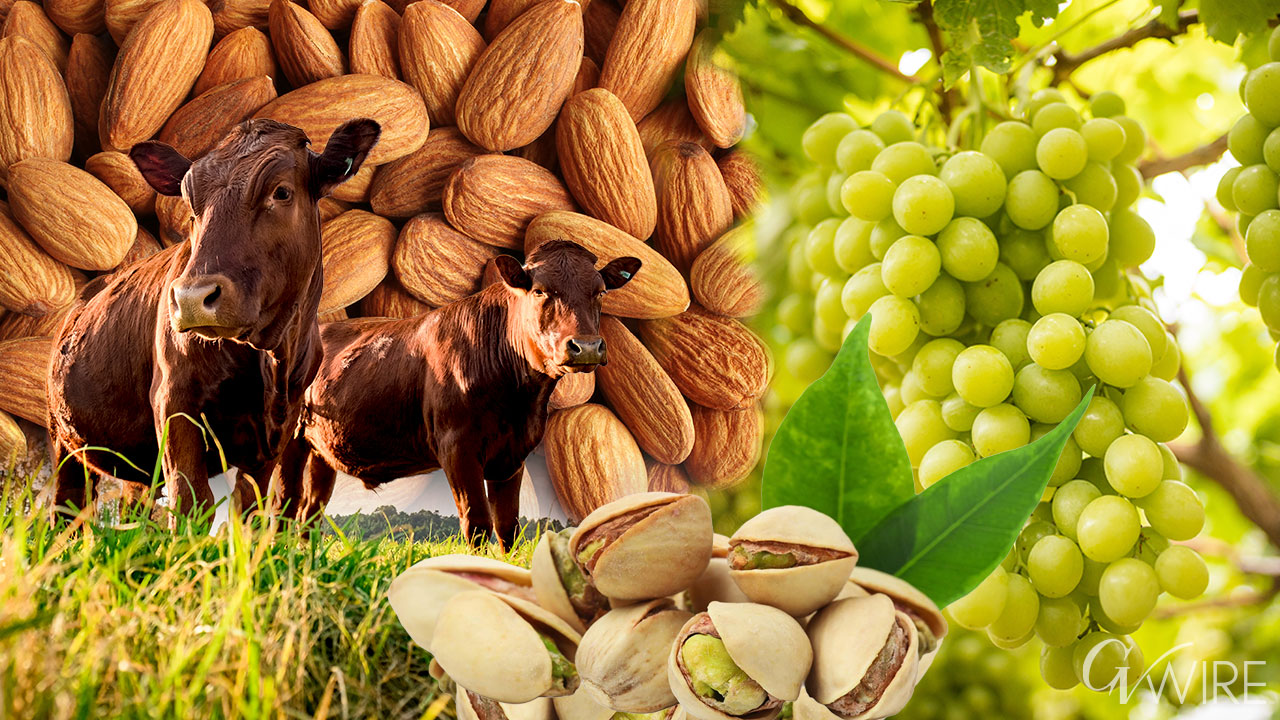
“Almonds retained the top spot at $1.75 billion, and pistachios overtook the second spot this year to have a value of $1.2 billion. Grapes dropped to the No. 3 spot at just over $1 billion, and cattle and calves snuck into the No. 4 spot with $1.013 billion,” Cregan said. “For pistachios and cattle and calves, that’s the first time on record that they have surpassed a value of $1 billion.”

Tulare County grossed $9.1 billion in ag values while Kern County, which held the title in 2023, brought in $8.9 billion.
With Supervisors Buddy Mendes and Brian Pacheco leaving office, for the first time in decades there will not be a career farmer on the board.
Pacheco, a rancher, said jokingly that he expects the county to retain its title of top ag county in the nation.
“We expect our city people to maintain that or we’ll be on the other side of the podium asking ‘what did you guys do?'” Pacheco said.
Beef Prices Accelerate Cattle Values in Crop Report
The top four crops in the county were: Almonds at $1.75 billion, pistachios at $1.22 billion, grapes at $1.03 billion, and cattle at $1.01 billion.
Pistachios and cattle took standout positions in the crop report, helping accelerate Fresno County values last year. In 2024, neither product broke $900 million in values, but world events helped accelerate those values.
In 2024, avian flu devastated the cattle industry causing ranchers nationwide to cull herds, including in the San Joaquin Valley. Add that to soaring feed and fuel costs and U.S. consumers found themselves paying sharply higher beef prices at grocery stores, accounting for the nearly 40% jump in value from 2024 to 2025.
At 86.2 million head currently, the U.S. cattle herd size is the smallest it’s been since 1951, according to the U.S. Department of Agriculture. The industry also faces more intrinsic dilemmas with increased foreign competition, rising costs, and fewer and fewer ranchers, according to NPR.
Pistachios Headed for Troubled Market in 2027
Pistachio growers reported a boon in 2025, with values accelerating nearly 42% from the year before. New markets globally and new products — namely Dubai chocolate — combined with a bumper crop made for a historic jump in pistachio values in the U.S., sources told GV Wire earlier this year.
That trend continued into 2026 when global markets reported shortages from major producers Turkey and Iran, one of which had its economy devastated by war. The market will be challenged in 2027 as weather problems coupled with an off-year for production will likely lead to a crop “failure” less than half the size of the current crop on the market, according to RaboResearch senior analyst David Magaña.
With demand expected to continue, farmers in the San Joaquin Valley will be divided among the haves and the have-nots, depending largely on geography, Magaña told GV Wire earlier this year.
Already, growers in Arizona and the south Valley reported many pistachio orchards producing blanks — hulls without nuts, said Jim Zion, managing partner with Meridian Growers.
Kern, Tulare Counties Crop Reports
Milk continues to drive Tulare County farm values. A boost in production made up for the drop of $2.30 per hundredweight reported. In total, dairy farmers reported milk values in the county exceeding $2.3 billion.
Tulare County cattle continued to bolster ag values at nearly $1.57 billion. Oranges, grapes, and tangerines rounded out the top five.
Pistachios led the way for Kern County, nearly reaching $1.4 billion in value. Grapes ($1.4 billion), citrus ($1.2 billion), almonds ($1.1 billion), and carrots ($1 billion) made up the next most valuable crops in that county.
Farm Values Struggle to Keep Up with Inflation: Jacobsen
Ryan Jacobsen, CEO of the Fresno County Farm Bureau, said the record amount comes as farmers face record costs to produce.
Nationally, labor prices, machinery, packaging materials, and diesel have together caused average input costs to increase by about 85% over the last five years, Jacobsen said.
“(Crop values have) not remotely stayed up with inputs and inflationary costs that we’ve seen there that have really made it very difficult for a lot of farms to survive during these past five years,” Jacobsen told GV Wire.
Water regulations in California have been the most impactful factor in agriculture. With high irrigation costs, often it’s more profitable for farmers to keep land fallowed than grow anything, Jacobsen said.
Meteorologists expect a Super El Niño this year, but Jacobsen said farmers’ expectations are far more tempered about that probability than media reports make it out to be.
“We’re seeing (ocean) temperatures that are extraordinarily high, and that’s the difference in this one versus previous El Niño’s,” Jacobsen said. “But from a historical perspective, surface temperatures are 15% to 20%, 25% of the equation.”
Farmers Finding Alternative Uses for Agave: Woolf
Stuart Woolf, CEO of Woolf Farming, told supervisors at the Nov. 3 meeting about how farmers are putting fallowed land to use. Especially in western Fresno County, farmers have turned many acres into recharge land so rains can restore aquifers. Additionally, farmers have turned to solar power, putting up fields of panels to produce and power the county.
Woolf also drove recent interest in planting drought-tolerant crops such as agave, with dedicated space now approaching 1,000 acres, he told supervisors.
Talking with GV Wire earlier this year, he said his first agave plantings are getting close to maturation, meaning in a couple seasons, they’ll be ready for tequila-like distillation.
He told GV Wire his trial batches were good but not quite there yet.
Compared to other permanent crops, agave only requires about two-and-a-half inches of water each year, compared to almonds, which need 48 to 50 inches of water.
Pistachios use about 38 to 40 inches and row crops anywhere from 28 to 30, Woolf said.
“Agave likes it in California … we’re getting by with very, very little water,” he said.
Agave’s uses go beyond simply spirits, Woolf said. Being fibrous, they can be used in construction materials to act as a binder in combination with cement.
The succulent can also be used as a sweetener. While more calorically dense than other sweeteners, it ranks far lower on the glycemic index than most others. Woolf said agave also holds cultural significance with Latino communities throughout Fresno County, and he hears from rural mayors about interest in expanding acreage throughout the county.
“We hope that this crop continues to grow, we would love to see Fresno County become the Napa Valley of all things distilled spirits,” Woolf said.