
|
Getting your Trinity Audio player ready...
|
ABU DHABI, United Arab Emirates — For a year and a half, as the United States engaged Russia in on-again, off-again peace talks, the Trump administration held off on cutting any business deals with Moscow, insisting that the Kremlin first take concrete steps toward ending the war in Ukraine.
That all changed this fall. President Donald Trump brokered a deal to waive sanctions and import Russian diesel before the midterm elections. U.S. officials held talks on a range of possible deals, including the sale of the international assets of Russian energy giant Lukoil and the resumption of Russian gas exports to Europe.
U.S. officials argued that the frenzy of potential dealmaking could build goodwill and help compel the Kremlin to stop fighting. But the inducements have done little to curb Russian President Vladimir Putin’s central demands on the war, which include placing limits on Ukraine’s defenses and alliances and broadly reordering the security architecture in Europe.

Those demands are at the center of peace talks between Russian and Ukrainian officials that Steve Witkoff and Jared Kushner, Trump’s envoys, are convening Tuesday and Wednesday in the United Arab Emirates. The talks, the first since February involving all three countries, will address thorny topics such as how to put in place an eventual ceasefire and whether a compromise can be reached on territory, U.S. officials said.
Top security advisers have flown in from European countries and NATO as momentum builds for Europe to become more directly involved in the peace process. The European officials will meet with the Americans and the Ukrainians, with a view toward fostering more direct discussions between European and Russian leaders in the future, the U.S. officials said.
But to pull Putin toward compromise, it is going to take a lot more than business deals, analysts say.
“It’s not going to entice him to make compromises on Ukraine,” said Eric Green, who served as senior director for Russia on the U.S. National Security Council under President Joe Biden.
Witkoff and Kushner, both real estate investors, have dealt with Russian oligarch types. Green said that the two men most likely went into the talks thinking: “We have a common language with these guys. They are interested in money. If we offer them various deals, that will persuade them to compromise in Ukraine.”
Green added, “It may be true of the oligarchs, but it is not true of Putin, who has different metrics that he is thinking about.” Those include political and security objectives — such as a ban on NATO membership for Ukraine and limits on the scope of its military — that would give Russia leverage over Ukrainian national policy.
Putin has demonstrated a stubborn willingness to endure a high price at home to get what he wants in Ukraine. He angered much of Russia’s business elite by choosing to invade Ukraine, and despite botching the initial invasion, he doubled down as war costs mounted.
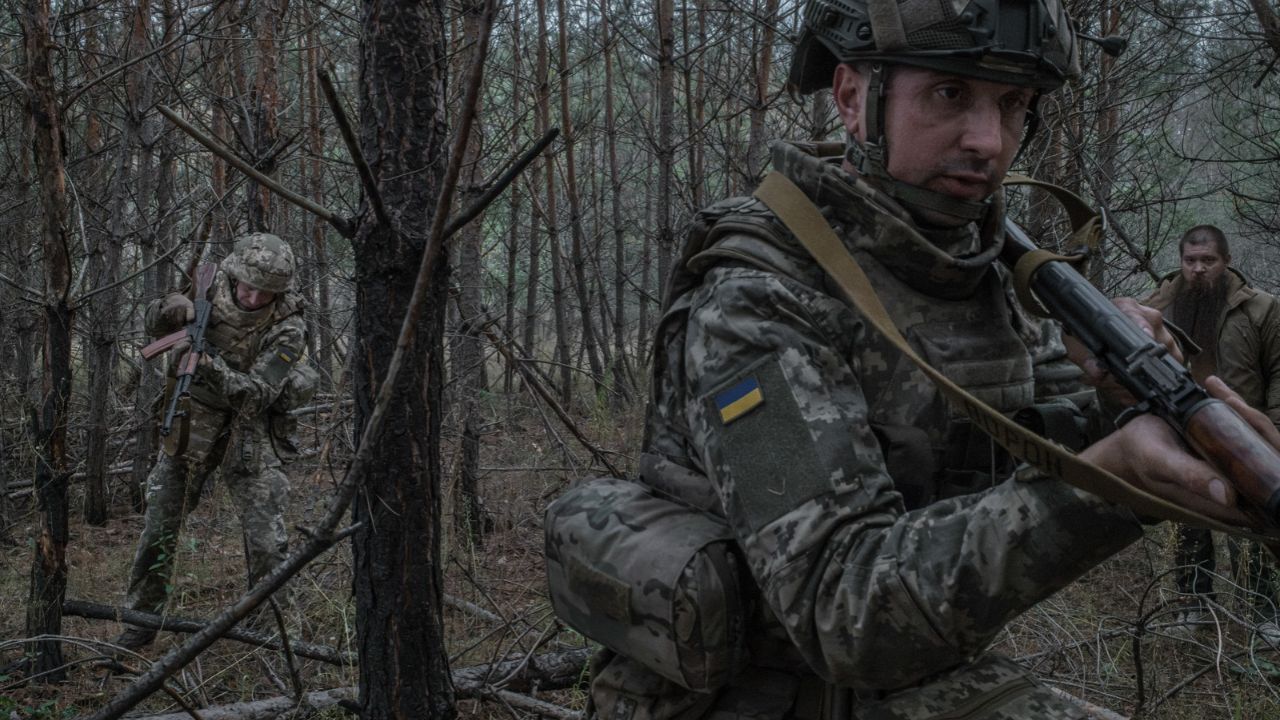
Despite the human and economic losses, the Russian leader may see little reason to stop fighting now, analysts say. Though Russia’s progress on the battlefield has stalled, Ukraine is running out of air defenses before perhaps the most perilous winter of the war. Moscow appears to believe that a brutal campaign against Ukrainian cities will increase its negotiating advantage in the coming months.
On top of this, Europe’s resolve to back Ukraine is beginning to fray. Far-right politician Marine Le Pen, who opposes support for Ukraine, is leading the polls ahead of France’s presidential election next spring. And the far-right Alternative for Germany party, which also wants to end Ukraine aid, is on the rise in Germany.
It was Russia that first injected the possibility of business deals into peace talks days after Trump returned to office.
To appeal to the real estate mogul president, Putin dispatched Kirill Dmitriev, the Stanford University- and Harvard University-educated former McKinsey executive who runs the Russian government investment fund, to sketch out all the ways that the United States could make money by reengaging with Russia.
In Moscow’s ideal world, a Russia-friendly Trump administration would press ahead with energy deals, begin lifting sanctions and normalize relations with Russia, all while forcing the Kremlin’s preferred terms on Ukraine to end the war.
Just as the Trump administration believes that Putin can be swayed by business deals, the Russians believe that such deals can also sway the Americans, Green said.
But Trump has not gone nearly so far as to hand victory to Russia in Ukraine. Domestic pressures have constrained the president in delivering what the Kremlin most desires, and Europe has continued sending billions of dollars and buying American weapons to keep Ukraine in the fight.
Ukraine still has bipartisan support in Congress, and once the Democrats control the House and the Senate with large majorities beginning in January, lawmakers could move more aggressively to curb any deals Trump strikes that are seen as overly favorable to Russia.
Thomas Graham, who served as senior Russia adviser on the National Security Council under President George W. Bush, said Putin had misread the domestic political situation in the United States.
“The idea was if he dangled those deals, the Trump people would jump on them, lean on the Ukrainians and this would be over on Russia’s terms,” Graham said. “But it turns out it’s not that simple; there is a domestic political context here.”
While commercial deals on their own are not sufficient to move Russia toward serious concessions, Graham said, it makes sense to include them as part of the broader negotiations.
U.S. officials, he said, should broker deals and sanctions relief packages that would entice the Russians but act on them only when Moscow commits to concrete steps to de-escalate the war. Those steps, he said, could include ceasefires on energy infrastructure and on shipping in the Black Sea.
The inducements for Russia should also be paired with additional U.S. support for Ukraine that pressures Moscow simultaneously, Graham said, including more air defenses.
Putin has rejected any broad ceasefire before the full specifics of a peace deal are worked out, worrying that the minute Russia puts down its weapons, it will lose leverage in the talks.
But the idea of brokering every last detail of a peace deal before a ceasefire is unrealistic, Graham said. He argued that the parties should be shooting for a “framework agreement” that lays out the fundamentals of a deal in exchange for a ceasefire.
Officials could then work out the details of carrying it out afterward.
“If Putin’s position is no ceasefire until everything is signed, then that is a recipe for a forever war on the Russian side,” Graham said. “And Russia can’t sustain that.”
—
This article originally appeared in The New York Times.
By Paul Sonne/Mauricio Lima
c. 2026 The New York Times Company