
|
Getting your Trinity Audio player ready...
|
The artificial intelligence boom has powered the U.S. economy through a period of tariffs, war and uncertainty. It has also pushed up prices, raised borrowing costs and set off fears of a financial bubble that could burst to devastating effect.
Americans made clear in last week’s midterm elections that they do not think the trade-off has been worth it.
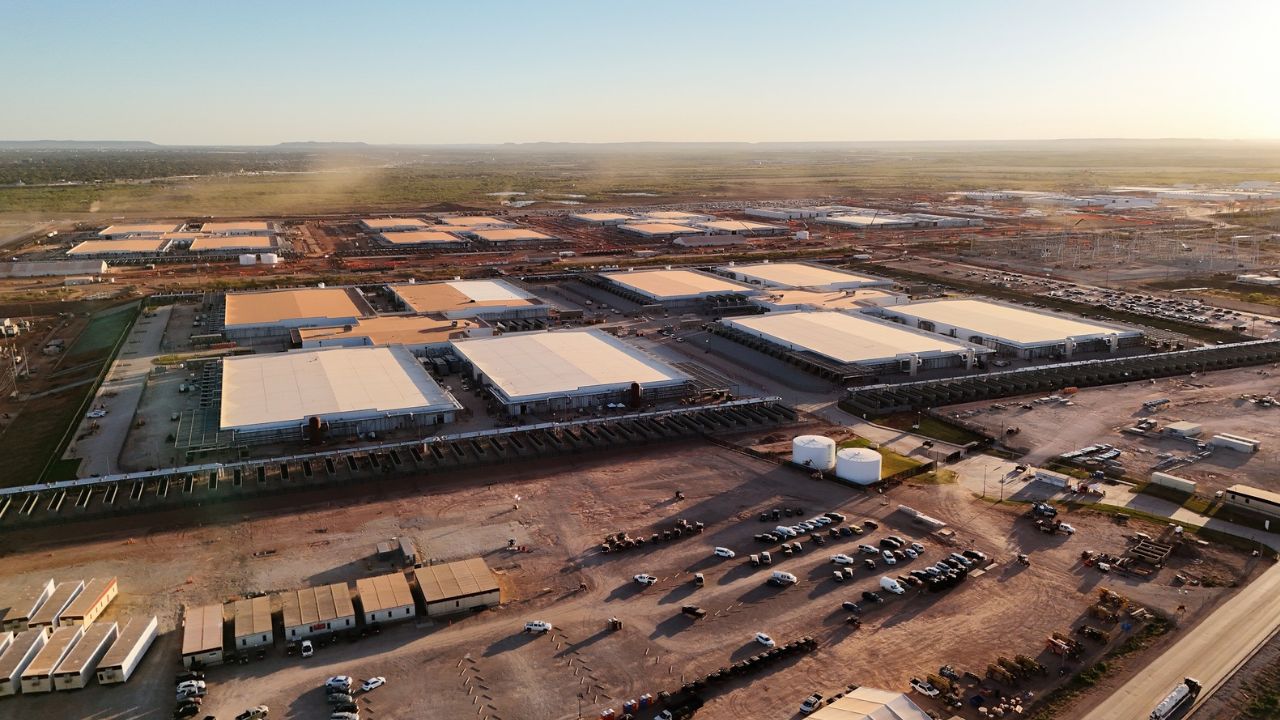
Voters overwhelmingly supported ballot initiatives that aimed to rein in data center development, and they elected to office governors and legislators who promised to do the same.

Now the question for newly empowered Democrats, and for policymakers more broadly, is whether they can find a way to address voters’ concerns without derailing the economy.
Many economists are optimistic, arguing that slowing the frenetic pace of the AI build-out could make it more sustainable, even if it causes some short-term hardship. Some of the AI skeptics who won office last week, including Gina Hinojosa, the newly elected Democratic governor of Texas, have said they want to ensure data center projects benefit their communities, not stop them entirely.
But the whipsawing of financial markets in the days after the 2026 election shows just how narrow a tightrope that is to walk. The mere suggestion of scrutiny in Washington has rattled Silicon Valley and Wall Street, which enjoyed two years of lax regulation under Republicans’ watch.
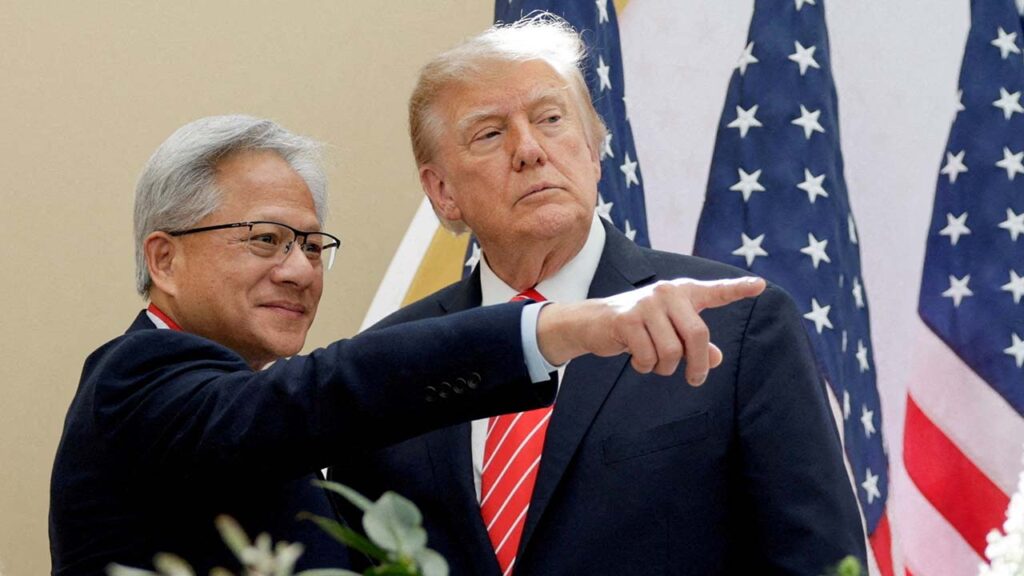
That tension was evident again Monday, when Nvidia, the chipmaker at the center of the AI ecosystem, descended into a maelstrom over its CEO’s relationship with a woman whom U.S. intelligence agencies believe to be a Chinese spy. President Donald Trump came to his defense, some in Congress have called for investigations, and Nvidia’s share price fell sharply Monday morning.
The incident offered fresh evidence that the economy has become so dependent on AI, and so much money has flooded into the sector, that deflating the bubble without popping it could prove difficult. Investors have made their bets on the assumption that the sector’s breakneck growth rate would continue for years, meaning that the market could be vulnerable if the pace slows even modestly.
“It’s not like you can scientifically calibrate this dial,” said Jared Bernstein, who served as a top economic adviser to President Joe Biden. “The likelihood that things deflate in some sort of orderly way are low.”
Powering Growth, Pushing Up Prices
The challenge for Democrats is that AI — and the building boom that developing it requires — has become embedded into nearly every aspect of the U.S. economy.
Investors have pumped hundreds of billions of dollars of capital into companies like OpenAI and Anthropic, which have spent that money on microchips, data centers and the electricity to power them. The investments have filtered through the economy, lifting demand for steel, construction equipment and even the specialized gray paint used to coat the walls of data centers.
At the same time, the rising share prices of AI-related companies have helped swell Americans’ brokerage accounts and retirement portfolios, helping to prop up consumer spending when rising prices and slowing wage growth are taking a toll on many people’s finances.
Suppliers to the data centers have continued to add jobs even as the rest of the manufacturing industry has cut workers, according to an analysis by Devesh Kodnani, a fellow at the Economic Security Project, a progressive research organization. The story is similar in construction, where data center projects have helped make up for soft demand in housing, warehouses and office buildings.
But while the boom has helped keep growth on track, it has also soaked up resources from other sectors. Companies found themselves forced to pay more for materials and labor. Shortages of memory chips led to higher prices for consumer electronics. The AI industry’s demand for power drove up electricity prices, while its demand for capital pushed up interest rates.
“It’s almost as if corporate America has been so obsessed with this technology investment that it’s chosen to do so at the expense of other aspects of the economy,” said James Knightley, chief international economist at ING, an investment bank.
That sense of corporate impunity helps explain public opposition to data centers, and to AI more generally, said Asad Ramzanali, director of AI and technology policy at the Vanderbilt Policy Accelerator, a research institute at Vanderbilt University.
Communities experience the costs of AI as noise, traffic and higher electricity bills, and even people who live nowhere near data centers worry about the effects that AI could have on their jobs, the climate or even the future of the human race. The benefits, on the other hand, seem mostly to be flowing to a relative handful of tech billionaires.
“They see all the costs, they feel all the cost, they bear all the cost, and the benefits are not accruing in a meaningful way,” Ramzanali said.
Policy Choices
Trump and his aides have shrugged off such criticisms, celebrating the potential riches to come from AI and the data centers that power the technology. The administration has also worked to ward off anything that might inhibit the development of those computing facilities — and their contribution to the economy’s growth.
“As President, I am 100 percent in favor of Super Intelligence (SI), and will work with the many States in the U.S. that want to become RICH by having them,” Trump said on social media, referring to data centers. “They are GOLD, and only foolish leadership will say ‘NO’ to the riches they bring!”
Within days of the midterm election, some Democrats quickly pledged that they would use their newfound political strength to regulate AI and curtail data center construction.
“One of the reasons the American people rose up against AI data centers is that they saw the AI industry was running wild, and the Trump administration was encouraging the AI industry to run wild,” said Rep. Ted Lieu of California, a chair of a Democratic commission established in 2025 to study AI’s economic implications.
Lieu offered a roster of policy areas the new Democratic majority expected to explore: the national security issues posed by sales of advanced chips, the effects chatbots could have on children and the worker protections required if AI replaces human labor. But he rejected the notion that those guardrails would pose a threat to economic growth.
Sen. Bernie Sanders, I-Vt., who caucuses with Democrats, pointed to the nearly four dozen moratoria on data center development across the country. Taking aim at what he called “Big Tech oligarchs,” he added on social media, “NATIONAL DATA CENTER MORATORIUM NOW.”
But even as Democrats have warned about the pitfalls of AI, many of the party’s newly elected leaders have said they are looking to impose limits on the industry, not shut it down.
In an interview with The New York Times on Friday, Hinojosa said she would delay permits for data centers “until we can protect Texans” but maintained her state’s pro-business reputation.
“These newly elected officials presumably don’t want to lose that much economic activity,” Bernstein said. “It’s kind of the whole game now.”
Financial Risks
Such dependence on one sector is risky, many economists say, and some moderation in the pace of the AI build-out would be welcomed.
Policymakers at the Federal Reserve have become concerned that the building boom is contributing to inflation and that until recently, it seemed immune to the central bank’s usual tool for controlling price pressures: higher interest rates. If Democrats rein in AI’s growth, that could lessen the need for more aggressive rate hikes.
Limits on data center construction could also impose some discipline on an industry that has been building so quickly, and spending so much, that economists were becoming skeptical all the bets would pay off. Stijn Van Nieuwerburgh, an economist at Columbia University, estimated in a recent paper that the AI build-out was on track to become the largest infrastructure investment in U.S. history, surpassing episodes like the railroad construction boom of the 19th century, most of which ended in catastrophic busts.
New regulations would probably “take some of the wind out of the sails of that whole sector,” Van Nieuwerburgh said. “But I think it’s not a bad thing. The silver lining could be that a bit slower build-out might actually give us more time to assess whether we need all of it.”
But while letting the air out of a bubble is appealing in theory, history suggests it is difficult to do. Even before the election, there were signs that investors were becoming concerned that some of their AI bets would not pay off. If the threat of regulation causes a more widespread deterioration in investor sentiment, that could lead to a sharper decline in stock prices. That could cause wealthier households to pull back spending, potentially causing a recession.
The real risk is that a bursting of the AI bubble reveals vulnerabilities in the financial system that economists and policymakers were not aware of. That is what happened in 2008, when a crisis that had seemed contained to subprime mortgages nearly brought down the entire global economy.
“I think the concerning version is where there are some hidden exposures in the financial system that we don’t really know about,” said Gabriel Chodorow-Reich, an economist at Harvard University.
The best way to prevent that outcome, Chodorow-Reich said, would be through careful regulation and scrutiny by the Treasury Department and the Fed.
Reining in the boom through a patchwork of local regulations “is a very second-best or third-best or maybe fifth-best way to do this,” he said, “but it could help.”
—
This article originally appeared in The New York Times.
By: Ben Casselman, Tony Romm and Colby Smith/Scott Ball
c.2026 The New York Times Company