
|
Getting your Trinity Audio player ready...
|
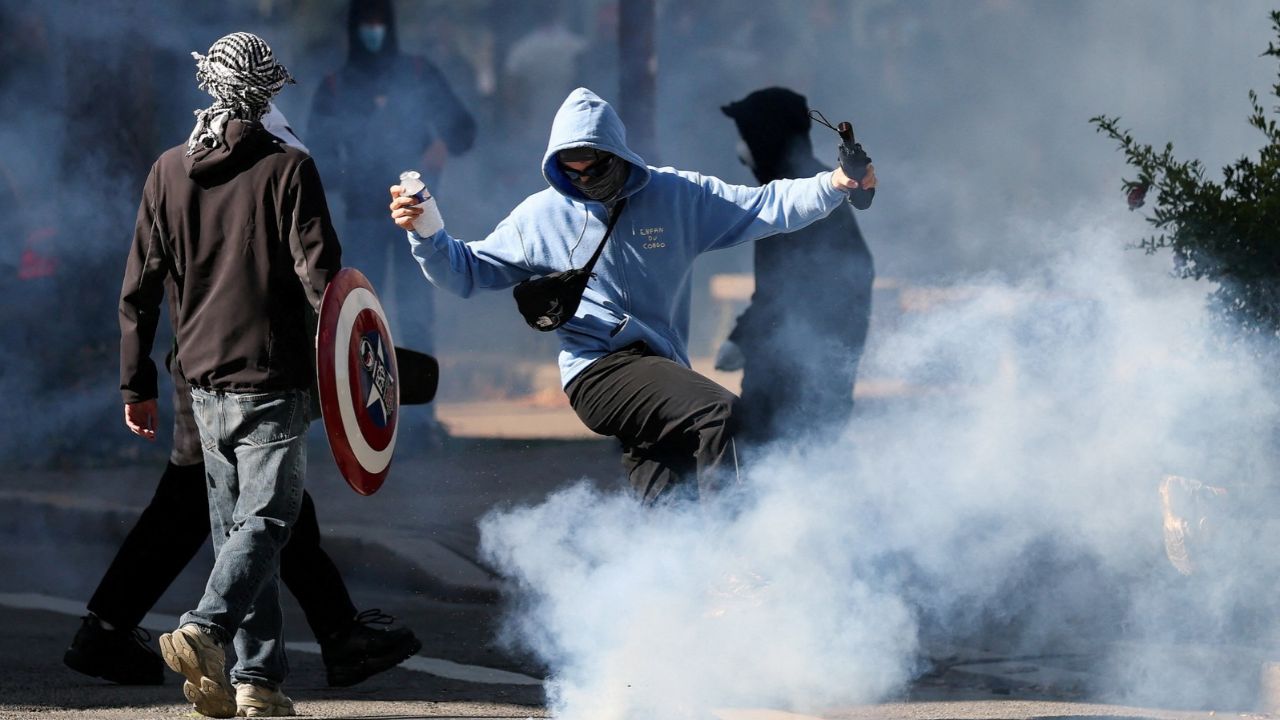
French teenagers blockaded some high schools and marched through cities on Thursday as the government promised to address their grievances about teacher shortages and dilapidated school buildings but gave few specific details.
The protest movement, now into its third week, has exposed deep tensions in France between popular demands for investments in deteriorating public services and a cash-strapped government under pressure from bond markets to reduce its debt and deficit.
High-school teacher Diane Di Sciullo joined students at a large march in Marseille, saying all they were asking for was a decent education in decent conditions. She denounced overcrowding, saying this year she had 37 students in her class.

“At the start of every lesson, I have to ask them to check the neighbouring classrooms for spare chairs and desks so they can actually study,” she said.
Di Sciullo, 28, was carrying a placard that read “I’m a teacher and my students help me catch cockroaches in class.”
Minister Promises Urgent Action
Education ministry figures showed the number of school blockades was gradually decreasing. It said 224 were closed in the morning, down to 157 by lunchtime, meaning that 96% of schools were open.
Large crowds demonstrated in Paris and across the country from Lille in the north to Rennes and Nantes in the west, and Toulon and Marseille in the south.
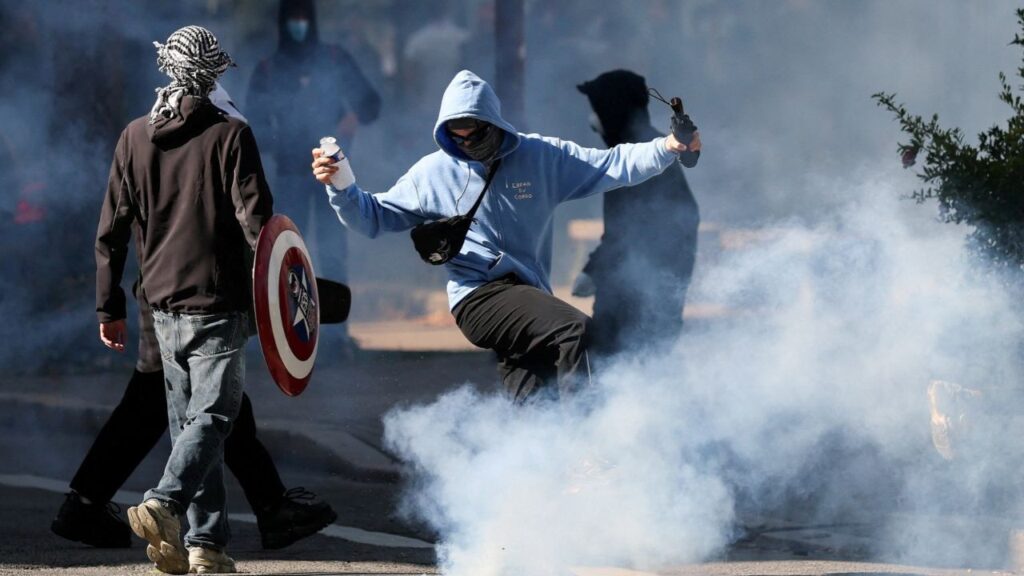
The marches were peaceful, though scuffles between police and protesters took place at some locations in Paris and Nantes and police charged at a crowd and used water cannon in Rennes.
Education Minister Edouard Geffray said after meeting students and teachers in Reims that he was launching an emergency plan to ensure absent teachers are replaced, while heavy school timetables were also under review.
It is not uncommon for French teenagers to have lessons from 8 a.m. to 6 p.m., as well as large amounts of homework.
Hundreds of Arrests
Geffray also said he was working on potential improvements to Parcoursup, the national online portal for applying to university, which has been widely criticised as confusing and stressful for applicants.
Prime Minister Sebastien Lecornu pledged late on Wednesday that the government would present “concrete, quick and fully funded responses” to the protests by late October, without offering specifics.
Student protest leaders said that was not good enough and called for further marches next Tuesday. There are also calls circulating online for a day of protests on October 17.
“Our demands must be heard. Yesterday, Mr Lecornu gave us a lot of hot air,” said Ryad Rani, leader of one of the student unions.
“The mobilisation will continue, we’re not backing down on anything.”
A prominent complaint featured on banners and placards was that the police response to the wave of protests has been too heavy-handed. “Too young to be listened to, old enough to be tear-gassed” was one example.
There have been hundreds of arrests and dozens of injuries since the movement started. On Wednesday, the government suspended the use of stun grenades in the policing of the protests after one teenager’s hand was blown off.
Polarised Political Response as Election Looms
Six months from a presidential election, the protests have highlighted stark polarisation between leading candidates to replace Emmanuel Macron, who cannot seek a third term.
Far-right frontrunner Marine Le Pen has highlighted damage to schools caused by a minority of protesters and outlined plans to slash public spending should she win.
Her hard-left opponent Jean-Luc Melenchon, who also has a chance of making the runoff, has praised the protesters as “incredible” and denounced police brutality.
According to an Elabe poll for BFM TV, 72% of French people think the students’ demands are legitimate, but 55% of them think the protests should stop.
On Thursday, student protests were also taking place in the Belgian cities of Brussels, Ciney and Liege.
Grievances included rising costs, overcrowded classrooms, limited resources and increased teacher workloads.
In Liege, where police said almost 200 arrests had been made in connection with student protests this month, authorities have imposed a ban on public gatherings of more than three people until October 16.
However, police said a gathering in front of the city’s university had been authorised.
(Additional reporting by Paris bureau and Charlotte Van Campenhout in Amsterdam; Writing by Estelle Shirbon; Editing by Timothy Heritage and Alison Williams)