
|
Getting your Trinity Audio player ready...
|
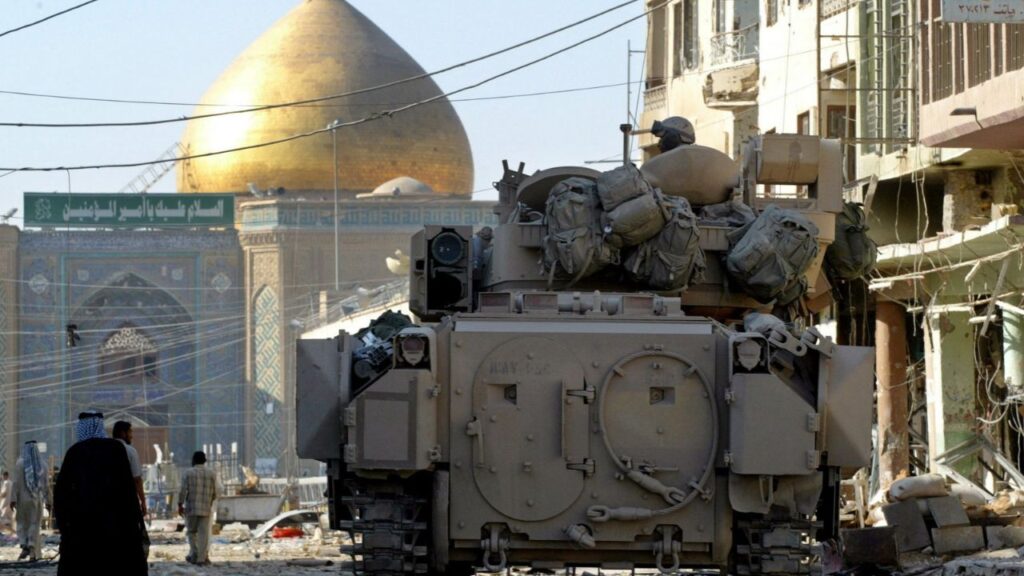
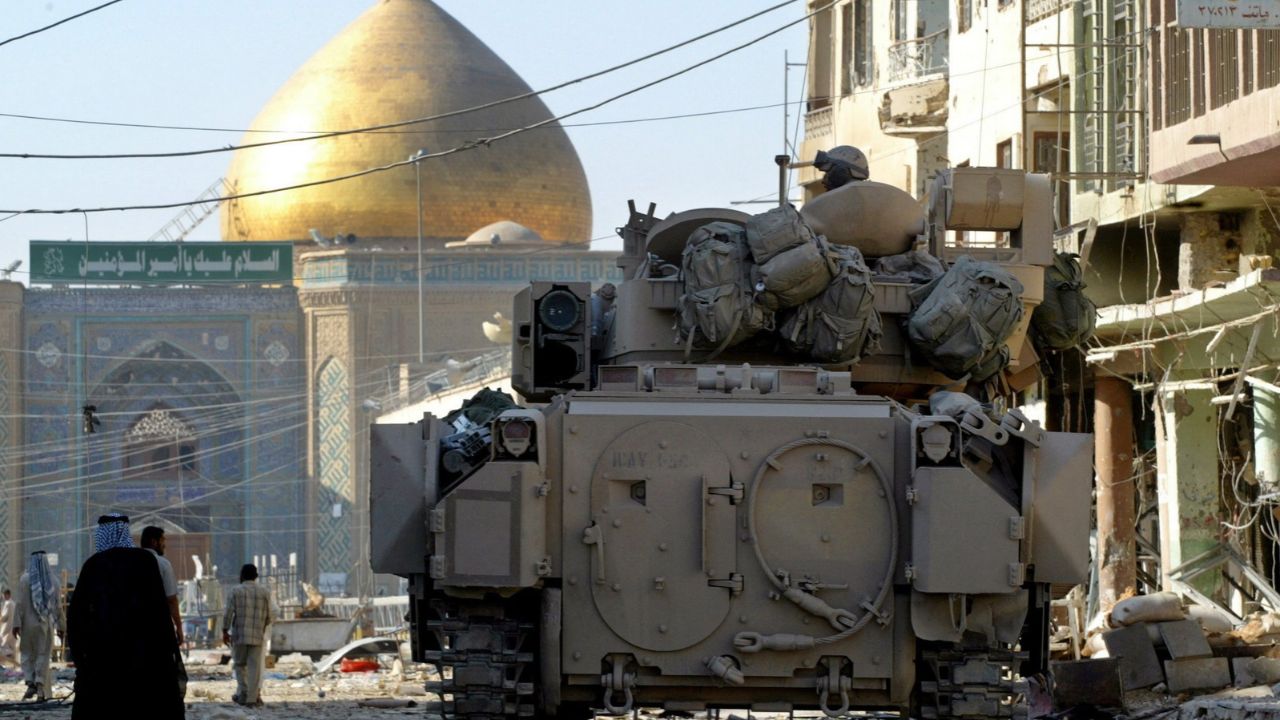
US forces are set to pull out from their last bases in Iraq by Wednesday, a departure celebrated as a victory by Iran and its allies who now have deep influence in the country where 4,500 Americans died during more than two decades of war.
Iraqi security experts say the withdrawal — agreed in 2024 under President Joe Biden and carried out by Donald Trump’s administration even as it wages war against Iran — could give Tehran and its powerful allies free rein, while also allowing other US enemies to stage a comeback, including Islamic State.
“Iran stands to benefit strategically from the coalition’s departure because it removes a military presence that for years acted as a counterweight to Tehran’s influence in Iraq,” said Jasim al-Bahadli, an Iraqi security analyst specialising in studying armed Shi’ite groups aligned with Iran.

He predicted that the pro-Iranian militia groups would not only portray the departure as a victory for their movement, but also “seek to translate that momentum into greater influence over security and political decision-making”.
Abu Mojtaba al-Yasiri, a commander in the Islamic Resistance in Iraq, an umbrella group of Iran-backed armed factions, described the US withdrawal as “a historic victory for the Iraqi Islamic resistance groups and honorable Iraqis, and a crushing defeat for the American project”.
“On September 30, we will celebrate the turning of a black page in Iraq’s history and the failure of the occupation to impose its will on our country,” he told Reuters. “Iraq has proven that its sovereignty cannot be secured by foreign forces, but by the resistance and the will of its people.”
Not Ready
While the eventual departure of US forces is broadly popular among Iraqis, those who worry about the strength of the Iran-backed groups fear the withdrawal is premature.
“We believe Iraq is still not fully ready to take over the security file at this time,” Abdulrahman al-Zobaie, a Sunni tribal leader in Fallujah, once a bastion of anti-American resistance, told Reuters.
“All Iraqis aspire to full sovereignty, and no Iraqi would dispute that. But I believe that the (US-led coalition) leaving in this way and creating a vacuum is what all Iraqis fear.”
American forces invaded Iraq in 2003 to topple Sunni Muslim dictator Saddam Hussein, and went on to occupy the country, install a Shi’ite-led government and fight a years-long counterinsurgency before withdrawing at the end of 2011.
They returned less than three years later to help Iraqi forces defeat the Sunni militant group Islamic State in a major war from 2014 to 2017.
Around twice as many Americans died in “Operation Iraqi Freedom” as in the parallel war in Afghanistan, which ended with an abrupt US withdrawal in 2021.
In recent years, Iraq has been the only country to maintain close political and military alliances with both the United States and Iran, which sometimes used Iraqi territory as a proxy battlefield.
The United States killed a top Iranian commander, Qasem Soleimani, with a strike on Baghdad Airport in 2020. Iran’s allies repeatedly fired on US bases, sometimes drawing reprisals.
In this year’s war against Iran, 7 of the 18 US service members listed as killed were in Iraq, the last an army sergeant who died during the controlled detonation of a drone at a base near Erbil in July.
Victory for Iran’s Axis
Iran, which says its ultimate aim is to force American forces to leave the entire Middle East, casts the US withdrawal from Iraq as a victory for its “axis of resistance” of allied armed groups across the region.
“Lasting security will prevail in Iraq” once the Americans leave the country and the region, the deputy chairman of the National Security Commission of Iran’s Parliament, Amir Hayat Moqaddam, said on Monday.
Iran “welcomes the withdrawal of American troops from Iraq and will undoubtedly support it,” he told Iran’s parliamentary news service. “Resistance groups are currently taking action, sometimes targeting and confronting American troops.”
Washington has accused Iran-backed militia groups in Iraq of playing a role in the wider Middle East conflict by launching attacks on neighbouring countries at the direction of Tehran, most recently hitting a major Saudi oil pipeline this month. The Baghdad government says it is trying to curb their influence.
New Life for Islamic State?
Some Iraqi security officials, both in the federal government and the semi-autonomous northern Kurdish region, say the US pullout also risks giving new life to Islamic State fighters, who, despite the defeat of their self-proclaimed caliphate nearly a decade ago, retain a sleeper cell network.
At their height, the fighters occupied a third of Iraq and killed thousands of people, including hundreds they videotaped themselves gunning down inside a former US military base.
A lack of US intelligence, logistical support and drones will give Islamic State a chance to regroup, said Kurdish commander Sirwan Barzani.
“For more than two weeks, we have noticed movement by (Islamic State) sleeper cells, after it was announced in the general media that there will be an official withdrawal of the international coalition from Iraq by the end of September,” he said. “This has boosted, in my opinion, the morale” of the fighters.
Iraqi security forces said a suspected Islamic State cell was preparing suicide attacks to coincide with the pullout. The plot highlighted concerns that the militant group remains capable of exploiting security gaps despite years of military setbacks, said four Iraqi security and army officials.
Islamic State “is seeking to send a message that the group is still powerful and capable of launching bloody attacks,” said Colonel Khalid al-Bayati, a senior security official in the strategic oil town of Kirkuk.
(Additional reporting by Maher Nazeh, Kawa Omar, Muayad Hameed and Elwely ElwellyWriting by Ahmed Rashed and Michael GeorgyEditing by Peter Graff)