



|
Getting your Trinity Audio player ready...
|
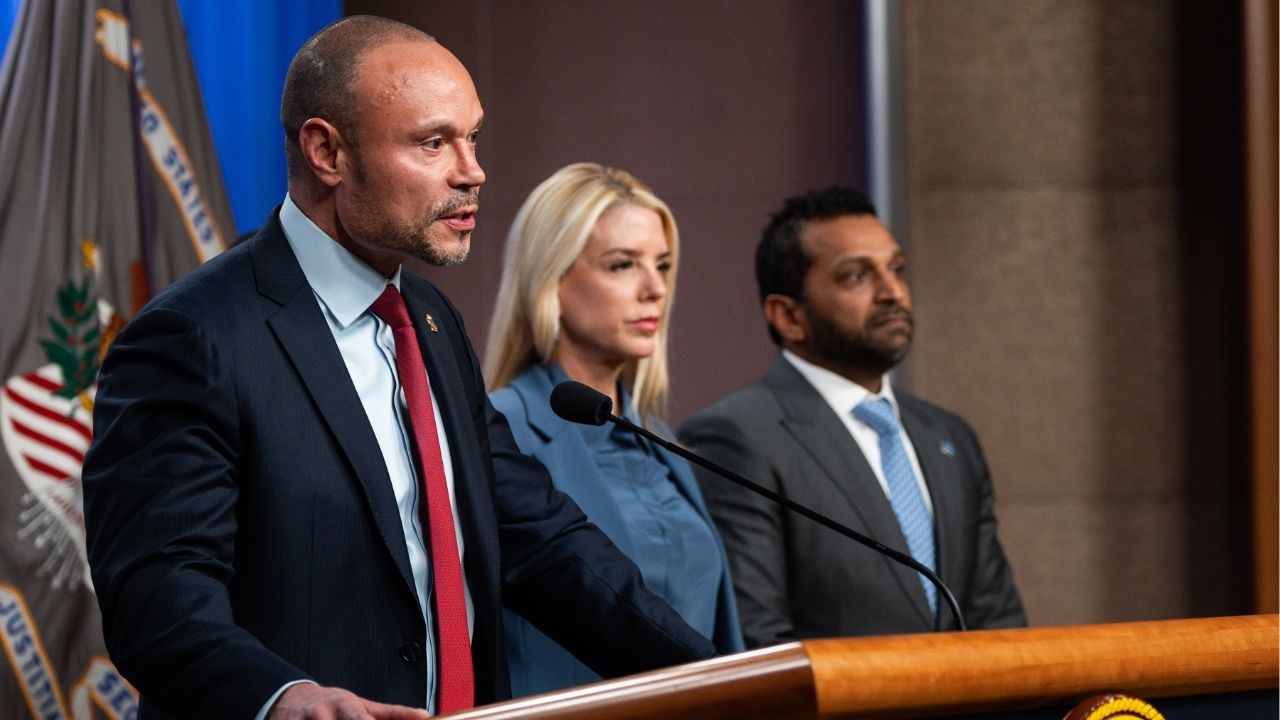
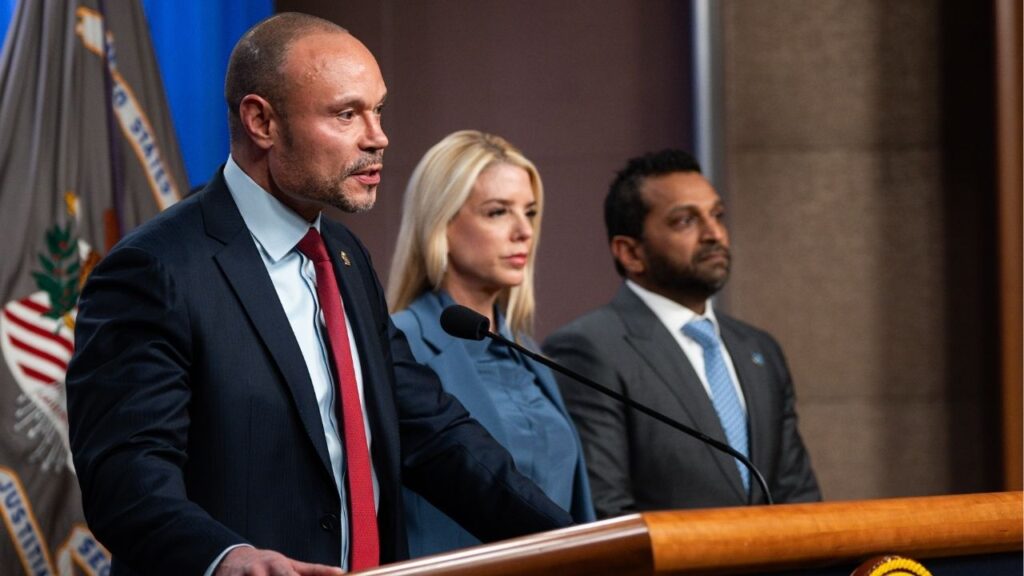
In early 2025, Dan Bongino, the fiery No. 2 official at the FBI, summoned dozens of agents to the bureau’s Washington headquarters.
Bongino, a conservative media personality recently elevated to the deputy’s role, demanded to know why a yearslong inquiry into the origins of the COVID-19 pandemic had stalled — and why investigators had not more forcefully scrutinized the role of government scientists, current and former officials said.
At one point, he squared off against an official who questioned the theory that he and many supporters of President Donald Trump had long promoted: that the virus had not merely leaked from a Chinese lab, but that American researchers, among them Dr. Anthony Fauci, had orchestrated a conspiracy to cover up that fact.

The meeting became so heated that Bongino ultimately asked the official to leave the room, an attendee said.
Bongino, who stepped down from the FBI in January to return to podcasting, and other officials helped set in motion a sprawling and aggressive investigative effort that has outlasted his tenure, The New York Times has learned.
As part of that effort, FBI agents and federal prosecutors have sought evidence related to at least eight scientists, among them a Nobel laureate and influential former government researchers like Fauci.
Investigators have demanded phone, email, grant and payment records, as well as grand jury testimony by scientists.
This account of the investigations is drawn from interviews with six current and former officials familiar with them, who asked not to be identified because they were not authorized to speak publicly, as well as documents reviewed by the Times.
It is not clear what evidence those inquiries have produced or what their status is. Fauci, once the government’s chief infectious disease scientist, received a preemptive pardon last year from former President Joe Biden that protects him from federal prosecution for official actions from 2014-25.
The inquiries were underway well before Republican lawmakers last month asked the Department of Justice to investigate Fauci’s refusal to answer questions before a Senate panel. They have continued playing out behind the scenes as those lawmakers released documents that have bruised Fauci’s reputation.
Many scientists see the federal government’s investigative effort as an attempt to punish political enemies and deflect blame from the first Trump administration for the catastrophic effects of the pandemic.
While the origins of the coronavirus have not definitively been established, these researchers point to the fact that the inquiries have failed to produce any clear evidence that Fauci or other American scientists covered up knowledge of a lab leak, or funded or collaborated on research that led to one.
Trump’s supporters, on the other hand, accuse those scientists of helping to start the pandemic and aggravating its harms, and believe the inquiries represent overdue accountability.
The FBI’s efforts during the Biden administration focused mainly on whether COVID emerged from a lab in Wuhan, China, though federal investigators also began examining some individual scientists.
Under Trump, the investigation has expanded as federal agents and prosecutors sought evidence against new targets and intensified their scrutiny of scientists.
Last month, Dr. David Morens, a former adviser to Fauci at the National Institutes of Health, pleaded guilty to conspiring to conceal federal records by steering government emails into a personal account. In those emails, Morens discussed efforts to defend researchers who were under suspicion for collaborating with the Wuhan lab.
Morens wrote that he was trying to protect researchers from what he described as baseless “political charges” of a lab leak.
A subpoena for documents in that case, dated September 2025 and reviewed by the Times, showed that federal prosecutors in Maryland sought evidence about Fauci, too, including any emails he sent to certain researchers from his personal account or payments he received for intervening on behalf of federal grantees.
Prosecutors in Maryland also recently demanded the testimony before a federal grand jury of a former staff member at EcoHealth Alliance, a defunct nonprofit that the Trump White House has said used NIH funding to facilitate “dangerous” research at the Wuhan lab where the administration believes the pandemic started.
EcoHealth executives have denied those claims. The NIH has said that viruses being studied there with U.S. funding bore no resemblance to the one that set off the pandemic.
The FBI and Department of Justice declined to comment for this article. Bongino conceded on his podcast last month that “there are a lot of complications with any case that may develop against Anthony Fauci because of the pardon,” even as he credited “the cleanup operation we instituted when we went over there” for Morens’ indictment.
On his podcast in 2024, Bongino said that government scientists had dismissed the lab leak theory because they wanted to undermine Trump.
“They knew that would be a destructive narrative for them because Donald Trump had been talking about the danger of China the entire time,” Bongino said. “So they hid the lab leak.”
A Theory About a Cover-Up
Shortly after Trump returned to office last year, his administration pulled down a website meant to help Americans find COVID vaccines and treatments and, in its place, posted a full-length image of Trump atop a new page that described why true blame for the pandemic rested with scientists.
“LAB LEAK,” the page declared — a leak that it suggested Fauci, Morens and EcoHealth scientists had helped to conceal.
The National Institute of Allergy and Infectious Diseases, which Fauci ran for nearly 40 years, financed collaborations between EcoHealth and the Wuhan Institute of Virology, a lab that studied coronaviruses in the city where the COVID outbreak began.
Some researchers favor the idea of a lab leak, whether or not U.S. funding was involved, citing assertions by intelligence officials that the lab probably failed to use adequate biosafety precautions at least some of the time.
Most scientists favor a so-called natural origin theory, pointing to new data published in recent years supporting the idea that the virus spilled from animals into people at a wild animal market in Wuhan, a tried-and-true route for emerging deadly viruses, including past outbreaks in China.
U.S. intelligence officials have said there was no indication that the Wuhan lab had been in possession of the pandemic coronavirus “or a close progenitor” before the COVID outbreak.
In Congress, Republican lawmakers began gathering evidence against scientists as the 2024 election approached.
“You make a pyramid,” said Mitchell Benzine, the staff director of the Republican-run Select Subcommittee on the Coronavirus Pandemic from 2023-25, describing the panel’s strategy. “You talk to and get documents from the bottom of the pyramid, and you work your way up.”
If Fauci was at the top of the pyramid, Morens, his former adviser, was nearer its base. The subcommittee discovered a trove of brash emails from 2020 and 2021 in which Morens described plans to evade federal records laws, including by learning how to “make emails disappear.”
Morens wrote about trying to quietly involve Fauci in efforts to defend against what he described as threats to “scientific independence” and to EcoHealth, whose NIH grant was canceled under orders from the first Trump administration in 2020.
By last fall, federal prosecutors were also examining Fauci and a half dozen other scientists, including Richard J. Roberts, a Nobel laureate in medicine, who had organized a letter denouncing the cancellation of EcoHealth’s grant, according to a September 2025 subpoena to EcoHealth.
The subpoena asked for evidence that Fauci had drafted or edited documents for EcoHealth, including records related to the Wuhan lab; correspondence from Fauci’s personal email address to EcoHealth; and evidence that the group had compensated Fauci with “currency, gift baskets, wine, meals, travel” or other items.
In addition to violations of federal records laws, Morens pleaded guilty last month to receiving illegal gratuities in the form of two bottles of The Prisoner Red Blend Napa Valley wine from Peter Daszak, EcoHealth’s former president.
Daszak said the wine had been a joking allusion to calls in 2020 for his and other scientists’ imprisonment. (Daszak and EcoHealth were later barred from federal contracts under Biden over allegations that they failed to properly monitor work at the Wuhan lab, which Daszak and the nonprofit denied.)
Government oversight experts criticized Morens’ efforts to hide critical correspondence about the pandemic, while noting that Trump administration officials have been said to conduct government business on private email accounts or an encrypted messaging app.
“It seems like retaliation,” Daszak said of the case, in which he appears as an unnamed co-conspirator. “The right learned pretty early on in COVID that public health is a threat to power.”
Timothy Belevetz, Morens’ lawyer, said Morens “has taken responsibility for what he did and will continue to do so.”
Fauci has said he “knew nothing” about Morens’ actions. His lawyers have created a defense fund to respond to what they described as a “legal barrage” that followed his refusal to answer questions from a Senate panel in July, including the announcement of state investigations. The panel voted to hold him in contempt of Congress.
“Dr. Fauci has done nothing wrong, and there is no basis for any investigations, whether by Congress, the Department of Justice, or state attorneys general,” said David Schertler, his lawyer.
“The only thing that will come from these completely unjustified efforts to besmirch Dr. Fauci’s reputation and his lifelong commitment to public health is wasted time and resources that would be better used on real issues.”
The FBI, which has for years asserted that the virus originated in the Wuhan lab, has also more recently examined whether Fauci pushed a group of scientists in early 2020 to downplay early suspicions that the coronavirus may not have evolved naturally.
Republicans have long suggested that Fauci pressured those scientists into changing their view as they prepared an article about the pandemic’s origin, perhaps by plying one of them with a federal grant.
Fauci and the scientists deny those claims. The grant in question was reviewed and approved for funding before Fauci discussed the origin with those scientists, he said.
The researchers said their initial suspicions were allayed instead by more extensive analyses of coronaviruses in other species, like bats and pangolins, which showed that unusual-seeming features of the novel virus were in fact present in naturally occurring viruses.
Democratic lawmakers said that the attacks on Fauci and other scientists echoed past efforts to prosecute political enemies.
“It smacks of McCarthyism because it seeks to demonize individuals for seemingly fictional and illusory reasons,” said Sen. Richard Blumenthal, DConn.. “The question is whether there’s selective targeting.”
Bongino has blamed Fauci and other government scientists not only for financing research that led to the pandemic, but also for using the resulting catastrophe to push social distancing measures and mail-in balloting provisions in 2020.
He has said on his podcast that those measures were introduced for one purpose, referring to an outcome that multiple investigations have established did not happen: “Steal the election. One hundred percent.”
–
This article originally appeared in The New York Times.
By Benjamin Mueller/Glenn Thrush/Tierney L. Cross
c.2026 The New York Times Company




![[hubspot type=form portal=8576119 id=f5235c74-daca-46b2-b841-0fec24b5a509]](https://gvwire.com/wp-content/uploads/2026/09/GVH_LaborDaySavings_300x250_static.jpg)