


|
Getting your Trinity Audio player ready...
|
WASHINGTON — The Trump administration is set to announce Monday what it is describing as its most comprehensive assault to date on Iran’s economy, unveiling a package of measures that are intended to isolate Iran from the rest of the world.
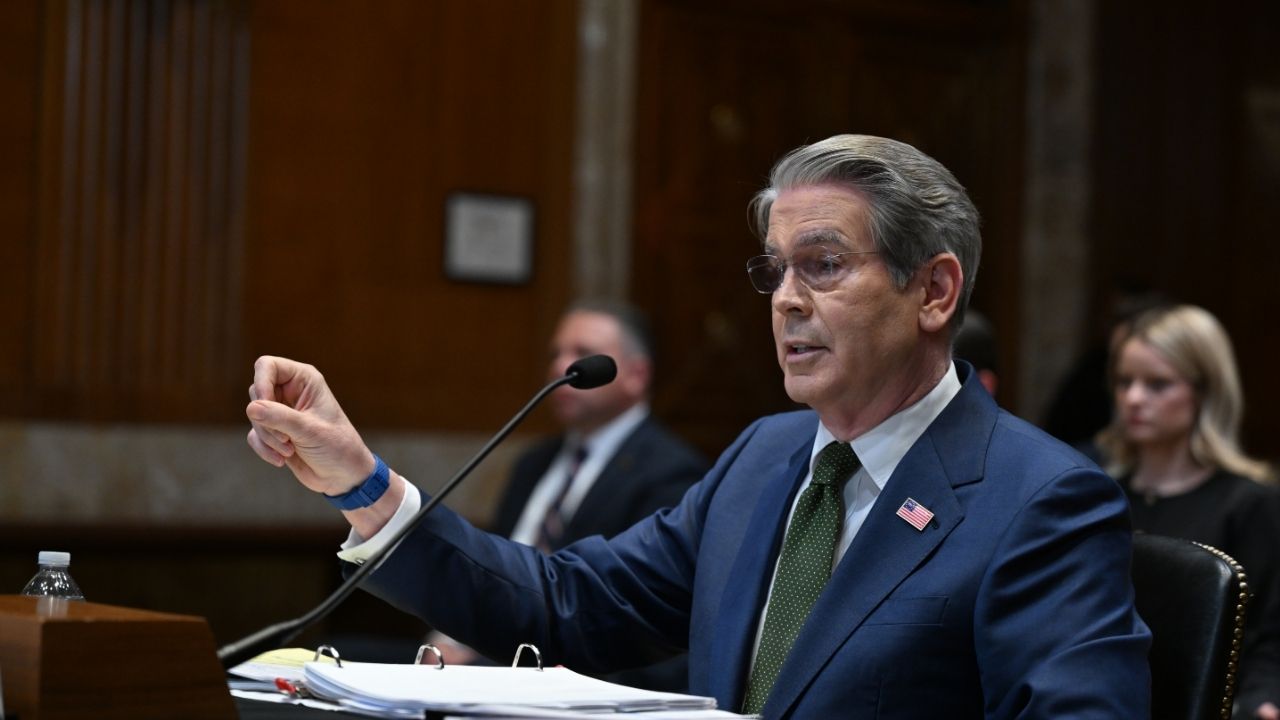
Treasury Secretary Scott Bessent is expected to announce the plan at a news conference Monday afternoon. The escalation of sanctions pressure comes as negotiations to end the military conflict between the United States and Iran continue to sputter.
The United States has ramped up pressure on Iran’s economy this year through its Operation Economic Fury initiative. But Bessent, along with President Donald Trump, has signaled that the new initiative will include greater coordination between the United States and its allies to cripple Iran’s economy.

“At dawn begins an economic D-Day — the single greatest financial offensive ever marshaled against an adversary,” Bessent wrote in a social media post Sunday evening. “The President has created the conditions to leverage every agency, every authority and action many assumed we would never summon.”
He added, “Our objective is to sever every economic lifeline that sustains the tyrannical regime until Tehran stands alone.”
The Treasury secretary said last week that countries that continued to do business with Iran, including money transfers and oil purchases, would face the “full might and force” of the U.S. government. Trump has also promised an “economic D-Day” against Iran, a “crushing” operation that he said would “cripple” the country.
The United States could look to impose secondary sanctions on countries that continue to do business with Iran, including purchasing its oil. However, it is not clear how the Trump administration plans to deal with China, which is the world’s largest buyer of Iranian oil.
The Treasury Department has imposed sanctions on independent Chinese refineries that buy Iranian oil, but it has refrained from imposing large-scale sanctions on Chinese financial institutions that facilitate such transactions.
Any new economic measures that implicate China could complicate Trump’s upcoming meeting with the country’s leader, Xi Jinping, in Washington next month.
Bessent suggested that China was aligned with the United States when it came to finding a resolution to the war in Iran and reopening the Strait of Hormuz.
“Many conversations are best to have in private,” Bessent told CNBC last week. “And we are confident that everyone wants the strait reopened and for energy prices to come back down.”
Iran’s economy has been in free fall this year because of the war and sanctions pressure.
On Saturday, Iran’s new security chief, Mohsen Rezaei, vowed to strike the interests of oil-rich neighbors if they joined U.S. efforts to further isolate Iran. He warned that Iran would seek to prevent “even a single drop of oil” from leaving the region.
—
This article originally appeared in The New York Times.
By Alan Rappeport/Kenny Holston
c. 2026 The New York Times Company