
|
Getting your Trinity Audio player ready...
|
David Ellison is making it clear that he’ll do just about anything to close his deal to buy Warner Bros. Discovery.
Even if it means considering plans to take his company far from Hollywood.
Ellison, Paramount’s CEO, told his senior leadership team last week that he would begin pulling the company out of California on Oct. 1 if there was no progress toward resolving a lawsuit by state attorneys general seeking to block the deal, according to three people with knowledge of his remarks.

It is unclear whether Ellison will follow through on the plan, which could put pressure on the California attorney general, one of the chief plaintiffs behind the suit, to come to the negotiating table. Losing a major Hollywood studio would be a blow to the state’s economy and self-identity.
Rob Bonta, the California attorney general, blasted Ellison on Tuesday for threatening to move. “It is an attempt to blackmail regulators who are daring to enforce the law,” Bonta said at a conference.
Even floating the idea of a move comes with political risks. Paramount has tried to position itself as a champion of Hollywood, and Ellison has personally pledged that a combined Paramount-Warner Bros. would release 30 movies in theaters every year.
Still, the comment to the executives highlights Ellison’s increasing eagerness to get the $111 billion deal over the finish line as soon as possible. The company will owe Warner Bros. shareholders $650 million each quarter, starting in October, until the deal closes. Last week, the judge overseeing the antitrust case set a trial start date for March, at least two payments away.
A spokesperson for Paramount declined to comment.
Paramount’s merger with Warner Bros. would create a Hollywood colossus. Joining the two companies would put two major movie studios, multiple streaming services and news networks CNN and CBS News under the same roof, greatly expanding Ellison’s influence in media and entertainment.
The state attorneys general have argued that the company would have outsize market power. Ellison and his supporters have ratcheted up their pushback, including in the press: a Wall Street Journal opinion column from Ari Emanuel, a power broker in Hollywood, calling the states’ antitrust case “trash”; an opinion essay in Variety from Adam Aron, the CEO of theater chain AMC; and a column in The Hollywood Reporter from former anchor Chris Wallace, who is now a paid adviser to private-equity firm RedBird Capital, which has a large stake in Paramount. Ellison wrote his own New York Times guest essay, too.
Ellison presented the moving plans to his senior leadership team last week, in part because of mounting internal questions about the looming fees and whether they would result in less spending on content, according to three people with direct knowledge of the meeting.
During the meeting, which was earlier reported by Puck, Ellison professed his love for California and the Paramount studio lot, telling executives he was reluctant to leave the state where he grew up, the people said. But Ellison said his obligations to the company might require Paramount to leave California.
“Clearly we’re not wanted here,” Ellison said in the meeting, according to the three people.
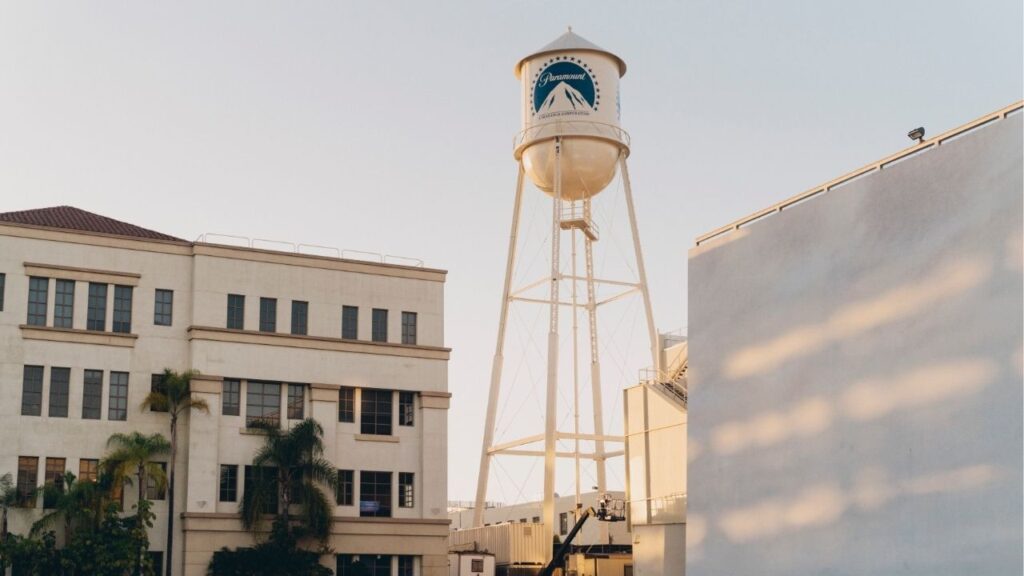
Ellison said the company would maintain a “robust creative campus” in Los Angeles — citing the example of Oracle, the technology company co-founded by his father, Larry Ellison, which continues to have a presence in Silicon Valley after it moved its headquarters to Texas. But he added that Paramount would sell its famed backlot as part of a move. (Commercial real estate brokers have valued the property at roughly $4 billion.)
The specificity of Ellison’s plan caught executives off guard. When the possibility of moving first surfaced in a Semafor report in July, most Paramount chiefs quickly dismissed it as posturing. Now they had to take their boss seriously.
Several people who attended the meeting were upset at the prospect of uprooting their lives and confided that unhappiness to others at the studio, resulting in widespread gossip inside the company, the people said.
Hollywood responded with growing frustration Tuesday to the news of Ellison’s idea, according to interviews with producers, agents, union officials and writers. Why can’t the Ellisons and Bonta get in a room and sort this out? Behind the scenes, several of Hollywood’s biggest unions have been pushing for such talks, as has Bryan Lourd, the CEO and co-chair of Creative Artists Agency, some of the people said.
In his remarks at the Tuesday conference, which was hosted by Politico, Bonta said he saw no need for settlement talks. “I think they are eager to enter those talks,” he said, referring to Paramount. He added that the states remained open to settlement proposals from Paramount, even as they focused on the upcoming trial.
Besides Oracle, several prominent companies have moved their headquarters out of California in recent years, including Tesla and Chevron. But entertainment is an emotional business, and the ties that many Paramount executives feel to Hollywood may prove troublesome for a corporate relocation.
“Many of the top Paramount executives I have spoken with are extremely unhappy with the idea,” Joseph M. Singer, a veteran film financier and former studio executive, said in an email. “Their lives, their families, and their kids’ lives and schools are in LA.”
Singer has publicly opposed the sale of Warner Bros. Discovery to Paramount. He added: “Either the merger is good for California, as its supporters have insisted, or those same jobs are a chip to be moved out of state when the state’s law enforcer declines to fold. A threat to relocate doesn’t make sense, and just hurts the very people he says he wants to protect.”
Los Angeles Mayor Karen Bass said in a statement late Tuesday, “Paramount has been an iconic part of Los Angeles for more than a century, and we will work to ensure that Paramount remains rooted in Los Angeles, continues to invest in our city, and continues to support good-paying jobs for Angelenos.”
—
This article originally appeared in The New York Times.
By Benjamin Mullin, Brooks Barnes and Lauren Hirsch/Ricardo Nagaoka
c. 2026 The New York Times Company