
|
Getting your Trinity Audio player ready...
|
Four years ago, after a former police officer shot or stabbed more than 30 people in northeastern Thailand — the deadliest mass killing by a single attacker in the country’s history — Anutin Charnvirakul, the country’s health minister, vowed tighter controls on guns.
Now the prime minister, Anutin on Friday found himself repeating that promise after another mass shooting, this time at a high school just northwest of Bangkok, the capital.
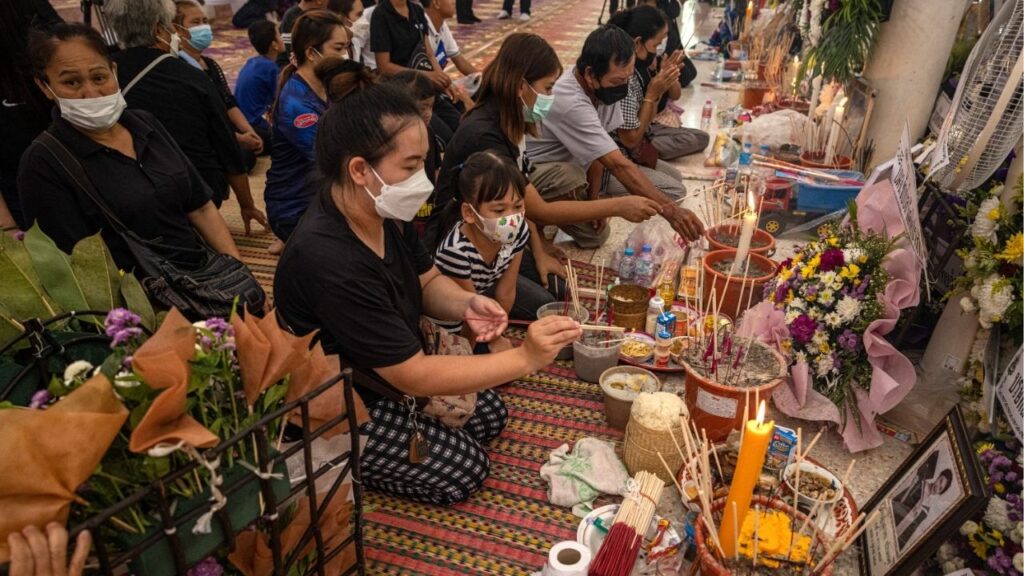
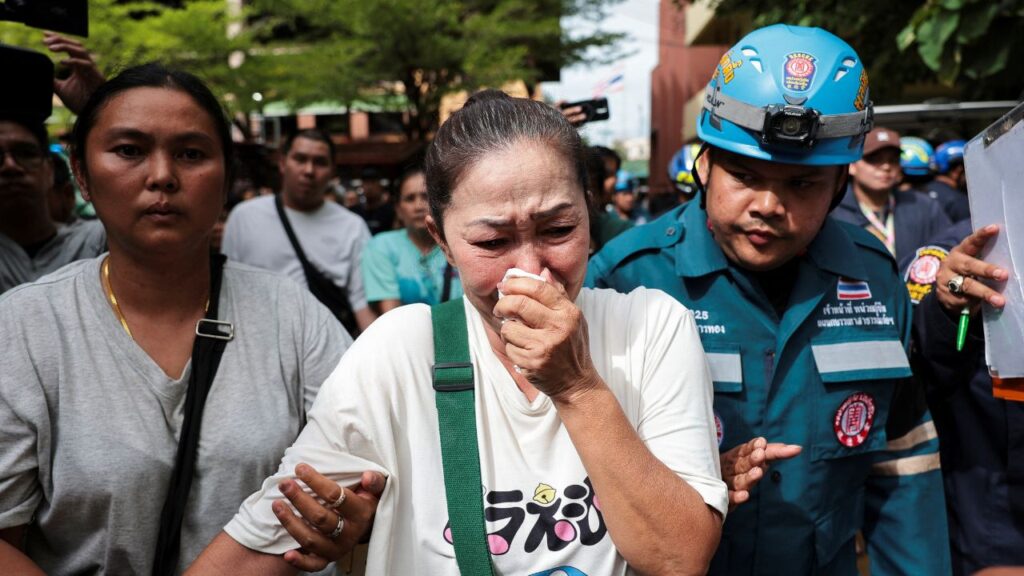
That morning, a student at Debsirin Nonthaburi School used his grandfather’s pistol to shoot and kill both of his grandparents at their home before going to school, where he fatally shot five teachers and wounded nearly 30 others. The attack, which was the worst mass shooting in Thailand since 2022, ended when the boy turned the weapon on himself.

It has also revived a long and intractable debate over gun control in the country, where there has been an alarming string of mass shootings in recent years, including one at a mall and one at a traditional food market.
“I think Thai society is increasingly questioning whether the existing level of firearms accessibility is acceptable,” said Trynh Phoraksa, a criminologist at Mahidol University. “What we are seeing is a change in public perception from viewing gun ownership as an individual issue to recognizing that firearm access is a public safety issue.”
Thailand has one of the highest rates of gun ownership in Southeast Asia because of gun laws that critics say are strict in some regards but lax in practice, as well as a unique culture of gun ownership in which, experts say, firearms have become both a sign of social prestige — given the outsize influence of the country’s military — and a reflection of Thais’ mistrust of public safety.
Anutin, who rose to the prime minister’s office last year, tried to address concerns about the proliferation of guns.
“When I became prime minister, one of my to-do things was to issue a new law regarding weapons, and it is still in the process,” he said Friday, as he announced plans for tighter firearm controls. He added that the new laws would allow only government officials on duty to carry guns but did not give specifics.
Thai citizens 20 years of age or older can legally purchase and own guns as long as they have stable incomes and clean criminal records and demonstrate a valid need, such as self-defense. Official government programs have also made guns available to civil servants at discounted prices, which has fueled a black market for firearms.
“If you are a government official or an MP like me, or an assistant to my team, we are all eligible to buy guns with a subsidy,” said Chayaphon Satondee, an opposition lawmaker, referring to members of parliament. “A lot of the MPs and ministers, they all have guns.”
The Small Arms Survey, a research project based in Geneva, estimated that in 2017, there were around 10 million firearms in civilian hands in the country — 4.1 million of which were unregistered — amounting to roughly 15.1 firearms per 100 people. One study in 2018, led by researchers at the University of Washington, suggested that firearms were responsible for more than 3,800 deaths in Thailand in 2016.
While every high-profile mass shooting has periodically resurfaced the debate over how to rein in Thailand’s guns, occasionally prompting new regulations, experts say that complacency among policymakers has prevented root-and-branch change, while enforcement has been weak.
Critics have said the country needs a better tracking system for the guns in circulation, as well as a program for people to voluntarily surrender their guns.
“The sheer number of illegal guns in circulation is itself a symptom of weak enforcement and accountability,” said Boonwara Sumano, a senior research fellow at the Thailand Development Research Institute, a Bangkok-based think tank. “After every mass shooting — Nakhon Ratchasima in 2020, Nong Bua Lamphu in 2022, Siam Paragon in 2023 — no senior government official has resigned or been dismissed for failing to prevent it.”
Boonwara and Trynh believe that gun violence in Thailand has also been increasingly inspired by mass shootings in other countries, such as the United States, an illustration of what researchers have described as the social contagiousness of such killings.
The shooter in the Siam Paragon attack in 2023 was wearing camouflage pants and a baseball cap with an American flag on it, leading to speculation that he had been emulating the tactical gear associated with U.S. mass shooters. After the shooting Friday, investigators found several videos of mass shootings in other countries on the attacker’s computer, local news media reported.
“Social media means a teenager in Bangkok can absorb the same imagery and ‘scripts’ as one in the U.S.,” Boonwara said.
Suchatvee Suwansawat, a prominent commentator on public safety issues and former candidate for prime minister, argued in a social media post Friday that the United States might nonetheless serve as a model for preventing such mass shootings in the future.
“The U.S. has faced numerous school shootings over a long period,” he wrote. “While these measures haven’t completely eliminated the problem, there are many lessons that Thailand should seriously study.”
Among his proposals were establishing active shooter drills at schools, using artificial intelligence to detect suspicious behavior and promoting safe firearm storage.
–
This article originally appeared in The New York Times.
By Max Kim/Muktita Suhartono/Andre Malerba
c.2026 The New York Times Company