
|
Getting your Trinity Audio player ready...
|
One day last September, a right-wing influencer named Natalie Winters posted what she billed as an “EXCLUSIVE” on social media: A federal prosecutor in Miami overseeing a fraud case against “MAGA patriots” had once written a blog with comments critical of President Donald Trump.
Winters, who has hundreds of thousands of followers, addressed her message to the accounts of senior officials at the Justice Department. Her demands for the prosecutor, Will Rosenzweig, could not have been clearer: “Fire him,” her message said.
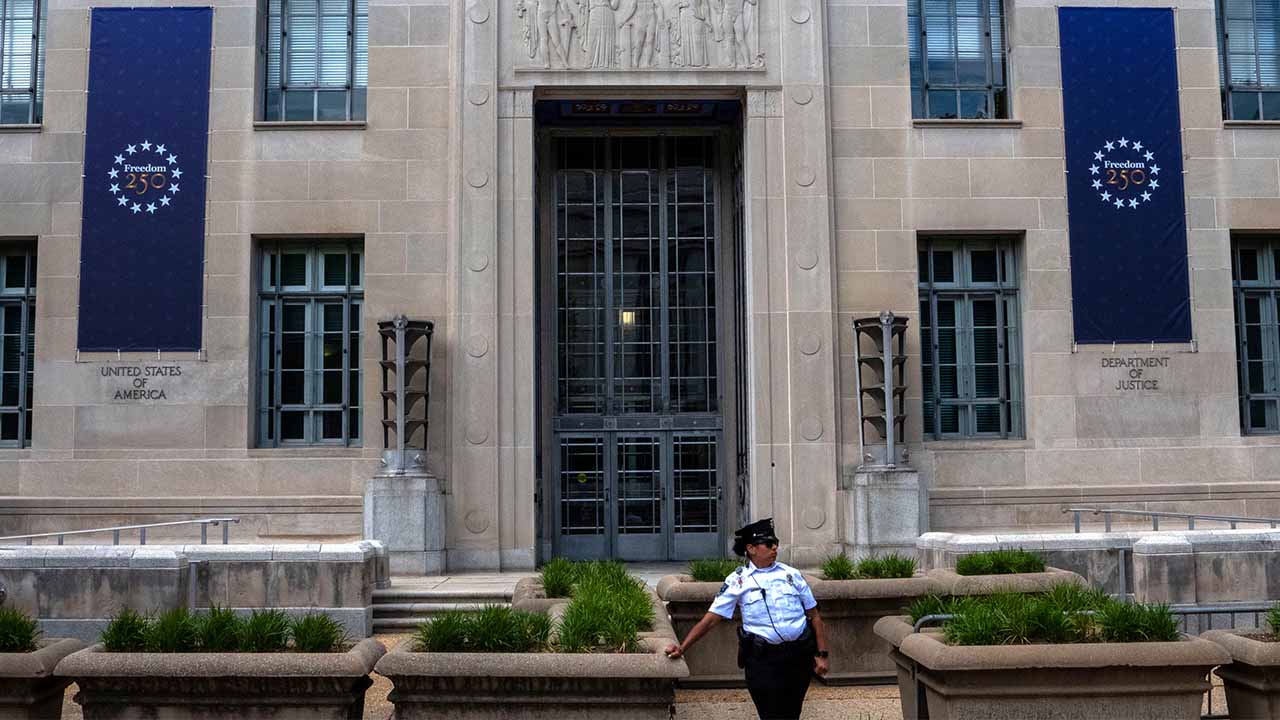
Less than three hours later, the department did exactly that. Rosenzweig, who during his career had consistently earned praise for his work, received an emailed letter signed by Pam Bondi, then the attorney general, dismissing him from his position at the U.S. attorney’s office in Miami, effective immediately. No reason was provided.

On Friday, Rosenzweig sued the Justice Department along with Todd Blanche, who now runs the department, and Jason A. Reding Quiñones, the U.S. attorney for the Southern District of Florida, asking for financial damages and his job back. In doing so, he joined a growing list of former prosecutors and federal agents who have gone to court in an effort to fight back against the widespread purge of law enforcement officials deemed to be disloyal to the president.
During Trump’s second term, agents and prosecutors have been fired for any number of reasons. Some were seasoned veterans who lost their jobs while trying to protect subordinates from being dismissed. Others were accused, sometimes incorrectly, of having worked on criminal cases involving the president. Many worked on cases stemming from the attack on the Capitol on Jan. 6, 2021.
Rosenzweig’s firing was one of several that shared a different twist: Right-wing commentators claimed to be behind them. On the morning after he was terminated, Winters reposted a message from another far-right influencer, Laura Loomer, announcing the news. Winters’ message, punctuated by a smiley-face emoji, declared, “Got this guy fired.”
Many of Winters’ posts have since been deleted, but lawyers for Rosenzweig included screenshots of them in their lawsuit. In the posts, she said that Rosenzweig had “smeared” Trump in his writings by calling him “mentally unfit” and a “white supremacist.”
Neither the Justice Department nor Winters immediately responded to messages seeking comment.
Loomer, in particular, has used social media to target several administration officials whom she has accused of disloyalty to Trump. By her own account, she played a central role in Maurene Comey, a daughter of James Comey, the former FBI director, losing her job as a federal prosecutor in New York City last summer. After Maurene Comey’s termination, Loomer celebrated online, taking credit for a “pressure campaign.”
Another seasoned prosecutor, Michael P. Ben’Ary, lost his job in October after an online influencer accused him of being “part of the internal resistance” in the U.S. attorney’s office for the Eastern District of Virginia to charging Comey with the first indictment brought against him.
In a farewell letter to colleagues posted on the door of his office, Ben’Ary, who spent much of his career working on international terrorism cases, expressed concern that important personnel decisions were apparently being made in response to online posts.
“Justice for Americans killed and injured by our enemies should not be contingent on what someone in the Department of Justice sees in their social media feed that day,” he wrote.
It remains unclear why Winters referred to the defendants in the fraud case that Rosenzweig was overseeing as “MAGA patriots.” The three men — Marcelo Kochen, Michael Kochen and Sandro Herek — do not appear to have any obvious public connection to Trump. They were charged with cheating Medicare out of millions of dollars in false and fraudulent claims.
Michael Kochen and Herek were convicted and sentenced to prison last week. Marcelo Kochen had his case severed from the others and has not yet gone to trial.
In their lawsuit, filed in U.S. District Court in Miami, lawyers for Rosenzweig raised questions about how Winters had known that their client was working on the fraud case to begin with and was able to connect him to blog posts critical of Trump that had been written years earlier.
At the time Winters demanded that Rosenzweig be fired, the lawyers wrote, the Justice Department had never issued a news release about the case and the proceedings had received almost no attention in the news media.
Moreover, the lawyers wrote, Rosenzweig’s blog had been dormant at that point for nearly seven years, with no recent posts. And they were written before he had even applied to join the Justice Department.
“The primary source from which a member of the public might have learned about the case would have been through one of the parties,” the lawyers added.
Rosenzweig’s sudden dismissal came on the eve of the fraud case going to trial and threw his office into a “tailspin,” according to the lawyers. As the office scrambled to find a replacement for him, the government asked the judge overseeing the case to delay the trial. The defendants, who only one week earlier had also asked for a delay, abruptly changed course and insisted that the trial begin on schedule, seeking a tactical advantage.
Rosenzweig was observing Rosh Hashana on the day he was fired and did not see the email ordering his dismissal until nearly 8 p.m. He ultimately spoke with one of his supervisors, who told him that Reding Quiñones had discussed his firing with officials in the office of the deputy attorney general, then led by Blanche, according to the suit.
The supervisor said it was after that conversation that the news about the dismissal “spread to Twitter,” the suit maintained. Rosenzweig’s lawyers acknowledged that they do not know whether the Justice Department received information about their client’s blog posts before Winters did or what effect the purported conversation between Reding Quiñones and Blanche’s office had on Bondi’s decision to fire Rosenzweig.
Regardless, Rosenzweig’s online writings criticizing Trump were “textbook examples” of speech protected by the First Amendment, his lawyers wrote.
“Mr. Rosenzweig published the blog posts as a private citizen, before he joined DOJ, and his commentary addressed matters of public concern,” they added. “He did not make them pursuant to any official duty. Defendants terminated him because of that protected speech, or because of the political affiliation and beliefs they perceived from it.”
—
This article originally appeared in The New York Times.
By: Alan Feuer/Alex Kent
c.2026 The New York Times Company