

|
Getting your Trinity Audio player ready...
|
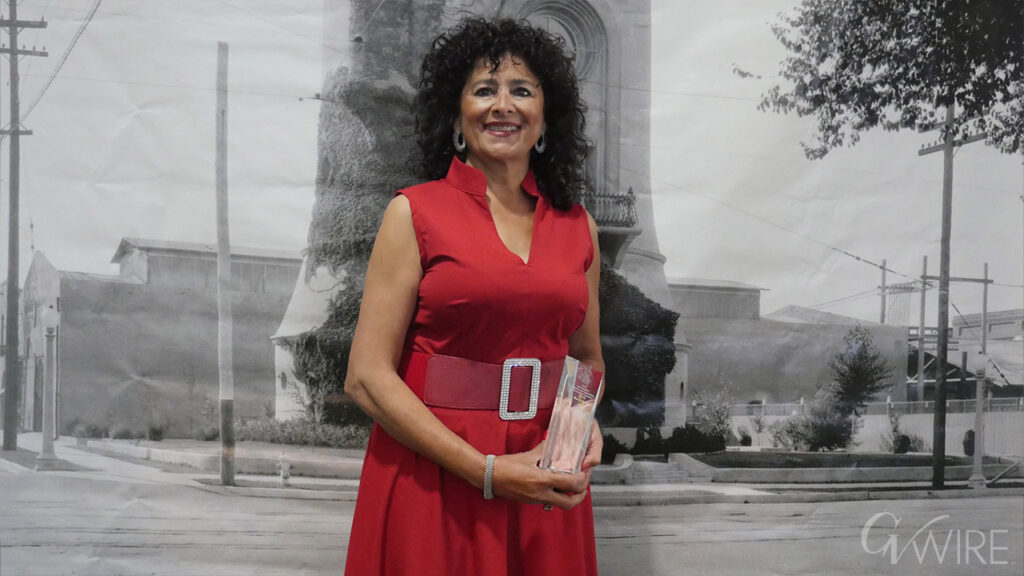
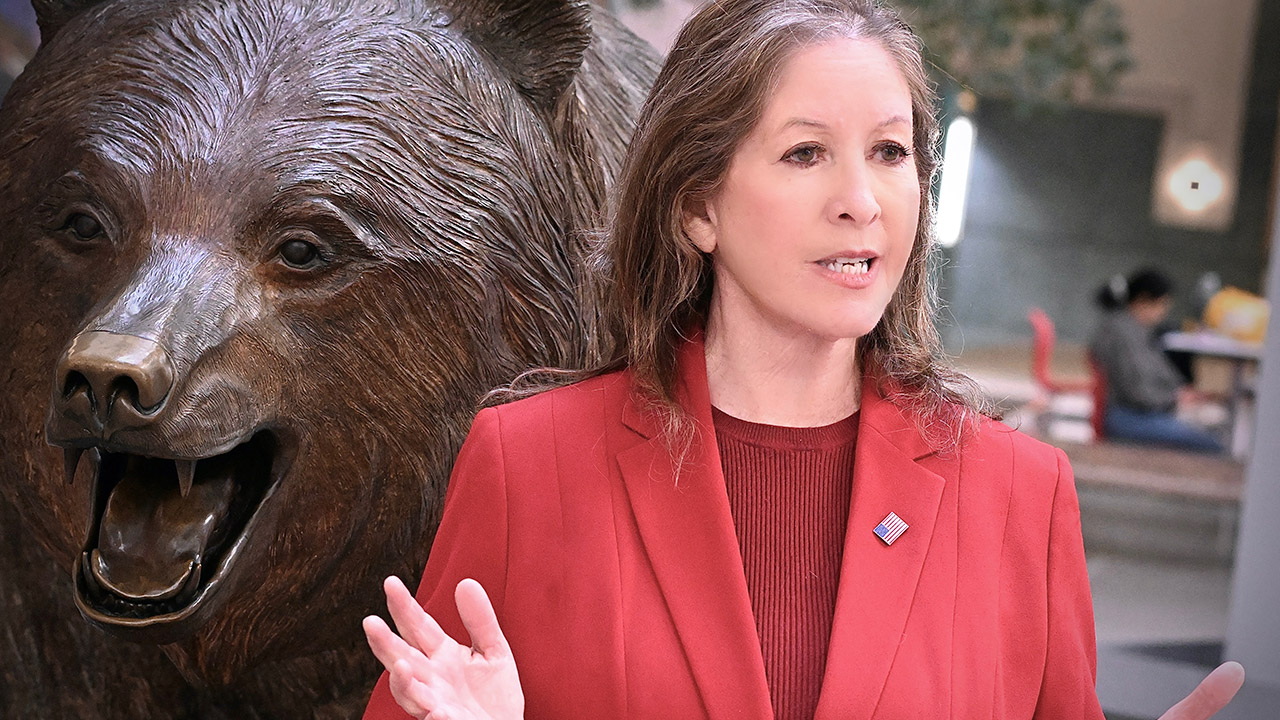
Ahead of a fundraiser being held Monday, GV Wire had an exclusive interview with Republican candidate Gloria Romero, who is running for lieutenant governor.
While on different tickets, she has joined Republican gubernatorial candidate Steve Hilton in calls to end the Democratic supermajority in the state Legislature.
Romero grew up in Barstow and became California’s senate majority leader as a Democrat, representing East Los Angeles and portions of the San Gabriel Valley.

She then switched parties in 2024 after she increasingly found herself on the opposite side of Democrats on important issues.
She has an extensive background in education, as a professor at multiple universities including CSU Los Angeles and as a trustee in numerous school districts.
Romero advanced to the general election with 17.8% of the vote compared to California State Treasurer Fiona Ma’s 19.1%.
On Monday, she will hold a fundraiser event at Club One Casino alongside Hilton and comedian Paul Rodriguez.
Below is a transcription of the interview that has been edited for length and clarity.
Romero on Why She Left the Democratic Party
Q: Originally, you were a Democrat, a high-ranking Democrat, and you decided to change. Why?
A: The big issue for me always was school choice. I was one of those Democrats who held on and advocated the belief that there should be school choice, parent rights. I did not believe in a monopoly government-run public education system, and especially one that is failing.
For example, in the Fresno Unified School District, today, as we speak, only 37% of Fresno Unified School students are at a basic level of proficiency in reading, 37%. When it comes to math, it’s even worse. It’s 27%. So we have a real problem there. So I have always believed in school choice, reforming the system, getting meritocracy into the system. Teaching phonics to read, which most districts will not do.
I got a lot of pushback from my own party. I maintained leadership because my colleagues respected me, but they knew I was advocating for a position that was aligned with the Republican Party. I joined with Republicans when we had the Republican governor, Arnold Schwarzenegger, in order to pass some landmark education rights legislation.
I had seen many people leave, Elon Musk, Leo Terrell, Tulsi Gabbard, and Bobby Kennedy. And it was finally when Bobby Kennedy left and went to embrace Trump, I knew it was time for me to leave as well. So I was walking away from the Democrat party for quite some time, but I was also walking towards the Republican party. I was inspired by Donald Trump. I was inspired by America first, fighting for America, protecting a strong border, believing in school choice.
Restore SAT/ACT as UC Admissions Requirements
Q: The lieutenant governor has a lot of roles in education, including sitting on the UC Board of Regents, how would you address problems in California education?
A: Just a couple days ago, I joined over 1,200 faculty at the University of California who are calling on the UC regent to adopt standardized testing once again, the SAT, the ACT, not as the only criteria, but you’ve got to look at this for college admissions. The UC San Diego report that really set out the five alarm fire, basically saying, hey, we’ve got kids coming into the university and they can’t do college level work. And so the college professors are having to basically dumb down the curriculum. When you lower the standard to admit certain groups, that’s just bigotry. It’s the soft bigotry of low expectations.
As lieutenant governor I would form a TK-through-16 education pipeline. I have authority over the higher education, but we’ve got to look at what’s coming in from K-12. That’s where the real problem is, where we see those kinds of statistics showing that almost half of all of our students cannot read or do math at the basic levels and yet we keep passing them along.
I also believe in implementing major reforms in terms of teacher tenure laws. I would reinstitute, call this out again. To basically ensure that we have stronger, more effective teacher training programs with a more rigorous evaluation policy. It shouldn’t be that you just show up on the job going to a classroom.
Other things that are not so much academic. I know what a woman is, I’m fighting for Title IX. I don’t believe that boys should participate, take the role of girls in women’s sports.
Phonics is Key to California’s Education, not Money
Q: Recently, Gov. Gavin Newsom announced a historic investment in education, calling himself the “education czar.” What do you think of his approach and how would you address math and literacy deficiencies in younger students?
A: Under the last eight years of him being governor, test scores have not improved at all. Maybe you see an increase in districts of a half- percent or 1% each year, but if you think about it, starting with those baselines of 37% proficient in reading, we have kids for 12 years. If you were to add 12% to that 37%, you’re still failing. If this is the education czar, my God, fire him immediately. Also, he’s bragging about how much money he’s putting into the system. He’s advocating $27,000, $28,000 per student per year. Money’s good if you get the results. California is failing on the results.
You have to really focus on reading first. If our kids are not reading by third grade, they are failing afterwards. After third grade, then you are reading to learn and there’s quite a philosophical and a learning difference between those things.
Lt. Gov. Oversees Economic Climate Report
Q: As lieutenant governor, you sit on the economic development board. You’ve been vocal about increasing affordability in the state, how do you go about doing that?
A: The lieutenant governor doesn’t run a particular department. I don’t have massive staff. I want to be very honest about what the limits are of this constitutional office, but it’s a powerful voice. I will convene and work on an economic climate report. The lieutenant governor is supposed to put out an economic plan for California. It hasn’t been done, I think, in the last eight years.
I intend to convene this, to put together what works, what doesn’t, what’s the rate of taxation, how can we begin to put the knowledge base together so that we can start focusing on what needs to go. I have a lot of ideas of what I think are the major issues, including massive taxation, the highest tax rates in the country, so many regulations in housing and affordability, especially having to deal with some very complicated and convoluted so-called air quality demands that basically raise the cost of affordability and prevent the (construction) of housing, which then drives up the overall cost of housing.
There’s a lot that can be done. Even without a formal (power), it’s really using the megaphone to make sure that we involve all of our businesses. Most of our small businesses are wanting to just survive, but (they need) to thrive and grow.
Use the Budget to Reform California’s Regulatory Climate
Q: You talked about regulations and clearing up red tape in California. Some of the most entrenched Democrats have sincerely tried to reform things such as the California Environmental Quality Act, but we’ve seen how limited or completely unsuccessful they’ve been. How do you have real CEQA or CARB reform, especially as a Republican?
A: The most important thing is Day One. I know people are surprised at that, but think about it. The only requirement from the Legislature actually is to pass a budget. You don’t need these thousands of bills, and most voters can’t name one or two bills.
We really don’t need that because the budget actually is where policy is implemented. If you don’t fund it, it doesn’t get done or if you don’t fund it, it withers away. That’s where the debate should be concentrated.
Call an extraordinary session of the Legislature on Day One. I would do two of them. One of them is on the budget immediately, start moving it forward. We know we basically have a false budget.
But also a second extraordinary session where we focus on waste, fraud, and abuse. That’s because a lot of this waste, fraud, and abuse needs to be struck out, clawed back — arrests where needed. But that’s where a lot of this will result in savings for the Legislature.
Nobody’s done this for 16 years, at least under one-party monopoly rule.
How Can a Republican Win in California?
Q: Latest polls show Steve Hilton trailing significantly behind his opponent, Xavier Becerra. What’s your path to victory, how do you convince voters in California, which has been overwhelmingly blue, to put you and Steve Hilton into office?
A: It’s got to be motivating the base. I’m not surprised at the outcome of the poll. It’s disappointing, but I’m not surprised. It’s largely going on simple party affiliation. A midterm election is a turn-out election. I would start with the Republican base, get a turnout.
Did you know that in the city of Los Angeles we had, and it’s a nonpartisan race, Spencer Pratt running for mayor. He lost by 30,000 votes, but did you know that 200,000 Republicans didn’t even bother to vote? Imagine if 200,000 had basically gotten up to vote, we would have Spencer Pratt as the leading mayoral candidate in California’s, I believe, most impactful city.
We’ve got to motivate the base and if we don’t, then at a certain point, people have to say, “I guess I’m happy with what I have.”
A lot of people don’t care about the lieutenant governor. I am struggling to raise money. It takes money to run advertisements. My opponent has millions of dollars in her war chest.
I probably won’t need the millions that she does to cover up her record, but we’ve got to pay the bills.
Working With Democrats
Q: How would you work with Democrats if you were elected?
A: I believe in working across the aisle, that’s how I was known in Sacramento. People knew I respected anybody who was in Sacramento. Didn’t have to agree with them, you didn’t have to vote the same way with them, but you respect people. They get there the same that I would have gotten there. Their people, their constituents vote for them.
Day One, president of the Senate (lieutenant governor acts as president of the Senate) I would sit down with all 40 senators because we’re no longer campaigning, we’re now governing. The most immediate thing is you got to get the confirmation done.
The governor’s the one who makes for the most part the vast majority of the nominations to fill all of the cabinet positions, the secretary positions, those are critical.
There are many Democrats who, they are afraid, quite frankly, to speak up. But whenever you have mixed government, when you can eliminate and get rid of one-party monopoly rule, people are more willing to speak up.
I just think there’s a lot of timid people with not a very strong backbone, and I intend to be somebody who shows, here’s backbone. I will work with you, you work with us, you give us honest recommendations in some good ways.
Use Chevron Decision to Claw Back Control of Commissions and Boards
Q: When you say you want to accept both Republican and Democrat ideas, you’re going to see a lot of laws come across your desk, even as lieutenant governor. What’s your veto threshold, generally?
A: We cannot tax ourselves into further debt. So anything that really begins to add to the cost of running government in California, that’s gonna be on the scrutiny list immediately.
There might be some ways to offset this, like when we take a look at waste, fraud, and abuse, what can we claw back, but you can’t just have this runaway escalator of increasing taxes.
A second major one as well is you cannot chip away at people’s rights, like parents’ rights. Anything that doesn’t recognize that there are sexes, boys and girls. If I were to see something saying boys belong in girls’ bathrooms, no, we’re not doing that.
Anything that seeks to expand existing commissions and boards without a thorough review of what do we really need. For example, there was a decision a while back, it’s called the Chevron decision. I believe that there are sufficient grounds in that decision to begin to look at potentially every commission in California. I would start with the Coastal Commission, the Land Commission as well on which the lieutenant governor serves and is a key voice. Too many of these commissions and boards have gone far past what they have been empowered to do.
Recently, the head of the Coastal Commission issued a proclamation right before the Fourth of July. She said to the city of Long Beach you cannot have fireworks this Fourth of July because it creates blah blah blah climate change. I mean that was just anti-American. What the bleep is the head of the Coastal Commission doing and by what authority does she have to order a city in California that you can’t have fireworks.