

|
Getting your Trinity Audio player ready...
|
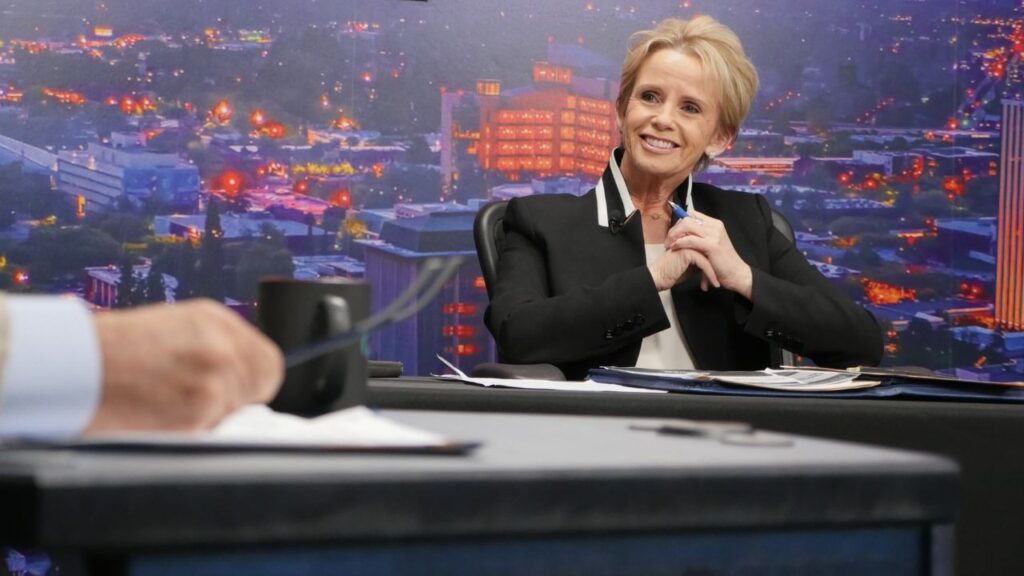
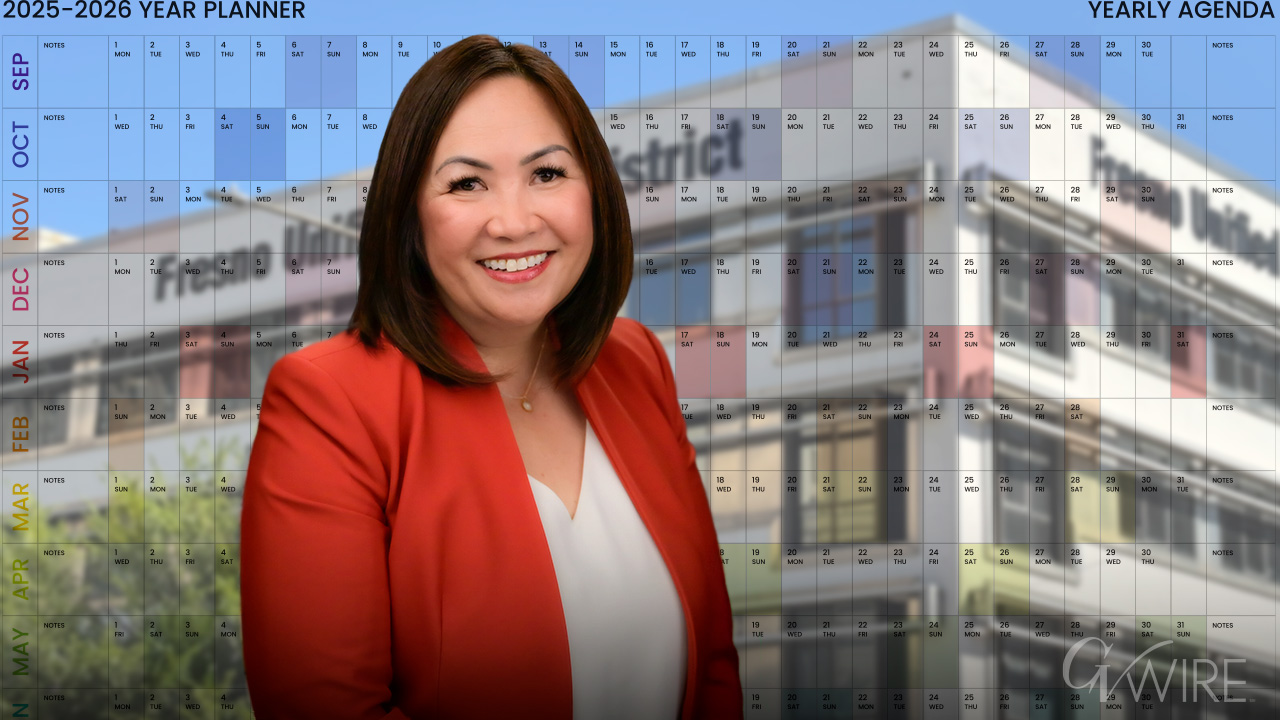
Superintendent Misty Her has officially spent a full school year at the helm of the state’s third largest school district — a time jam-packed with hard choices, community judgement, and a push for change.
“I would say I’m not even the same person anymore (and) for good reason,” Her told GV Wire. “I shouldn’t be the same person, because a good leader is always evolving. And that’s the only way we sustain and we’re able to change.”

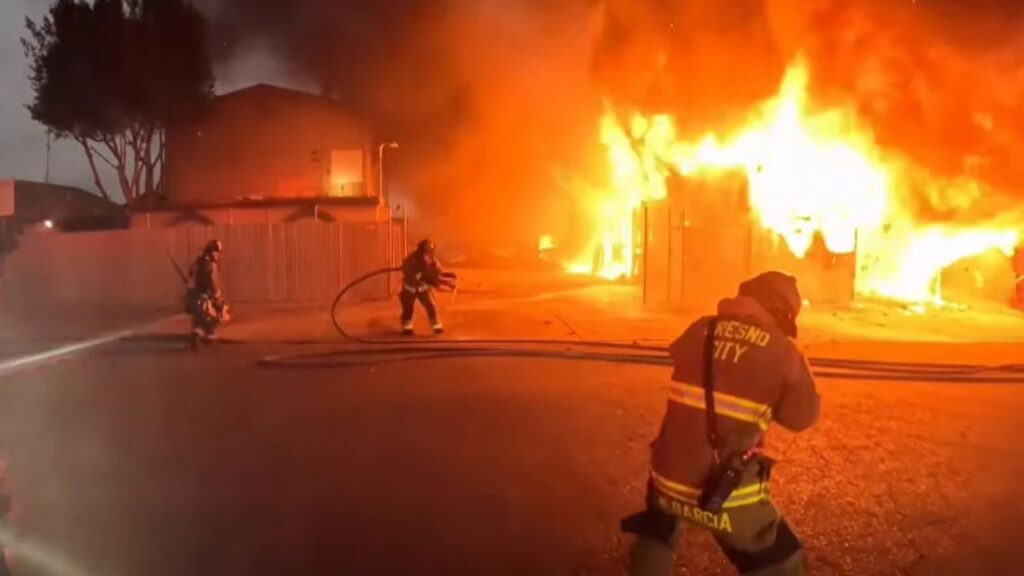
“We’ve seen what can happen in Clovis Unified for decades. But we’re not seeing that right here in Fresno and Fresno Unified. And so, we need to do more for our students. There needs to be an outcry.” — Fresno Mayor Jerry Dyer
Her took over amidst declining enrollment and growing budget deficits, leading to controversial cuts and community scrutiny.
During this time, the administration and trustees honed in on student outcomes, implementing high standards and massive goals.

Some feel that Her is on the right track, leading the district towards better student outcomes. But others aren’t as convinced.
In May, Fresno Mayor Jerry Dyer broke his longstanding silence on educational matters, calling out Fresno Unified’s “unacceptable” scores.
Backing the mayor’s opinion: decades of Fresno Unified student test scores ranking among the lowest in California and the nation, particularly for Black and Hispanic students.
“We’ve seen what can happen in Clovis Unified for decades,” Dyer said. “But we’re not seeing that right here in Fresno and Fresno Unified. And so, we need to do more for our students. There needs to be an outcry.”
Recent assessments provide some hope, with 70% of kindergartener students mastering foundational literacy skills. This places the students on track to becoming proficient readers by third grade, a benchmark for future success.
“It looks like we’ve made some really good gains academically with our kids and we are positioning ourselves and our entire system to really make sure that our kids are able to meet those goals and guardrails,” Trustee Elizabeth Jonnasson-Rosas said.
Her’s Appointment Shrouded in Controversy
Every superintendent tenure is bound to garner supporters and critics, as the district navigates ups and downs. Her gained a fair share of both before she was appointed to the position.
The School Board conducted a lengthy superintendent search, clouded by transparency concerns and disagreements over the search process.
This left Her to serve as interim superintendent for a year, before being appointed by trustees in a 5-1 vote. Trustee Susan Wittrup cast the lone no vote saying there were more qualified candidates.
And she wasn’t the only one against the appointment. The Fresno Teachers Association gave Her a “D+” grade for her performance as interim superintendent in a social media post.
“Conditions have declined in some areas, and input is rarely valued,” the post stated. This is a sentiment that FTA President Manuel Bonilla says still rings true a year later.
However, many celebrated Her’s appointment, filling the School Board room to share their support.
“To bring home-grown talent into the driver’s seat, to bring leadership that’s fostered in this very community. And to be able to pivot with that kind of leadership,” Silas Cha, a professor of political science at Clovis Community College, told trustees. “I think you will be engaging in a very historical move. But at the same time, it’s the right thing to do.”
Her is the first Hmong and first woman superintendent in the district’s history.
Community Outrage Over Salary
After the superintendent’s contract was made public, Her’s salary — $385,500 not including benefits — garnered intense backlash.
“I didn’t ask for anything more than what the other superintendents were getting. If you look at my contract and you look at all the previous superintendents,” Her said.
Former Superintendent Bob Nelson made $246,567 in 2017 in his first year in the top job.
Her’s starting salary is equivalent to Nelson’s starting income when factoring in inflation, a spokesperson told GV Wire at the time. But community members remained shocked at the pay package, especially in comparison to a teacher’s salary.
During that time, FTA invited the community to guess Her’s salary in a social media post.
This spurred the district to respond with a now deleted social media post calling attention to FTA’s executive director Louis Jamerson’s pay: $410,733 in the last fiscal year in salary and other compensation.
That post increased community and FTA backlash with many calling the comparison inappropriate and raising concerns about the district’s culture days into Her’s tenure.
Now, with mounting fiscal concerns, Her told GV Wire “it doesn’t make sense” for her to take a raise.
“I will be the first to volunteer to say that I’ll take the pay cut,” she said.
School Board trustees will evaluate Her in autumn after end-of-the-year test results are available. The contract allows Her to receive a 3%-7% pay bump.
Fresno Unified Centralizes Goals, Prioritizes Monitoring
Fresno Unified has done away with the 20-plus initiatives of the past to focus on four goals and accompanying guardrails.
The 2030 goals, crafted by trustees based on feedback from community listening sessions, center on early literacy, literacy intervention, college and career readiness, and life skills. And to keep the district on track, the superintendent team created interim goals.
The interim goals hold the district accountable while also allowing staff to see what is “working” and what needs to be fixed. This allows the district to strategically implement efficient methods and eliminate what isn’t working.
“If we are off track, I better know and I better be able to understand why we are off track,” Her said. “What’s keeping us off track? And what are the actions that we are going to do that is going to be different the next time?”
Her periodically shares updates on the interim goals, tracking student performance by school site. The data is publicly presented alongside proposed improvement methods, inviting public accountability and boosting transparency.
“We owe it to our community, and we owe it to our families. We owe to our kids,” Her said. “And the only way I know how to operate is to be transparent with everybody.”
Additionally, district leaders have restructured the budget, focusing funding on supporting the goals and guardrails.
Some Teachers See Huge Results
Rachel Nichols, a first-grade teacher at Yokomi Elementary, shared impressive reading results during a School Board meeting.
Latest testing showed 91% of her pupils could read at grade level.
“This has been the most memorable instance in which a policy from the board has had such an enormous positive impact on my day-to-day teaching,” Nichols told trustees. “I see on the faces of the children I work with the sense of empowerment. An accomplishment that learning to read brings.”
One district goal calls for first-graders proficient in literacy based on iReady results to rise from 48% in June 2024 to 80% in June 2030
Nichols shared that 75% of all first graders at Yokomi ended the year reading at grade level — only 5% off the district’s 2030 goal. This is a big jump from previous reports.
Last year, Yokomi failed to meet the district’s interim early literacy goal with only 40% of students on track. The next update will come in August.
The elementary school has historically performed better than the district overall. During the 2024-25 school year, about 47% of third-through-sixth-grade students met or exceeded ELA standards.
Out of the Office, Into the Classroom
From August to the end of the school year, the superintendent has spent every Monday morning co-teaching a first-grade classroom at Mayfair Elementary School alongside lead teacher Ana Bustos.
“All administrators would benefit from doing what she did, which was not make decisions just from downtown through cabinet meetings with data,” Bustos previously told GV Wire. “But to actually come to the classroom and see what is really happening firsthand.”
Her’s time was spent on building literacy, focusing on those students struggling to keep up with their classmates.
The extra support has paid big dividends: 84% of students in that classroom are reading at or above grade level.
Comparatively, at the beginning of the school year, more than half of the students in Bustos’ classroom were behind and in need of intervention.
Her has worked in Fresno Unified for over 30 years, spending a chunk of time teaching. But entering the classroom was an adjustment, she said.
The experience gave her first-hand knowledge about students of today and new teaching methods. For example, Her learned Orton-Gillingham, a literacy intervention method, from scratch.
“It’s taught me a lot about my own system that we’re creating for our teachers out there,” Her said. “It’s allowed me to have conversations with my team to go, ‘Hey, I think we need to make these changes, we need to make these tweaks.’ How did I know that? The only way I knew that was because I was in the classroom.”
And during a recent appearance on Unfiltered, a podcast hosted by GV Wire publisher Darius Assemi, Her shared a call to action. All employees, manager and above, will spend time co-teaching in classrooms during the 2026-27 school year.
Her Tasked with Replicating Results Throughout the District
Despite this improvement, other educators do not have confidence in Her, according to Bonilla.
“I think what we’re hearing the most is that the systems have just simply not changed. Yeah, there are definitely bright spots in individual classrooms, individual campuses, but those are not systems,” Bonilla said. “It’s not because of a leadership team that has implemented, new ideas, or listening to anybody that’s doing the work on the ground, right? It’s usually because folks are overcoming those barriers at the school site.”
Wittrup, who represents the Bullard High region on the school boaard, echoed this sentiment, saying classroom success often comes despite the system not because of it.
However, the district has seen widespread improvements in kindergarten classrooms, surpassing its interim goal. The district will provide public updates on other goals beginning in August, district spokesperson AJ Kato said.
And, according to Roosevelt High region trustee Jonasson-Rosas, this is just the beginning of district-wide improvements.
“Misty’s working on a strategic plan that really will hone down on all the lessons learned and strategies that our educators and our entire system are going to implement to be able to get those gains throughout,” she said.
Declining Enrollment and Budget Require Sweeping Layoffs
Fresno Unified is eliminating 384 positions across the district to “right size” the district amidst the enrollment decline.
“Right now, we’re trying to right size our district. In 2002, we had 80,000 students and 7,000 employees. And right now, we are 67,000 students and 10,000 employees,” Her told GV Wire. “And we don’t have the funding that we used to have.”
The district began to lose thousands of students post-pandemic. And administrators estimate a continued loss of 1,200 to 1,700 students annually over the next seven years.
The district loses about $17 million annually for every 1,000 students enrolled elsewhere.
To stay afloat, trustees approved an early retirement incentive for 573 employees — planning to leave many positions unfilled.
Additionally, the district delivered final layoff notices to 84 certified employees and 196 classified employees who are undergoing a seniority-based “bumping” process.
Local unions and community members have harshly criticized the eliminations, raising concerns about weakening student support and staff burning out.
The central office is also downsizing, cutting 141 positions.
“That’s hard for people,” Bonilla said. “(The district is) saying we don’t have money to do this thing, continue (educators) working directly with students, but we do have money to operate like this. We do have to spend on lawyers for a defamation case. We do to have money for consultants.”
Her Tries to Mend Community Relations
Her has spent a good chunk of the last year in listening sessions with the community and educators, attempting to mend their relationships with the administration.
“It’s very important for me that I’m in front of teachers and that they see me,” Her said. “And they see that I want this really good relationship, because we’re only as good as our teachers.”
When individuals come forward with complaints, Her does not blame others, she said. The superintendent added that she strongly believes in taking responsibility and “putting a mirror” to her actions.
However, Bonilla said that meeting with the community is only the first step.
“If you’re not doing anything to change the things or to address the things that you heard, then you haven’t really heard us at all, right?” Bonilla said. “And in this case, it goes even worse because not only are you not addressing, but you are actually proposing things that are the opposite of what people are asking for… That’s what I mean when I talk about disconnect.”
Bonilla highlighted the recent lateral movement of five principals and 26 vice principals that prompted community outrage.
The early retirement incentive created a massive exodus in site leadership, triggering a chain-reaction of movement. Many educators and community members fought against the reassignments of beloved leadership, which they deemed “detrimental” to their schools.
Trustees chimed in during the last board meeting, voicing opposing opinions on the matter. But Her chose to remain silent on the dais, and a district spokesperson confirmed the district would not reconsider the move.
FTA Relationship Continues Rocky Course
The Fresno Teachers Association and the district often find themselves on opposing sides, creating a seemingly less than friendly relationship.
Her dismisses such chatter as mere public speculation, describing the disagreements as “good, healthy debate.”
“Sometimes the narrative out there is that we don’t like to work together, and I don’t believe that to be true,” Her told GV Wire. “The things we agree on is we want what’s best for our kids. … That for me is enough to always sit across the table from President Bonilla and his team.”
However, Her and Bonilla did not start off on the best foot.
Mere weeks into her tenure, Her directed then chief communications officer Nikki Henry to compile instances of the union leader criticizing the superintendent in an “inflammatory, unprofessional, or dismissive way.”
The dossier made headlines after the FTA discovered the attributed quotes were manufactured using artificial intelligence.
“Valid criticism of things that needed to be addressed was taken as personal attacks,” Bonilla said, reflecting on the situation. “That remains a very valid concern because it feels like people are not being heard.”
More recently, FTA leaders have been vocal critics of position eliminations, reserve levels, and what they label “a culture of fear and retribution.”
Meanwhile, Fresno Unified and FTA are entering contract negotiations that figure to be tense and hard fought.
“I don’t doubt that there’s a desire and there’s love for students from our superintendent one bit,” Bonilla said. “It’s how we get there and the apparatus, the organizational structure, the responsibilities and accountabilities that we’re speaking at.”
Trustees Set to Review Misty Her in Fall
Trustees will evaluate Her’s performance as superintendent using a new template, which tracks the progress of the district’s goals and guardrails.
The evaluation will take place sometime in autumn, once all end-of-the-year results are in.
In the meantime, Her has been asking trustees for advice, a step-up from former Superintendent Bob Nelson who did not seek trustee opinion, according to Wittrup.
Wittrup’s main concerns surround hiring decisions, performance of top brass, and how the district is addressing a long line of potentially costly lawsuits.
However, the ultimate measure of success and performance is elevating student outcomes, which Wittrup says she hasn’t quite seen. But Wittrup added that she believes productive steps have been made and the goals set a positive tone.
Another trustee, Jonasson-Rosas, pointed to the early unity between the school board and the superintendent as charting a new course for the district.
“With Superintendent Her and the board aligning towards goals and guardrails, we’re really having more focused conversations on that in the district than we were before,” Jonasson-Rosas said.
However, she said there is still work to do around implementation and hopes the entire community will work together in supporting student outcomes.