
|
Getting your Trinity Audio player ready...
|
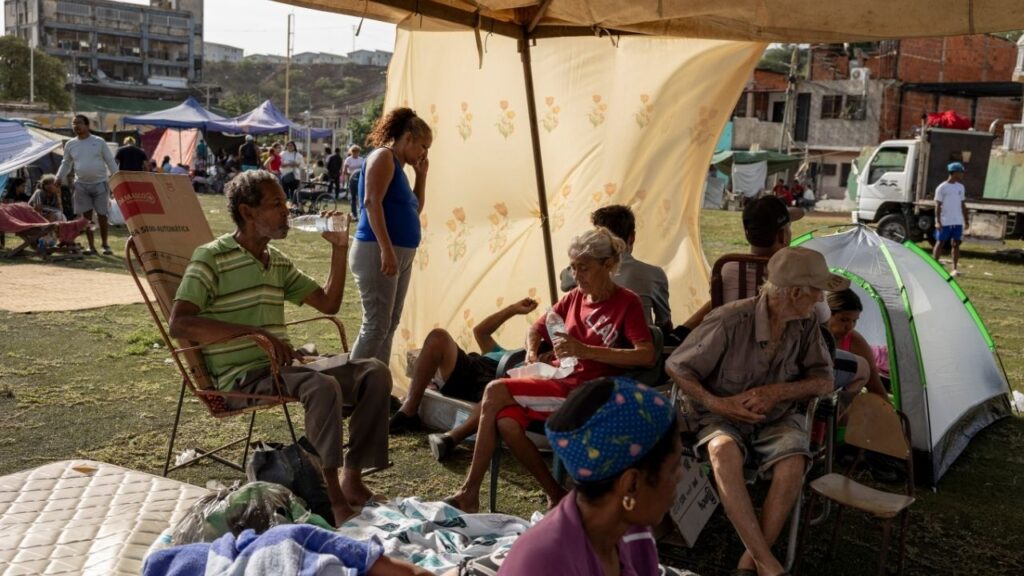
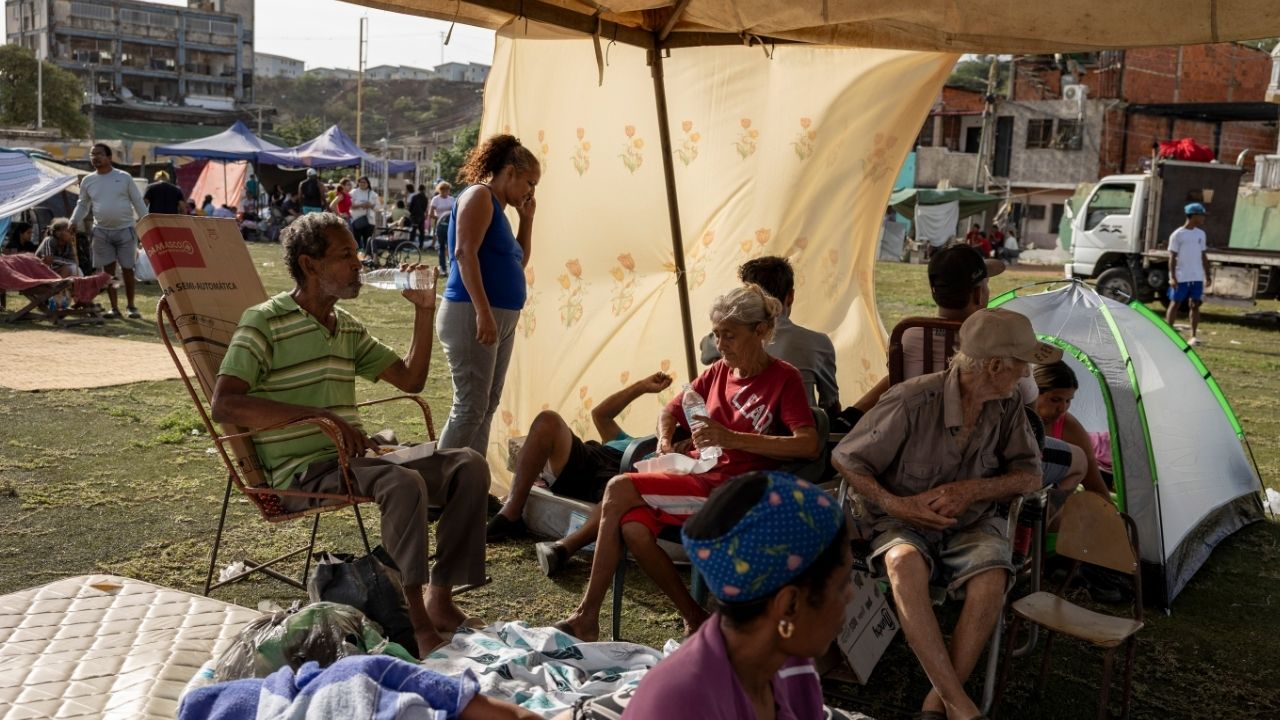
CARACAS, Venezuela — With nowhere to go, Venezuelans pitched tents in public plazas and by the side of busy highways. Families sprawled out on mattresses and over thin blankets, on patches of grass and concrete benches. Others went to parking lots to sleep in their cars.
Many Venezuelans stayed outside for a second night in a row after back-to-back earthquakes Wednesday toppled at least 250 buildings and left nearly 3,000 families homeless, according to Venezuelan officials.
“We’ll stay here, best to be safe because there have been many aftershocks,” said Aliria Álvarez, 61, sitting on the sidewalk outside her apartment building in Caracas, the capital, on Thursday evening.

She was accompanied by five relatives and a neighbor, all too afraid to sleep in their apartments, which emergency management workers had told them were not safe to stay in until they had been inspected for damage.
They sat on plastic chairs, next to a tent they had set up, and hunkered down for another night, though sleep was hard to come by.
As rescue workers struggle to dig out people still trapped in the rubble after the 7.2- and 7.5-magnitude quakes, Venezuelan officials were grappling with the need to house those who had suddenly lost their residences and assure others that their homes were safe to return to.
Delcy Rodríguez, Venezuela’s interim president, said Thursday that the government would provide temporary shelters and make hotels available for those whose homes were destroyed or severely damaged, though it was unclear how many people that would cover.
The mayor of Caracas, Carmen Meléndez, also announced that the city had opened at least four emergency shelters in basketball courts and stadiums.
A baseball field in La Guaira, the northern coastal city hit hardest by the earthquakes, was taking in dozens of displaced families, but there was little sign of a government presence there when a New York Times photographer visited Thursday afternoon. Most of the supplies donated for homeless families were being dropped off by citizens on bikes and in trucks.
Arsenia Beatriz Mayora, 70, sought shelter at the field along with 10 family members who had all narrowly escaped before their home came crumbling down.
“It was completely destroyed,” Mayora said. “All that was left was the facade.”
Yudith Granado, 51, opted to sleep on a mattress outside her apartment building with her husband and daughter Thursday. They were scared of going inside their first-floor apartment, where cracks had formed in the front door and along a wall, except to take a quick shower.
“We were able to bathe, with fear and quickly,” she said.
Granado said she had shown videos of the damage to two emergency management workers, who told her that they couldn’t help and that the family had to wait for firefighters to inspect the home.
“We’re here waiting for a response,” she said.
Carlos David Carrasco, a university professor, toured four plazas in Caracas on Thursday evening where more than 100 families had gathered to spend the night, including pregnant mothers, children, older people and pets.
Carrasco, 33, posted videos of the overnight encampments on social media, he said, to draw awareness to the situation.
“We’re going into the third day of this and the need is only going to go up,” Carrasco told the Times in a voice message.
“It’s clear that the government doesn’t have the capacity right now,” he added.
—
This article originally appeared in The New York Times.
By Luis Ferré-Sadurní and María Victoria Fermín/Fabiola Ferrero
c. 2026 The New York Times Company