
|
Getting your Trinity Audio player ready...
|
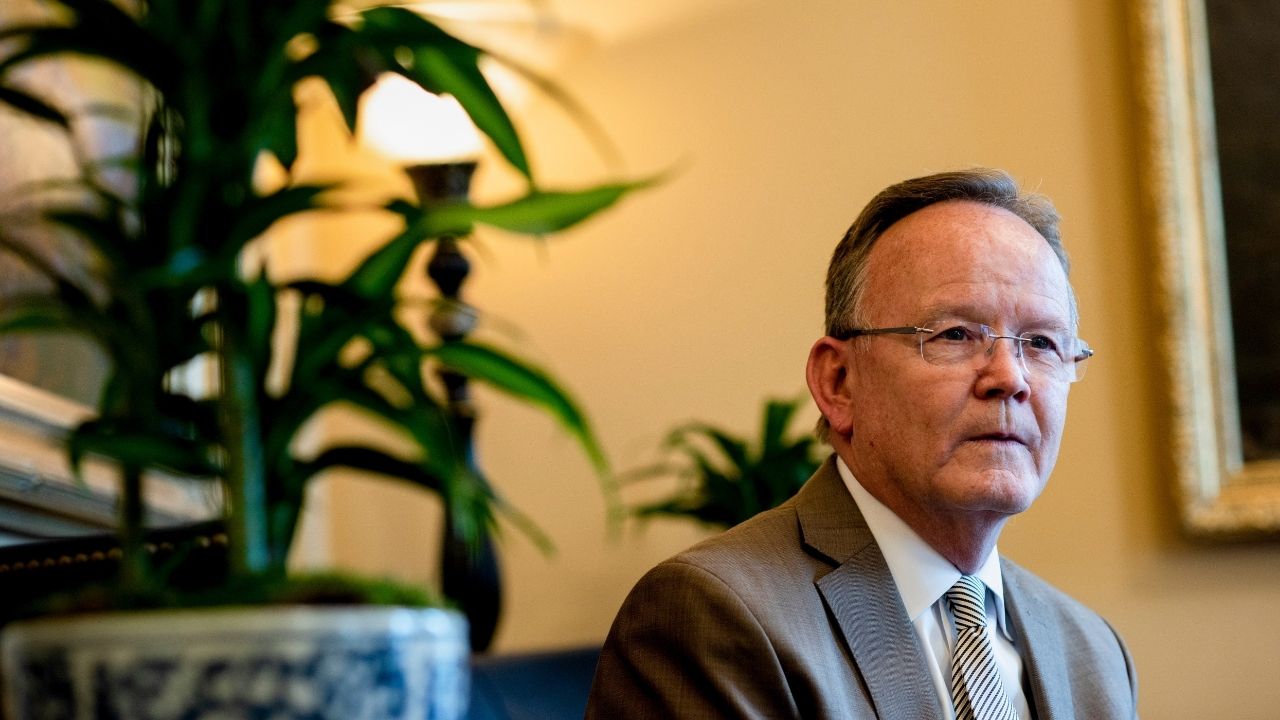
The president of the Utah Senate who championed a huge data center beside the Great Salt Lake was defeated in his Republican primary Tuesday night, one of the most high-profile signs of the voter backlash to data center projects.
The vote to oust the Senate president, J. Stuart Adams, was a stunner. Adams was one of the longest-serving and most powerful politicians in Utah, a solidly Republican state, and had won earlier reelections with little opposition.
Adams lost his Senate seat to Stephanie Hollist, a former university lawyer, who accused Adams and Utah’s political establishment of lacking transparency and ignoring their own voters by approving a data center project backed by celebrity investor and “Shark Tank” personality Kevin O’Leary.

Adams did not directly represent the 40,000-acre proposed site of the data center in Box Elder County, a fast-growing farming and industrial area about 60 miles north of Salt Lake City.
But he became the focus of an anti-data-center groundswell because he served as chair of a Utah agency that approved initial plans this spring to build the data center, known as Stratos.
Thousands of Utah voters, many of them lifelong Republicans and members of the Church of Jesus Christ of Latter-day Saints, objected, venting their frustration in public comments and heated public meetings.
They worried about how much energy it would consume and how its water usage would affect the drought-stricken Great Salt Lake, and accused state officials of granting the project generous tax breaks while ignoring the public’s concerns.
On Wednesday afternoon, one Republican commissioner in Box Elder County who voted to move ahead with the data center conceded the race in his own primary election, and another was behind in his race, though the results had not been called.
O’Leary has said the project would create thousands of jobs and millions of dollars in revenue for local governments, supply its own power and could end up contributing water to the Great Salt Lake.
Adams did not directly address the Stratos project in his concession Tuesday night but congratulated Hollist while saying he had worked to “champion policies that have strengthened Utah, supported businesses, helped working families.”
Hollist said that her win showed that voters were “tired of feeling like they’re not seeing themselves represented in government.” She is expected to win the November general election in the heavily Republican district, and Utah legislators will have to pick a new Senate president.
Adams had won reelection for years with minimal opposition, but Hollist said she heard from many discontented voters as she knocked on doors over the past six months. The data center, she said, had been “the straw that broke the camel’s back” for many in Adams’ northern Utah district.
The public’s concern showed that Republican voters were just as worried about the impact of data centers as Democrats, she said: “It concerns our way of life — our resources, our water, our air quality. Across the Republican spectrum, people care about it.”
The furious debate over building AI data centers has helped to tip races in Alabama, Missouri, Wisconsin and beyond, with supporters arguing they will generate money and jobs and opponents assailing their environmental impacts and a lack of transparency surrounding their approval and operations.
In April, St. Louis Public Radio reported that voters in Festus, Missouri, ousted four city councilors who had supported a $6 billion data center project. That same month, voters in Menomonie, Wisconsin, elected a new mayor who campaigned on his opposition to data centers, according to ABC News 18.
In early May, after state and local officials in Utah voted to move ahead with the Stratos data center, Adams praised it, saying, “This project supports the free world through reliable energy supply while creating real opportunity for communities here at home.”
But as the issue heated up in Utah’s primary election, Adams changed his tune, sending O’Leary a letter that demanded huge cuts to the size and scope of the project. O’Leary obliged. The Stratos project has not broken ground yet and still needs to go through several other reviews.
Adams’ campaign sent out mailers that praised Adams for getting tough on data centers, including one that showed O’Leary underwater inside a Utah-shaped shark tank. The image appears to be generated by artificial intelligence.
—
This article originally appeared in The New York Times.
By Jack Healy/Niki Chan Wylie
c. 2026 The New York Times Company