

|
Getting your Trinity Audio player ready...
|
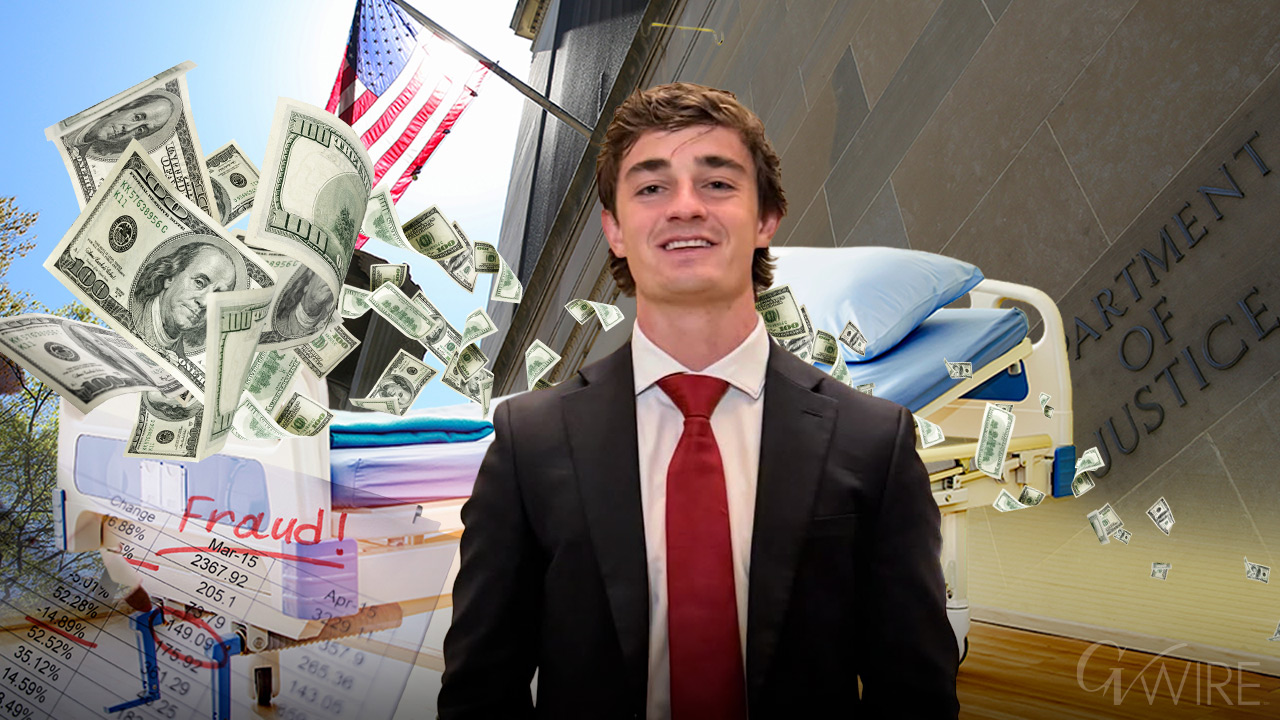
On Tuesday, the U.S. Department of Justice announced federal charges against 10 Southern California defendants associated with defrauding Medi-Cal and Medicare for hospice care.
At the same time, a bill from Assemblymember Ali Macedo, R-Visalia, received a hearing Wednesday in the state Senate, which would put into law fraud protections prescribed by the California Department of Public Health, which said earlier this month that a “factual emergency exists.”
The report stated immediate action was needed to “avoid serious harm to public peace, health, safety, and general welfare.”

Macedo, said patients and families going through hospice often don’t know what questions to ask, what warning signs to look for, or how to tell whether a provider is acting appropriately.
She said the bill codifies “commonsense” accountability measures.
“This bill is about a very basic principle: If a provider is going to bill Medi-Cal for end-of-life care, the state should have a timely, clear, auditable record that the patient actually elected hospice and that informed consent was obtained,” Macedo told GV Wire. “Given the documented fraud concerns — and now CDPH’s own finding of a factual emergency — that is a very reasonable safeguard.”
Tangipa Wants Apology to Shirley
The criminal charges and emergency regulations come as California legislators advance another bill dubbed by Republican leaders as the “Stop Nick Shirley Act,” which both provides anonymity to care providers and restricts posting public images and information of business owners and workers.
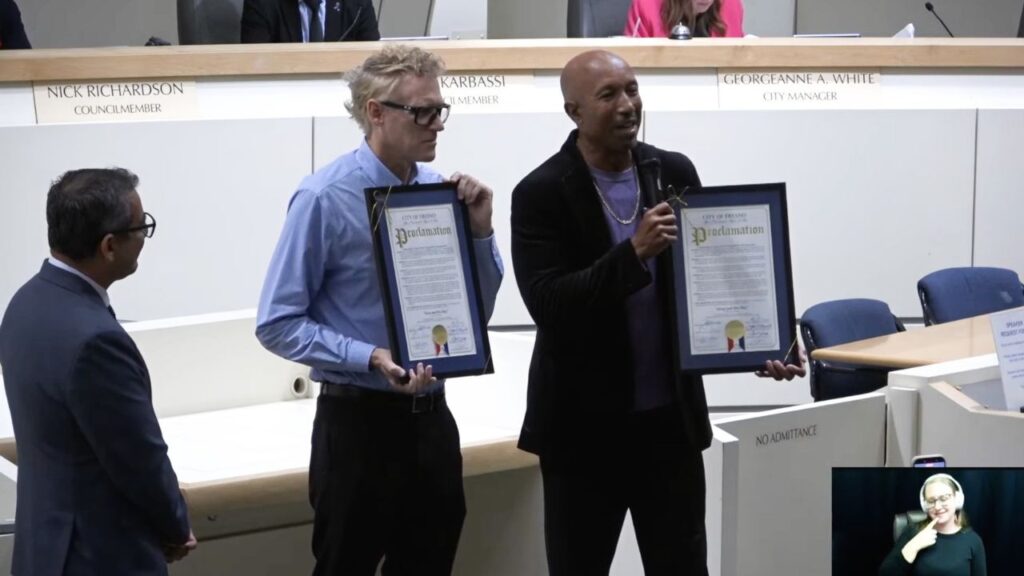
Earlier this month, Assemblymember David Tangipa, R-Clovis, said the CDPH audit vindicates Shirley, and Tangipa called on legislators to apologize to the YouTuber and investigator.
“The state of California owes Nick Shirley an apology…” Tangipa said on social media Sunday. “And not only him, owes the other legislators an apology as well for calling out the rampant fraud that is in our medical system.”
Charges Allege Hundreds of Millions in Hospice Fraud
Federal law enforcement arrested five defendants as part of the operation.
Christina Mareik, a Whittier woman, is accused of submitting $270 million in fraudulent claims for unnecessary Medi-Cal prescription drugs over a one-year period.
From May 2022 to April 2023, Mareik allegedly coordinated with others, including pharmacy workers, to secure drugs that numerous patients reported not needing.
While pharmacy workers approved thousands of fraudulent prescriptions, Mareik handled patient complaints to avoid involving law enforcement, prosecutors claim.
Mareik could face 10 years in prison.
Oren David Shachar, 59 of Van Nuys, Abraham Shin, 66 of Corona, and Jeannie Choi, 57 of Torrance, are charged with running hospice care companies that billed Medicare for $27 million.
Shachar, through his several hospice care companies, allegedly coordinated with marketers Choi and Shin to submit false claims for unnecessary hospice services for patients who were either not terminally ill or who had already died.
In 2025, Shin and Choi allegedly sold patients’ personal information to Shachar to help with the fraud. A conviction could result in “decades” in federal prison, according to a news release.
Healthcare Fraud Effort Comes as Trump Pardons Healthcare Fraudsters
The Department of Justice said the charges are part of a “new era” in federal, state, and international cooperation to combat healthcare fraud.
In total, prosecutors have brought charges against 455 defendants, including 90 doctors and other licensed medical professionals, involving $6.5 billion in false claims.
First Assistant U.S. Attorney Bill Essayli said in a statement that the department would seek long prison sentences for offenders.
“Public health programs are intended to support the elderly, the ill, the needy, and other vulnerable members of our communities,” Essayli said. “It is not there to enrich fraudsters. Today’s announcement highlights our determination to hold anyone who defrauds our nation’s health system criminally accountable. We will find you. We will arrest you. And we will seek long prison sentences.”
While the DOJ pursues healthcare fraud, this month, Gov. Gavin Newsom’s office pointed out that President Donald Trump had pardoned many criminals convicted for various fraud crimes.
On Dec. 22, 2020, Trump pardoned Philip Esformes, who was found guilty of committing $1.3 billion in Medicare and Medicaid fraud and sentenced to serve a prison sentence through 2033.
That year, Trump also pardoned Judith Negron, convicted for her role in $205 million fraud scheme in Florida. Negron served less than a quarter of her 35-year prison sentence, a release stated.
Newsom’s office estimates collectively, those granted clemency committed at least $1.6 billion in healthcare fraud.
AB 2624 Provides Protections to Service Workers: Proponents
Shirley’s investigative YouTube video comes after years of warnings from traditional media and the California State Auditor’s Office. A 2022 report from the Auditor’s office — following a 2020 investigation by the L.A. Times — estimated hospice companies in Southern California had overbilled Medicare by $105 million in a single year.
In 2021, the state put a moratorium on new hospice agency licenses.
Shortly after the extent of hospice fraud came back to public light, Assemblymember Mia Bonta authored AB 2624, which expands confidentiality requirements under the “Safe At Home” program for service providers helping immigrant communities.
It keeps personal information in public records redacted and also prohibits people from posting on the internet the personal information or images of service providers “with the specific intent that another person imminently use that information to commit a crime involving violence or a threat of violence.”
Bonta’s office did not respond to requests for comment from GV Wire.
Bonta in her bill’s summary said the proposed law would give service providers the same protections as other healthcare workers to those working with immigrant communities.
“The national anti-immigrant political climate has put immigration services providers at higher risk of danger,” Bonta said in her report. “The media and services providers have reported that organizations that assist immigrants have become targets of extremists.”
On Tuesday, AB 2624 passed the Senate Judiciary Committee 11-2 and is now headed to the Senate Public Safety Committee.
AB 2624 Could Be Used to Hide Hospice Fraud: DeMaio
Opponents of the bill, however, said the protections are too broad, allowing individuals to demand the removal of video recordings, even if taken in public.
The bill allows legal action against people who post personal information.
Assemblymember Carl DeMaio, R-San Diego, said the bill could used to force the removal of video evidence of fraud.
“California Democrats are trying to intimidate citizen watchdog journalists and protect waste and fraud happening in far-Left-wing NGOs,” DeMaio said in a statement. “AB 2624 can only be described as the ‘Stop Nick Shirley Act’ — a bill designed to silence citizen journalists exposing fraud and abuse of taxpayer dollars.”
Macedo Bill Gets Wednesday Hearing
On Wednesday, Macedo’s bill, AB 2538, was heard at the State Senate Committee on Health. The bill codifies into law emergency recommendations made by the state’s public health department on June 1.
The Department of Public Health’s report said current state laws have allowed managers to oversee more operations than realistically possible. For instance, one administrator was in charge of 27 agencies.
Others used names and personal information of people not actually employed.
Earlier this year, Macedo visited Van Nuys, describing the area as “ground zero for hospice fraud, where one location showed nearly 200 active hospice and home health licenses.”
The new regulations would clarify standards, allowing for more stringent screening, require personnel qualifications, and generally give the department more authority to enforce the law.
“If emergency regulations are not adopted immediately, the Department will not have the robust regulatory requirements needed to protect the health and safety of hospice patients and to enhance its ongoing efforts to address the indicators of fraud and abuse identified in the Audit Report,” the report stated.