
|
Getting your Trinity Audio player ready...
|
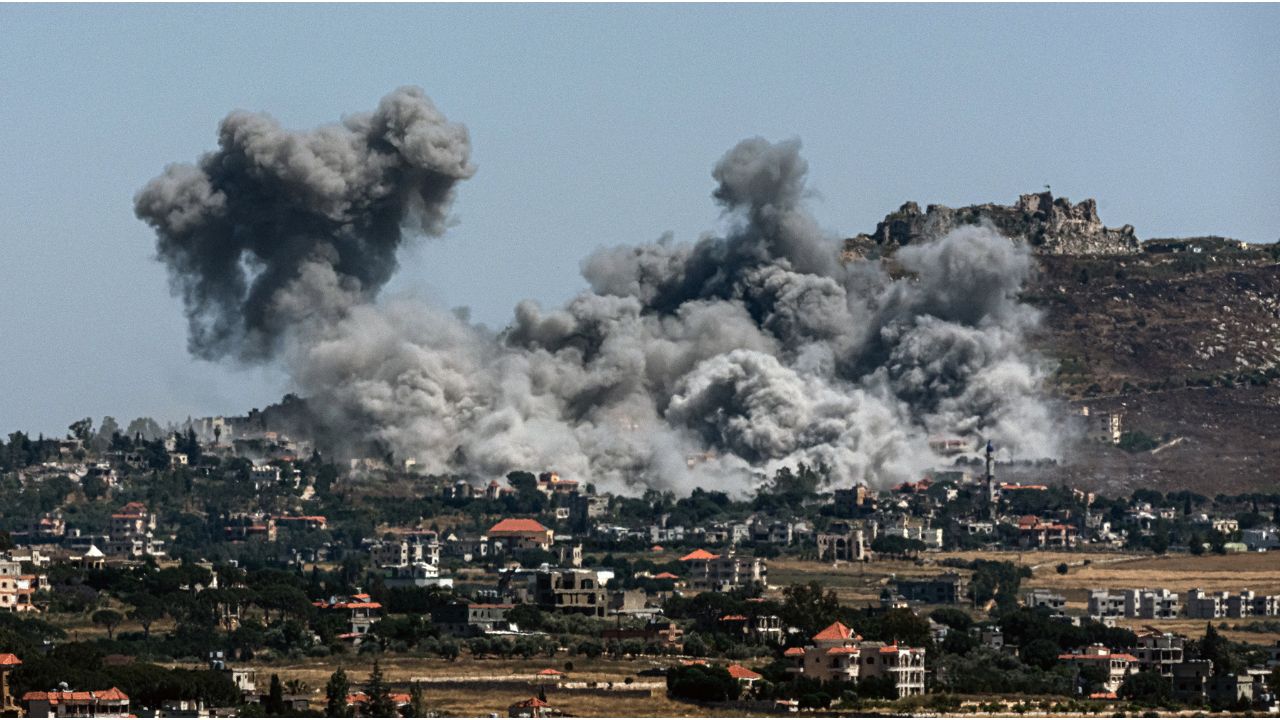
The Israeli military said it was still targeting Hezbollah in southern Lebanon on Thursday, hours after the Trump administration brokered a new but tentative ceasefire between the two countries.
The agreement could help clear an obstacle to ending the war in Iran, which has demanded that Lebanon be included in a broader peace deal with the United States. But negotiations between Washington and Iran remain murky, with issues including the fate of Iran’s nuclear program unresolved.
On Thursday, President Joseph Aoun of Lebanon said the ceasefire could begin within a day of the agreement being officially endorsed by “all relevant parties” and once guarantees for its enforcement were clear.

Hezbollah, the Iranian-backed militant group in Lebanon that is not under the direct control of the Lebanese government, did not immediately comment on the deal. But the group said it had fired two rocket salvos at Israeli troops in the border region.
Under a U.S.-brokered ceasefire that took effect in April, Israel said it retained its right to act in self-defense but would not carry out “offensive operations” against Lebanese targets by land, air or sea.
On Thursday, Avichay Adraee, an Israeli military spokesperson, posted a warning on social media to residents of southern Lebanon not to return to an area south of the Zahrani River, about 25 miles from the border with Israel. “The fighting in southern Lebanon continues,” he said.
A U.N. peacekeeper from Serbia died Thursday and two others were wounded when mortar shells struck their base in southern Lebanon overnight, hours before the agreement was reached in Washington. It was not clear where the mortars were fired from, and the United Nations said it was investigating.
Whether the ceasefire holds will depend in part on the cooperation of Hezbollah, which does not answer to the Lebanese government and was not a party to either set of negotiations, raising questions about whether the deal could be enforced. The April ceasefire has been largely ignored, with both sides continuing to trade attacks.
In a statement Thursday, Israeli Defense Minister Israel Katz said the agreement “includes an unequivocal statement of the objective of disarming Hezbollah across all of Lebanon and condemnation of Iran’s involvement in Lebanon and the region.”
The agreement, which was confirmed by the U.S. State Department, calls for the creation of “pilot zones” where the Lebanese military would “take exclusive control” and that all “nonstate actors” would be barred.
In recent weeks, Prime Minister Benjamin Netanyahu of Israel has ramped up his rhetoric against Hezbollah, even as truce talks have taken place.
Here’s What Else We’re Covering:
— U.S.-Iran negotiations: President Donald Trump said Wednesday that the war in Iran was “not a big thing” for the United States, claiming it was going better than he expected. The United States and Israel launched the war on Feb. 28, more than three months ago.
— U.S.-Israel relations: Trump also said in an interview with The New York Post published Wednesday that he had used expletives in a recent phone conversation with Netanyahu but that they had a broadly positive relationship.
— Kuwait attack: A spokesperson for Iran’s Revolutionary Guard said it had not fired at the Kuwait airport terminal, blaming Wednesday’s damage on a failed U.S. interceptor missile. The U.S. military said the Iranian claim was false.
—
This article originally appeared in The New York Times.
By Lara Jakes and Yan Zhuang/Daniel Berehulak
c. 2026 The New York Times Company