



|
Getting your Trinity Audio player ready...
|
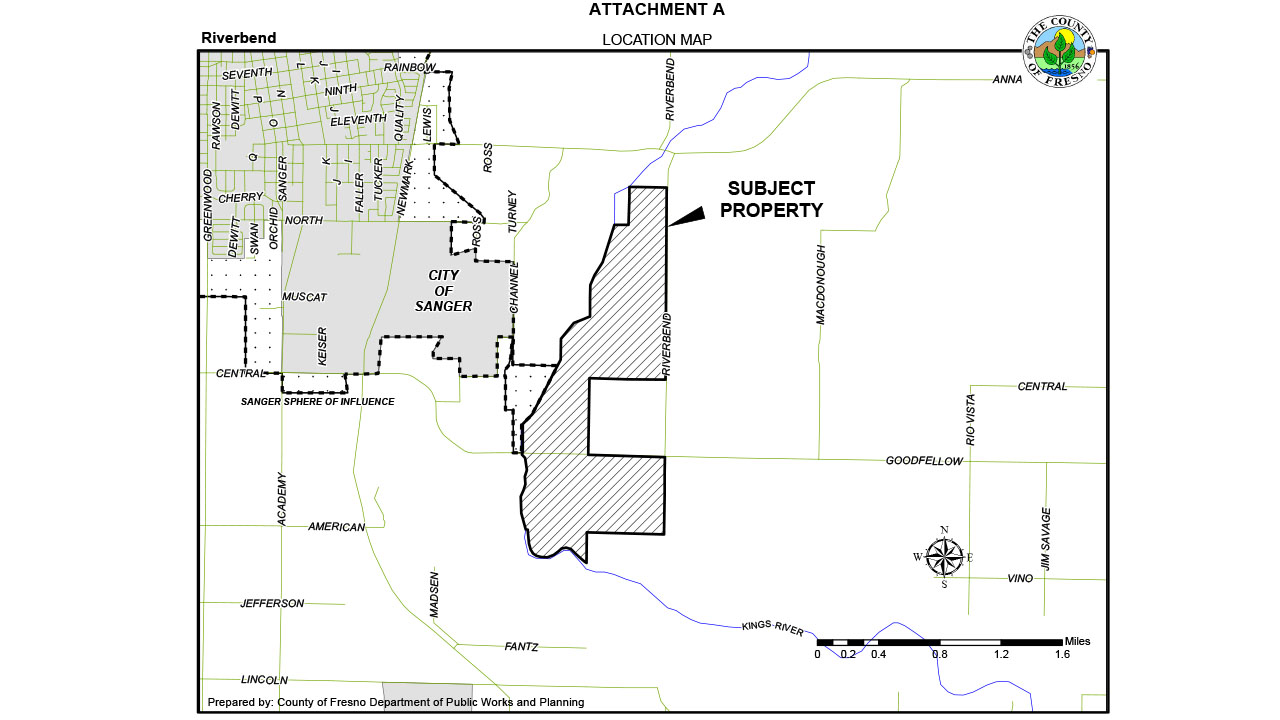
More than 11 years after first approving a mining project east of Sanger, the Fresno County Board of Supervisors on Tuesday agreed that landowners have done enough work to keep the project alive.
The decision came despite the objections of neighbors, the Kings River Land Trust, and the Kings River Conservancy. They say conditions near the river have changed since 2015.
Sue Buckley, president of the Kings River Conservancy, asked supervisors to deny the project.

“Things have changed since this issue was brought before you before,” Buckley said. “If you were to move forward in any way please consider a brand new environmental impact. I think the eagle’s nest that’s sitting right on top of that property near the river, those eagles might appreciate that.”
Soft Costs Count as Development: Attorney
On a 4-0 vote, with Supervisor Brian Pacheco recusing himself, supervisors found that the $1 million in soft costs spent on the 833-acre Riverbend Sand & Gravel project constituted “substantial development” — a determination needed for the project to continue.
The agreement gives Riverbend Sand & Gravel two years to get significant foundation work or grading work completed. Otherwise, the permit could be revoked.
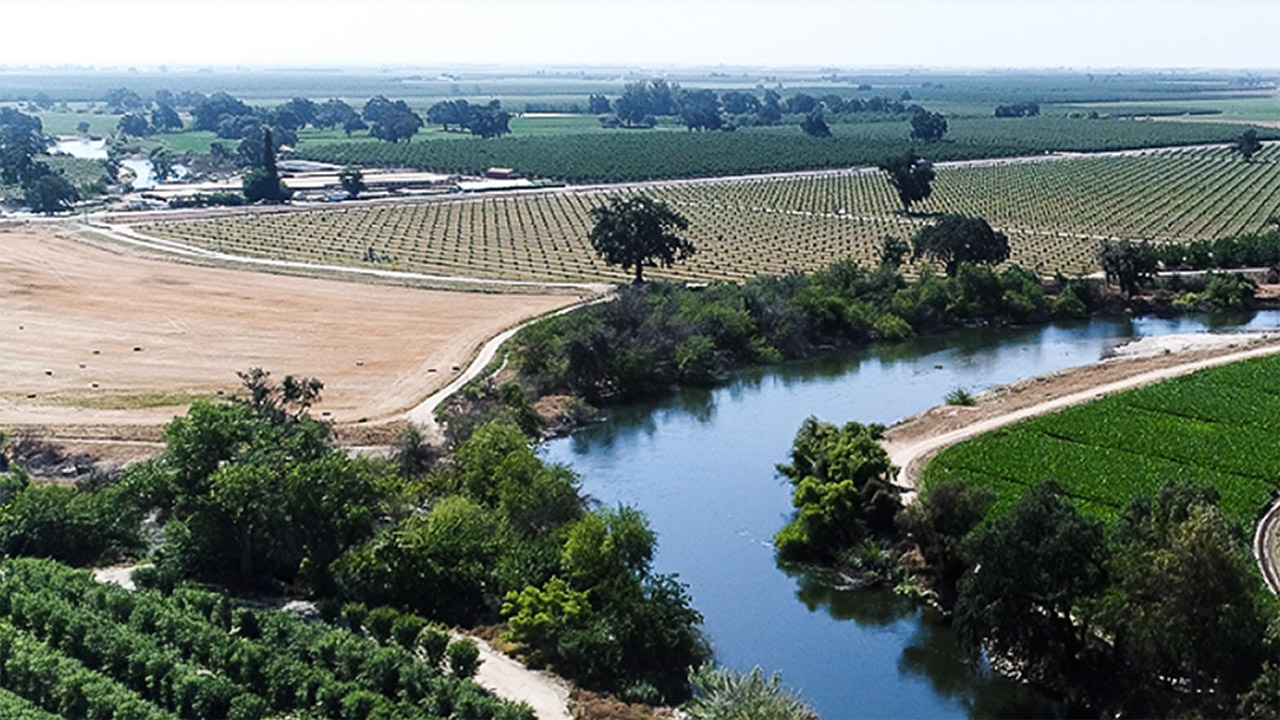
The land, which is surrounded by farms, grows olives, walnuts, and grapes, according to staff analysis.
In 2024, the Fresno County Department of Public Works & Planning halted the project after saying the permit to operate had expired due to inactivity.
Landowners said they spent the time since 2015 meeting with five different mining companies before ultimately reaching an agreement with Martin Marrieta Materials, which operates a nearby mine. That 2024 determination caused Martin Marrieta to withdraw from the agreement, attorney Patrick Mitchell told supervisors.
Over the years, they spent money on permitting approvals, a new fence, and electrical work. Mitchell said California law credits those soft costs as development.
“Had county staff not taken the incorrect position in the spring of 2024 that (the permit) had expired, Martin Marrietta would be mining the site by now,” a letter from attorney Patrick Mitchell to the county stated.
Chris Motta, manager of the county department, said in a 2025 letter that how much was spent was not important but rather the physical improvements.
“Here, the sole pieces of constructed infrastructure are a fence and power connection,” Motta wrote at the time.
Sand, Gravel Essential for Construction: BIA
Mining activities would yield about 1.6 million tons of construction material per year over a 75-year approved lifespan, Mitchell said. Of the 833 acres, 619 would be mined, with the remainder acting as a buffer between operations and the river.
Engineer and Senior Quality Control Manager Nathan Shwiyhat with Martin Marietta told supervisors that several mines throughout the county have gone dry in recent years.
“The cost of construction and the maintenance of our roadways, buildings, airports, housing will certainly increase as construction material will need to be imported from farther away,” Marietta said.
Darren Rose, president and CEO of the Fresno Madera Building Industry Association, said having nearby sources of materials means cutting down on construction and greenhouse gases.
He also said the best materials come from waterways such as the Kings River.
“At the core, every house, foundation, road, and curb in the region depends on a stable, nearby approximate aggregate supply,” Rose said. “It speaks to long-term resource scarcity.”
Property owner and farmer Steve Scheenstra, whose almond farm is surrounded by the property, said the mining operations would negatively impact his business.
“It’s going to devastate my property value and my ability to farm,” Scheenstra said.
He said the $1 million spent over the 11 years did not constitute much. According to Mitchell’s presentation in some years, only a few thousand dollars were spent.
“Any permit that you approve, if someone trickles out a little bit of money for a few years, you’re giving them an infinite timeline,” Scheenstra said.
Water Issues on Kings River Have Changed in 11 Years: Neighbor
The agreement with Riverbend indemnifies the county from future lawsuits.
In the years since 2015, the Sustainable Groundwater Management Act has been implemented, and neighbors say nearby well levels have dropped.
A family of bobcats and eagles have begun living on the property since then, added Joann Grunwald, who told supervisors she lives near the property.
Most opponents said the project needs to do a revised environmental study to see how mining operations would affect water, traffic, and roadways.
Environmental studies can cost tens of thousands or hundreds of thousands of dollars.
Supervisors, however, said their decision was not about the environmental impact but whether or not the company had done enough work to keep its permit.
“We can’t rehash what took place 11 years ago,” Magsig said.
Supervisor Buddy Mendes, whose district includes the project, said he has not heard about water table issues in the area. He is the chair of the Kings River East Groundwater Sustainability Agency.
In a line of questions from Supervisor Luis Chavez, county counsel Doug Sloan told board members they are allowed to interpret their own ordinances.
Chavez said if the company doesn’t meet the requirements within the two-year deadline, the matter would return for review.