
|
Getting your Trinity Audio player ready...
|
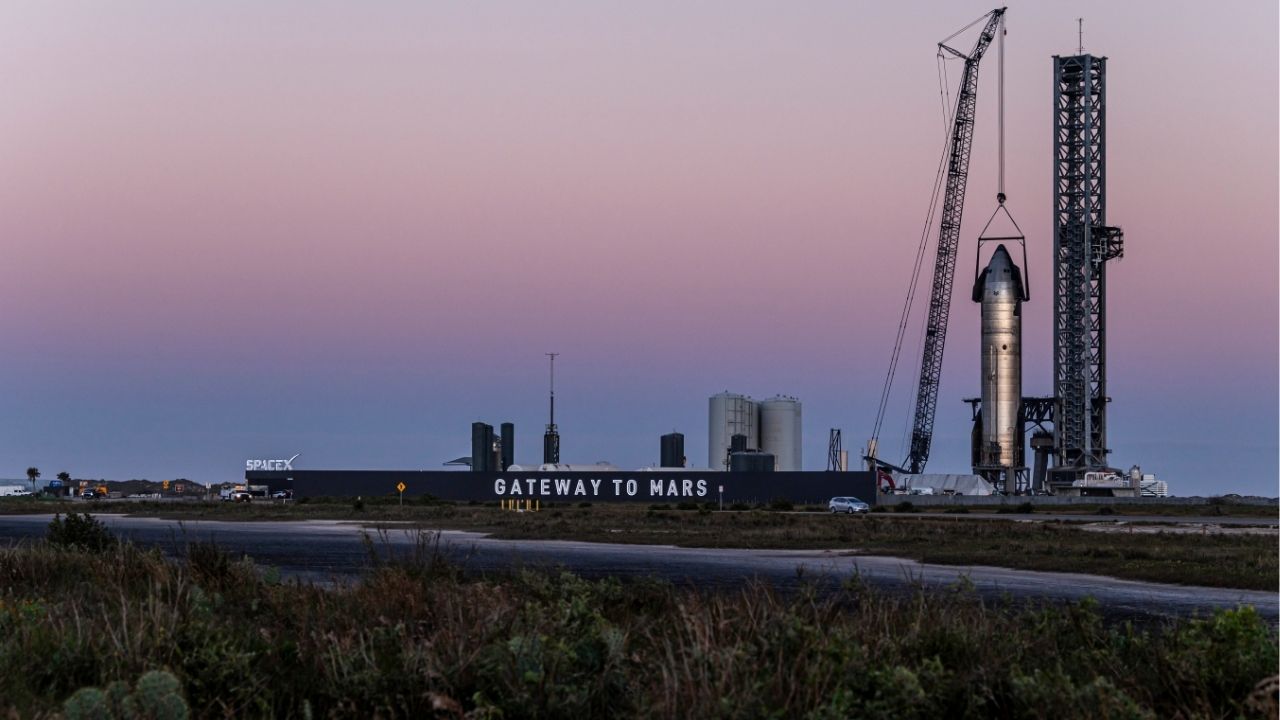
The scale of Elon Musk’s ambitious plan to build a giant computer chip plant in Texas is becoming clear — and it is stunning.
The first stage of the chip manufacturing project led by his rocket company, SpaceX, will cost at least $55 billion, according to a public hearing notice filed on Wednesday in Grimes County, Texas, where the factory will be located. Total spending could reach $119 billion.
The project, called Terafab, is intended to supply chips to power artificial intelligence for SpaceX and Tesla, Musk’s electric car company. SpaceX is also asking for tax breaks for the project, something that will be discussed at a hearing next month, according to the notice.

SpaceX is pursuing the chip manufacturing plant as the rocket company prepares to go public as soon as June, in what is likely to be one of the largest initial public offerings ever.
Even as SpaceX’s main businesses involve rocket launches and offering satellite internet, Musk has increasingly used the company to push his AI ambitions. This year, SpaceX bought xAI, Musk’s AI startup, creating a company with a valuation of $1.25 trillion.
Last month, SpaceX announced a $60 billion deal to acquire the AI startup Cursor, which makes a code-writing assistant. And Musk has also pitched the idea of AI data centers that would orbit Earth.
The Terafab venture comes amid a broader race to manufacture enough chips to power the fast-growing technology. The AI chipmaker Nvidia’s valuation has skyrocketed to make it the most valuable company in the world. Google, Amazon and others are racing to produce their own AI chips.
The Musk project could also prove crucial for Intel, the big American chipmaker that has struggled in recent years. Last month, Intel announced that it will be joining the Terafab project to “design, fabricate and package ultra-high-performance chips at scale.”
Musk’s AI efforts are starting to gain momentum. On Wednesday, the AI startup Anthropic said it had made a deal with SpaceX to use all of the computing capacity from the rocket company’s Colossus 1 data center in Memphis and its more than 220,000 Nvidia AI chips.
Musk, the world’s richest person, is also embroiled in a contentious court battle with OpenAI, which Musk cofounded. Musk sued the AI startup in 2024 over allegations the company had breached its founding contract when it took on Microsoft as an investor and started creating commercial products.
(The New York Times has sued OpenAI and Microsoft, claiming copyright infringement of news content related to AI systems. The two companies have denied the suit’s claims.)
SpaceX did not immediately respond to a request for comment. Wednesday’s filing called the project “a transformative investment in domestic semiconductor manufacturing capacity.”
Musk is well-known for making big, long-term bets. And his blueprint for the chip manufacturing complex in East Texas fits that mold, analysts said.
The cost of building modern chip factories has steadily increased in recent years. New ones typically cost $10 billion to $30 billion, with some costing even more. A new semiconductor factory usually takes three to five years to build and equip with sophisticated machinery.
Terafab will be the “most epic chip-building effort ever — combining logic, memory and advanced packaging under one roof,” Musk wrote in a post on the social media platform X last month.
—
This article originally appeared in The New York Times.
By Steve Lohr/Meridith Kohut
c. 2026 The New York Times Company