


|
Getting your Trinity Audio player ready...
|
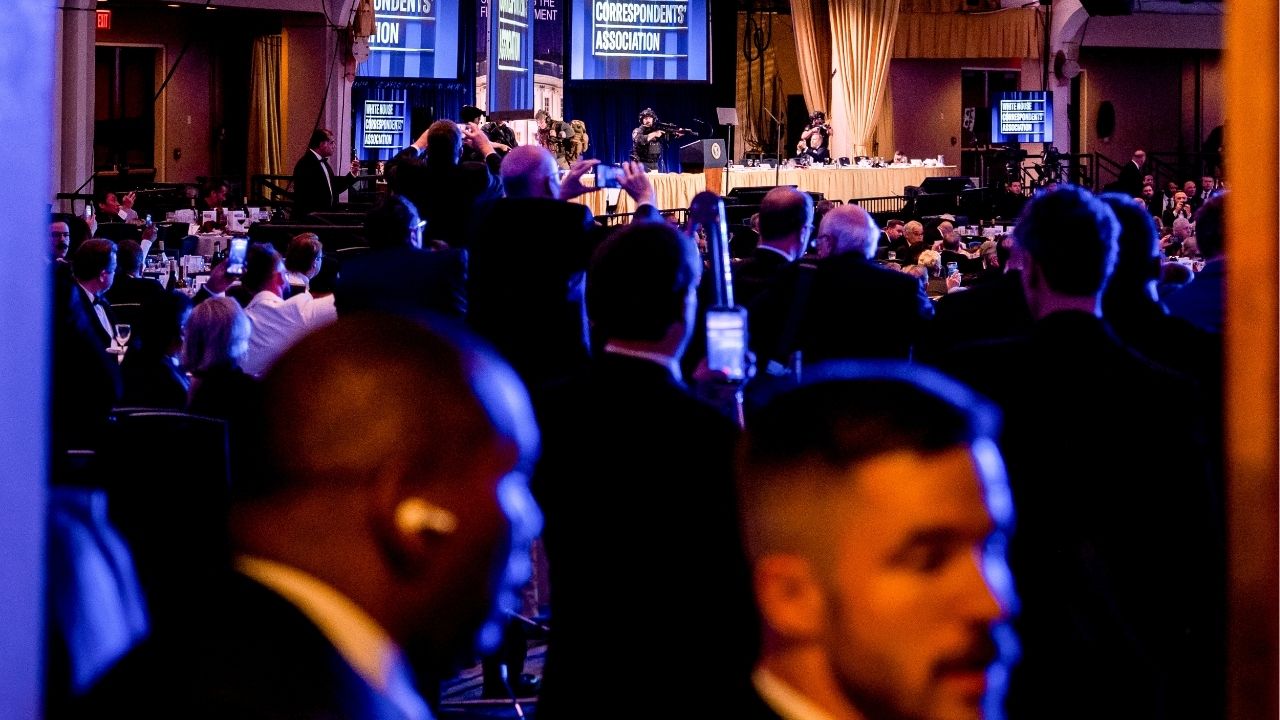
WASHINGTON — A federal grand jury returned a four-count indictment Tuesday against Cole Tomas Allen, the man accused of rushing a security point at the White House Correspondents’ Association dinner in an attempt to kill President Donald Trump.
The indictment charged Allen with assaulting a federal agent, indicating that prosecutors now believe Allen wounded a Secret Service officer who was shot during the incident, as officers scrambled to secure the annual press gala.
The Justice Department had charged Allen with attempting to assassinate the president, transporting guns with the intent to commit a felony, and firing a shotgun. But it had stopped short of accusing him of shooting the officer, who was hit in his ballistic vest and survived.

Prosecutors say that Allen, 31, traveled from California in April with plans to ambush Trump and other senior administration officials as they mingled with journalists at the dinner.
In an email Allen is said to have sent to friends and family before the attack, he laid out a hierarchy of potential targets, prioritizing Cabinet officials and including Secret Service agents “only if necessary.”
In court filings in April, prosecutors accused Allen of booking a room in the Washington Hilton, where the event has been held for decades, and plotting the attack before the dinner. Video and photos submitted by the government appeared to show Allen storming into the area the dinner was being held armed with a shotgun, a pistol and several knives. He was immediately tackled and arrested.
Upon receiving the grand jury indictment, a federal judge scheduled a May 11 arraignment for Allen, who has yet to enter a plea regarding the initial charges.
Allen has been held in jail in Washington pending his next court appearance. On Monday, a federal magistrate judge demanded answers about his detention conditions, after Allen’s lawyers said he had been improperly placed on suicide watch and held in solitary confinement after his arrest.
For days after Allen’s arrest, the government had not explained why it believed the Secret Service officer identified by the initials “R.V.” had been shot during the incident.
Todd Blanche, the acting attorney general, had initially announced that a spent shell was found in the shotgun Allen had carried with him. But an early investigation concluded only that the officer was hit once while wearing a protective vest.
With the new charges, the government formally accused Allen of firing at the officer.
“Today’s indictment underscores a simple truth: There is evidence this defendant intended to assassinate the president, and that he shot a U.S. Secret Service officer after he traversed the country with a cache of ammunition to accomplish his goals,” Jeanine Pirro, the U.S. attorney in Washington, said in a statement.
“The use of violence to register dissent is antidemocratic at its core,” she said. “We will pursue the maximum punishment available under the law against anyone who travels to the District of Columbia to engage in such acts.”
During his initial appearance in court in April, a federal magistrate judge told Allen he could face a sentence of up to life in prison if found guilty of attempting to assassinate the president. Allen quietly acknowledged the judge, who urged him to speak up through his lawyers if he continued to face harsh conditions, including limited access to phone calls and visits.
—
This article originally appeared in The New York Times.
By Zach Montague/Salwan Georges
c. 2026 The New York Times Company