



|
Getting your Trinity Audio player ready...
|
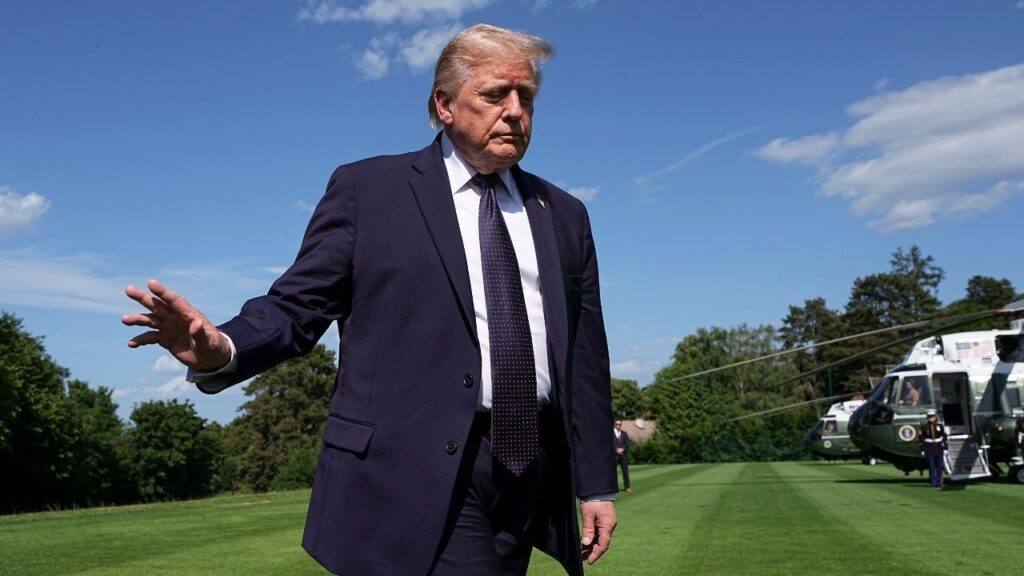
People across the Middle East waited uneasily on Saturday for a decision from President Donald Trump about a proposal to end the war with Iran, as the United States reaffirmed its resolve to emerge with a deal he finds acceptable.
Trump said on social media Friday that he was meeting with advisers at the White House Situation Room to make a “final determination” about the proposed deal, but that meeting ended with no announcement.
Trump has zigzagged on his positions during the negotiations, vacillating between talk of progress on a deal and threats of renewed strikes.

Later on Friday evening, Iran said there was still “no final agreement” with the United States. Esmaeil Baghaei, the Iranian Foreign Ministry spokesperson, told state television that while “message exchanges are of course ongoing,” a deal was not yet in hand.
Some Iranians Frustrated Over Regime Remaining in Power
Some people in Iran who had hoped the war could lead to the end of the Islamic Republic’s authoritarian rule said they were disillusioned and indifferent to the idea of a potential agreement.
“We know that even if there is one, we will not receive any benefits from it,” said Ali, a 43-year-old engineer from Mazandaran province in northern Iran, who asked to be identified only by his first name, fearing government retaliation.
“It would mostly serve to guarantee the survival of the Islamic Republic,” he added.
Some details of the proposal — which has yet to be made public — were described by several officials briefed on them or involved in the talks, who spoke on condition of anonymity because of the sensitivity of the diplomacy.
The proposal appears to involve few immediate concessions from Iran, despite Trump’s insistence that he has won a resounding victory over his adversaries.
Strait of Hormuz Would Reopen
The proposal would effectively end the U.S.-Israeli military campaign against Iran in exchange for Iran lifting its blockade of the Strait of Hormuz, a crucial waterway for oil and gas shipping that Iran has closed since the early days of the war, rattling energy markets.
Many of the thorniest issues — such as the future of Iran’s nuclear program — would be deferred to later rounds of talks.
Trump said in his social media post on Friday that, to make a deal, Iran would have to agree to fully reopen the strait to shipping traffic and allow the United States to remove and destroy its stockpiles of enriched uranium. The United States and Israel fear Iran could use that to make a nuclear weapon.
Iran hawks in the United States, including some senior Republicans, have denounced the reported deal as a catastrophe in the making. The war is also broadly unpopular among the U.S. public, amid spiking gasoline prices.
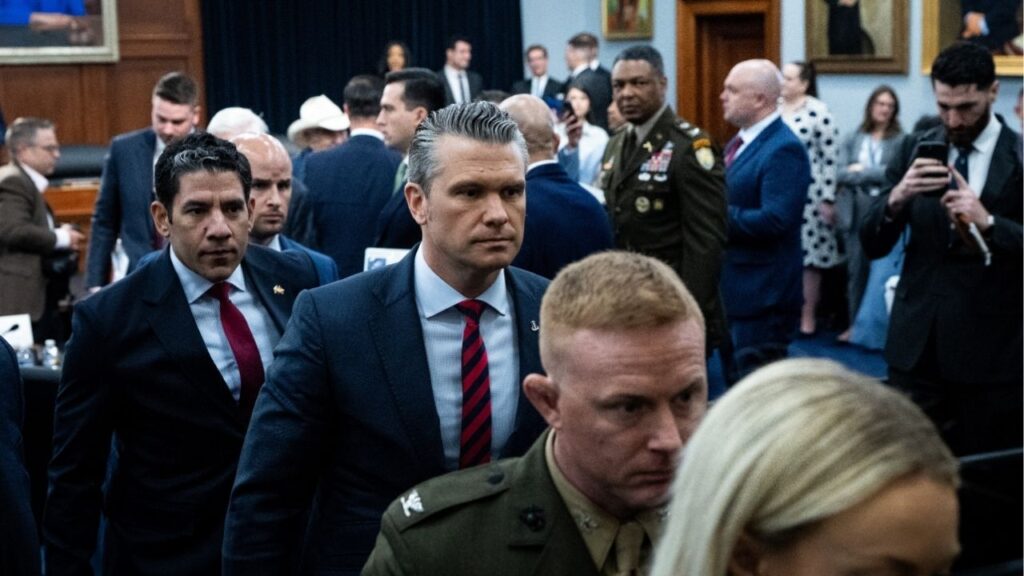
On Saturday, Defense Secretary Pete Hegseth seemed to downplay the imminence of a possible deal, despite the president’s remarks the previous day. Speaking at the Shangri-La Dialogue, a security conference in Singapore, he said Trump had asked him to tell the audience how “patient he is in ensuring” that any agreement with Iran would be a “great deal.”
US Ready for Another Round of Fighting, Hegseth Says
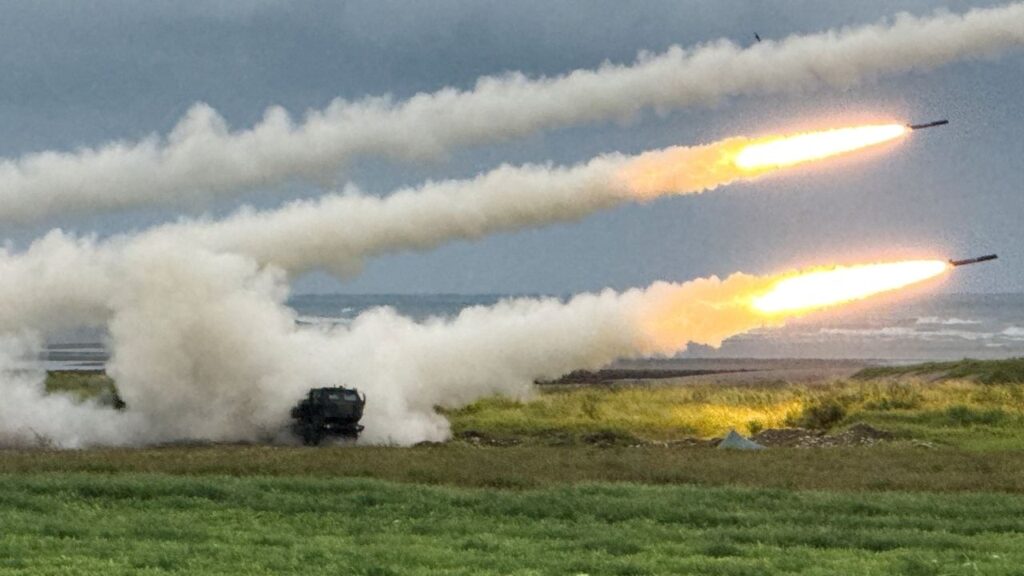
Hegseth also sought to bat away reports that the U.S. military had burned through substantial amounts of munitions during the conflict with Iran, insisting that it was ready for another round of fighting if necessary.
“We are more than capable. Our stockpiles are more than suited for that, both there and around the globe,” Hegseth said. “We are in a very good place.”
A small group of Iranian hard-liners have also spoken out against the agreement with the United States, viewing it as too conciliatory.
On Saturday, Mohsen Rezaei, a former Iranian military chief who is an adviser to Mojtaba Khamenei, the Iranian supreme leader, accused Trump of “excessive demands” and “betraying diplomacy.”
Trump began the U.S.-Israeli campaign against Iran in late February with a speech suggesting that the war was intended to lead to the ouster of the Islamic Republic, which has ruled the country since a 1979 revolution.
Three months later, Iran’s leaders view themselves as victorious, having weathered a U.S.-Israeli effort to topple their rule. Weeks of war, and nearly two months of U.S. pressure and negotiations, appear to have done little to shift their public stance on key issues, such as the country’s nuclear program.
This article originally appeared in The New York Times.
By Aaron Boxerman/Daniel Berehulak
( Leily Nikounazar contributed reporting.)
c.2026 The New York Times Company