
|
Getting your Trinity Audio player ready...
|
The Strait of Hormuz is open for all commercial ships after the agreement of a ceasefire in Lebanon, Iran and the United States said Friday.
Oil prices dropped soon after the announcement, though Iran said ships would have to take a “coordinated route” that shipping analysts said referred to a route that runs close to Iran’s coast.
Shortly after Iran’s announcement, President Donald Trump responded in social media post: “IRAN HAS JUST ANNOUNCED THAT THE STRAIT OF IRAN IS FULLY OPEN AND READY FOR FULL PASSAGE. THANK YOU!”

Brent crude, the international oil benchmark, fell more than 10%, to below $90 a barrel, its lowest level in more than a month, though it remains more than 20% higher than before the war started. West Texas Intermediate, the U.S. benchmark, also fell over 10%, to below $84 per barrel.
Before the war, a fifth of the world’s oil and liquefied natural gas traveled through the Strait of Hormuz. But tanker traffic slowed to a trickle after Iran began attacking ships early in a war, causing a shortage of oil and gas in world markets that drove up the costs of gasoline, diesel and cooking gas.
Iran’s foreign minister, Seyed Abbas Araghchi, said in a post on the social platform X that the strait would be open for the “remaining period of ceasefire.” He did not specify whether that was the ceasefire in Lebanon or the one between the United States and Iran.
Iran has said before that the strait is open to shipping. And experts on the Strait of Hormuz said Araghchi’s statement should be treated cautiously.
“That does not equate to freedom of navigation,” said Martin Navias, an author of “Tanker Wars: The Assault on Merchant Shipping During the Iran-Iraq Crisis.”
U.S. forces began a blockade east of the Strait of Hormuz on Monday, with the aim of stopping Iranian and Iran-linked ships.
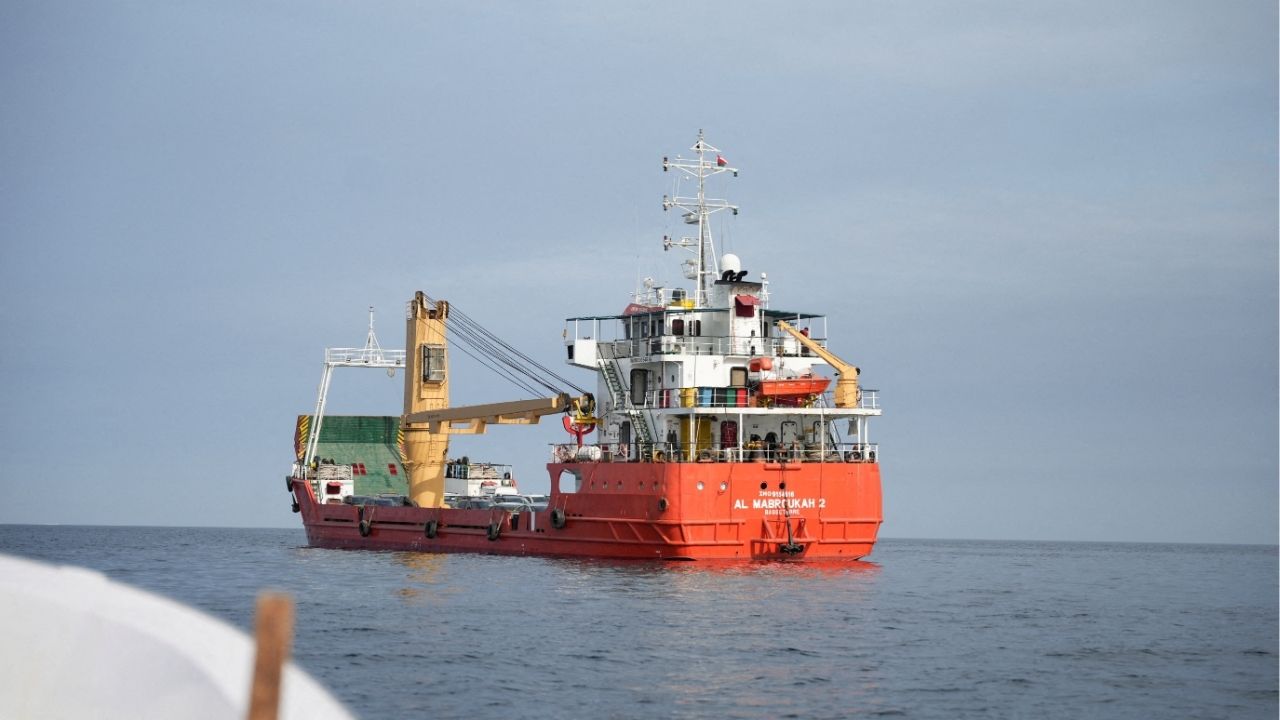
U.S. Central Command posted a video Friday of U.S. officials directing a merchant vessels to return to an Iranian port. It was one of 19 ships that have complied with direction from U.S. forces to turn around and return to Iran, Central Command said on social media. “ZERO vessels have evaded U.S. forces during the blockade,” it said.
Iran’s assurances were not likely to be sufficient for major shipping companies, which are hesitant to send ships through the strait, even ones that have been stranded there for weeks, without more certain security guarantees.
“On paper, this looks great,” said Alexis Ellender, an analyst at Kpler, a marine data tracking firm. But Ellender added that he expected it would to take some time — weeks, not days — before there was a significant upturn in the volume of ships going through.
But some smaller companies may be willing to restart traffic if they secure affordable insurance cover. Around 900 ships have been stranded in the Persian Gulf over the course of the war, according to a New York Times analysis of Kpler data.
Stock markets, which have rapidly recovered from a war-induced sell-off in March, rose after the announcement. The S&P 500 rose 0.5% as trading got underway in New York. The index had already erased its losses stemming from the conflict and posted a fresh record high this week. It is on course for its third straight week of gains, its best streak since October.
—
This article originally appeared in The New York Times.
By Peter Eavis, Jenny Gross and Joe Rennison
c. 2026 The New York Times Company