
|
Getting your Trinity Audio player ready...
|
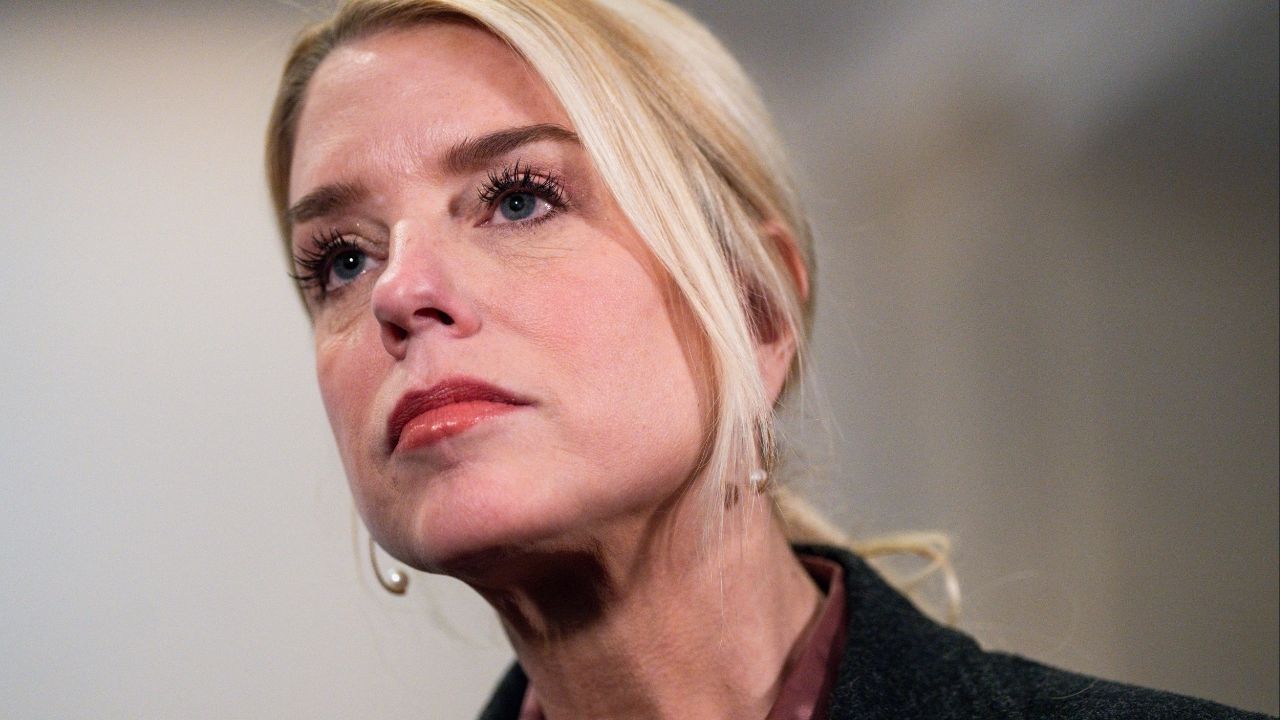
President Donald Trump has discussed firing Attorney General Pam Bondi in recent days as he grows frustrated with her leadership at the Justice Department and her handling of the Epstein files, according to four people familiar with the conversations.
Trump has floated the idea of replacing Bondi with Lee Zeldin, the administrator of the Environmental Protection Agency, the people said. They spoke on the condition of anonymity to discuss private deliberations by the president.
Trump has not made a final decision, and Bondi’s allies pointed to photos of her and the president traveling to the Supreme Court on Wednesday to dispute the notion that the president is planning to fire her.

“Attorney General Pam Bondi is a wonderful person and she is doing a good job,” Trump said in a statement to The New York Times. A spokesperson for Bondi referred to Trump’s statement.
But the president has been souring on Bondi for months. Among his top complaints is Bondi’s handling of the Epstein files, which has become a political liability for Trump among his supporters. He has also complained about her shortcomings as a communicator and vented about what he sees as the department’s lack of aggressiveness in going after his foes, according to people who have spoken to him recently.
The House Oversight Committee voted to subpoena Bondi last month to compel her to testify about the Justice Department’s investigation into Epstein, the disgraced financier who died by suicide in jail while awaiting trial on sex trafficking charges in 2019. Her deposition is scheduled for April 14, though she and Rep. James Comer of Kentucky, the committee’s Republican chair, have been working together to avoid the deposition, even though it is unclear whether it is legally possible to withdraw a subpoena.
Trump has also said the Justice Department under Bondi has not moved aggressively enough to prosecute his political enemies. In September, Trump wrote a social media post directed at Bondi in which he grumbled about the lack of indictments.
During his second term, Trump had been hesitant to oust members of his Cabinet after his first term was marred by frequent firings and narratives of staff chaos. Some officials said Trump’s posture had shifted in recent weeks, buoyed by the smooth process of removing Kristi Noem from her role as secretary of homeland security and the straightforward confirmation process of Markwayne Mullin to replace her.
Trump has sent mixed signals about Bondi over the past year. He has complained about her privately, arguing that she has not been effective enough in pursuing his priorities. He has been particularly angry about the Justice Department’s failure to win cases involving his political opponents, including against former FBI Director James Comey and New York Attorney General Letitia James.
At the same time, Trump has praised her loyalty in public and speaks with her often.
If Trump does fire Bondi, officials said, he has not made a final decision about who should replace her, though he has discussed elevating Zeldin.
Zeldin, a former Republican member of Congress from New York who unsuccessfully ran to be his state’s governor, has been one of Trump’s most reliable foot soldiers. As administrator of the EPA, charged with ensuring the protection of human health and the environment, Zeldin has made it his mission to promote Trump’s vision of “energy dominance.”
“He’s our secret weapon,” Trump said of Zeldin in February at a White House event promoting the coal industry, adding, “He’s getting those approvals done in record setting time.”
Representatives for the EPA did not immediately respond to a request for comment.
—
This article originally appeared in The New York Times.
By Tyler Pager/Tierney L. Cross
c. 2026 The New York Times Company