


|
Getting your Trinity Audio player ready...
|
SAN FRANCISCO — Anthropic on Tuesday set a price range for its initial public offering, valuing the company at more than $1 trillion, in a sign that investor demand for the fast-growing but money-losing darlings of the artificial intelligence boom remains robust.
The range, of $70 to $78 per share, would make Anthropic worth $1.26 trillion to $1.41 trillion, when all shares are counted, a staggering sum for a 5-year-old company. That was lower than a $2 trillion valuation that bankers had floated this summer but still higher than the company’s private valuation of $900 billion.
Seven of the tech industry’s biggest players, including Google, Nvidia and Microsoft, have signed up to invest a total of $26 billion in the offering. Along with the other shares Anthropic plans to sell, the company could raise up to $100 billion at the highest end of its ambitions.

That would make it the largest IPO in history, topping Elon Musk’s SpaceX, which ultimately raised $86 billion when it went public in June, at a $1.77 trillion valuation.
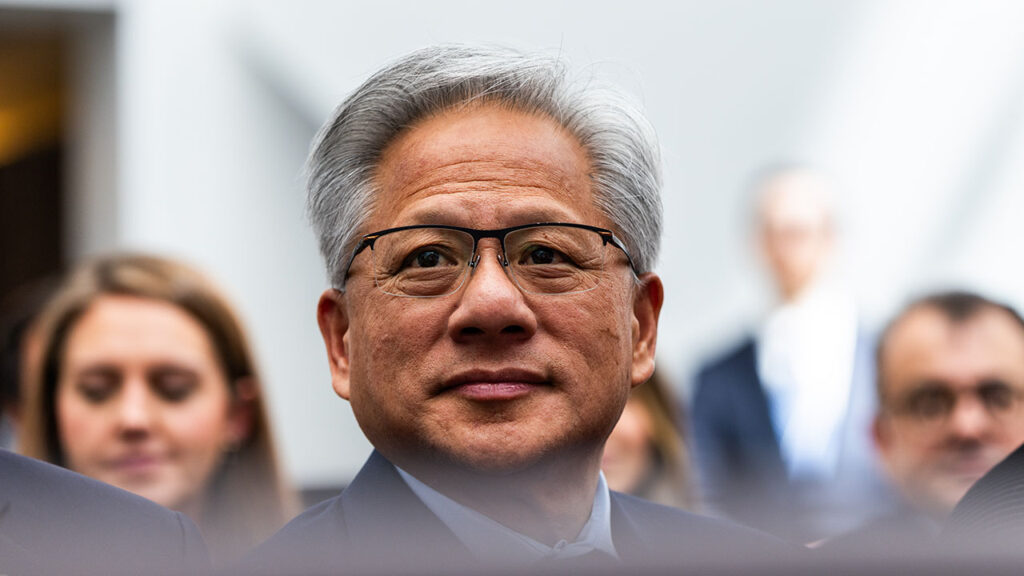
Anthropic’s preliminary pricing comes at a volatile moment for the stock market, with wild swings after the midterm elections, in which voters overwhelmingly voted against data centers and the tech industry’s favored politicians. The revelation that Jensen Huang, CEO of AI chipmaker Nvidia, had a relationship with a woman who U.S. intelligence determined to be Chinese spy, has added to the anxiety.
Investors are already skittish because of concerns that the build-out of AI is increasingly funded by debt and worries about the poor performance of AI companies that went public this year. Consequently, a number of companies have delayed their planned offerings in recent months, rather than face a steep cut to their valuation.
Still, many of Anthropic’s investors and bankers say the company’s size, importance and unique role within the future of AI may give it distinct pull to navigate market jitters. A number of its investors, including Fidelity Investments and T. Rowe Price, are among the biggest buyers in public offerings, potentially giving Anthropic a built-in support base.
Anthropic’s offering will serve as a test of the AI boom, which has attracted enormous sums to AI companies while raising questions of a possible bubble. Bankers typically deem an offering successful if its shares gradually rise once a company is publicly traded. Anthropic has historically taken a conservative approach to its own valuation, rather than seek the highest figure it can achieve.
The San Francisco company set its preliminary price as it kicks off its pitch to Wall Street investors in what is known as a roadshow. Anthropic expects to finalize the price of its shares next Wednesday, which will then begin trading Thursday on the Nasdaq under the ticker symbol ANT.
The company will now spend the next few weeks making its pitch to investors, likely answering questions about how much it is spending on computing and how it is fending off competition from cheaper models in China.
On Tuesday, Morgan Stanley will host a meeting for investors with Anthropic’s chief financial officer, Krishna Rao. On Friday, JPMorgan Chase will host a fireside chat with its CEO, Jamie Dimon, and Anthropic’s CEO, Dario Amodei. Next week, Rao and Daniela Amodei, Anthropic’s president and Dario Amodei’s sister, will meet with investors at Goldman Sachs.
Anthropic will also look to sell about 20% of its shares to individual investors, it said in a filing Tuesday, though that portion could ultimately depend on demand. Individual investors made up about 22.5% of SpaceX’s IPO, though the company originally targeted around 30%.
Anthropic makes large language models and a chatbot named Claude. Its tools are popular with businesses, which use Anthropic’s products to write code and automate tasks. The company’s revenue went from $41 million in 2023 to $33 billion in the first nine months of this year, a feat that investors say has no modern precedent.
Until now, the company has relied on private investors to fund its growth. It raised roughly $130 billion from a wide range of backers, including traditional venture capital firms, big tech companies, hedge funds, Wall Street banks, international conglomerates and Middle Eastern sovereign wealth funds. It also issued debt that converts to equity, which it has recorded as a loss as its valuation has grown, leading to a $104 billion net loss in the first nine months of the year.
To support its growth, Anthropic has struck deals with competitors, including Google and SpaceX, for the cloud computing infrastructure needed to run its AI models. It is on the hook for as much as $895.4 billion by 2045. But the company has posted narrowing operating losses; it lost $8 billion last year and $1.3 billion in the first nine months of this year.
The company’s founders have promoted the promise and peril of AI to investors, calling it one of the most consequential technologies in human history.
Founded in 2021 by former employees of OpenAI including Amodei and his sister, Anthropic distinguished itself with a focus on AI safety while building tools for businesses to easily deploy the technology. It is a public benefit corporation, meaning it puts a priority on social responsibility alongside profits.
Anthropic has tussled with the U.S. government. The company refused to let its software be used for autonomous weapons or certain kinds of domestic surveillance, which led the Defense Department to label it a supply chain risk. Anthropic has also tried limiting access to its models that are very good at identifying software vulnerabilities.
Its IPO is likely to spread cash around San Francisco. Its seven founders, including the Amodei siblings, have pledged to donate 80% of their holdings to charity. Each founder owns a little under 2% of the company.
Goldman Sachs and Morgan Stanley are underwriting the listing.
(The New York Times has sued OpenAI and Microsoft, claiming copyright infringement of news content related to AI systems. The two companies have denied those claims.)
—
This article originally appeared in The New York Times.
By Erin Griffith, Mike Isaac and Lauren Hirsch/Jason Henry
c. 2026 The New York Times Company