
|
Getting your Trinity Audio player ready...
|
After a nine-month lull, talks to end the war in Ukraine are set to resume in Abu Dhabi, the capital of the United Arab Emirates, on Tuesday.
The White House-led process had stalled over Russian demands that Ukraine hand over about 2,000 square miles of territory that the Russian military has been unable to seize on the battlefield. They were then interrupted by the start of the U.S.-Israeli war against Iran.
This week, negotiators will focus on security guarantees intended to prevent the war from restarting if a ceasefire is reached, U.S. officials have said. The idea is to pan out from territorial claims to look at broader issues of European security, in hope of breaking the stalemate.

President Donald Trump, who will not attend the talks, said the goal was “a big, beautiful agreement.”
On Monday, Jared Kushner, the president’s son-in-law and envoy, wrote that the objective was to “bring Ukraine and Russia together to discuss directly their postwar security concerns, proposals, and potential solutions.”
How did we get here?
The all-out war in Ukraine, the largest in Europe since World War II, began in 2022 when Russia invaded. The U.S. peace effort began after Trump’s inauguration in 2025.
The process is helmed by Steve Witkoff, the administration’s peace envoy, and Kushner. Both also lead diplomacy on Iran and have been largely focused on the other conflict since February.
The latest push by the administration began in September with talks over business and economic sweeteners for Russia, including lifting sanctions on diesel exports, which upset Ukraine.
The talks will be between the United States, Ukraine and Russia, and are scheduled for Tuesday and Wednesday. France’s foreign minister said his country would participate, but Kremlin spokesperson Dmitry Peskov said the meetings would not include European officials.
Witkoff wrote in a post on the social platform X that negotiations would focus on “postwar security arrangement, de-escalation” and humanitarian issues.
What’s the strategy?
In March 2025, Ukraine offered an immediate, unconditional ceasefire along the current front line — an offer that stands. Russian President Vladimir Putin said that to end the war, Russia must be given the roughly 20% of the Donetsk region in eastern Ukraine that his military has failed to capture.
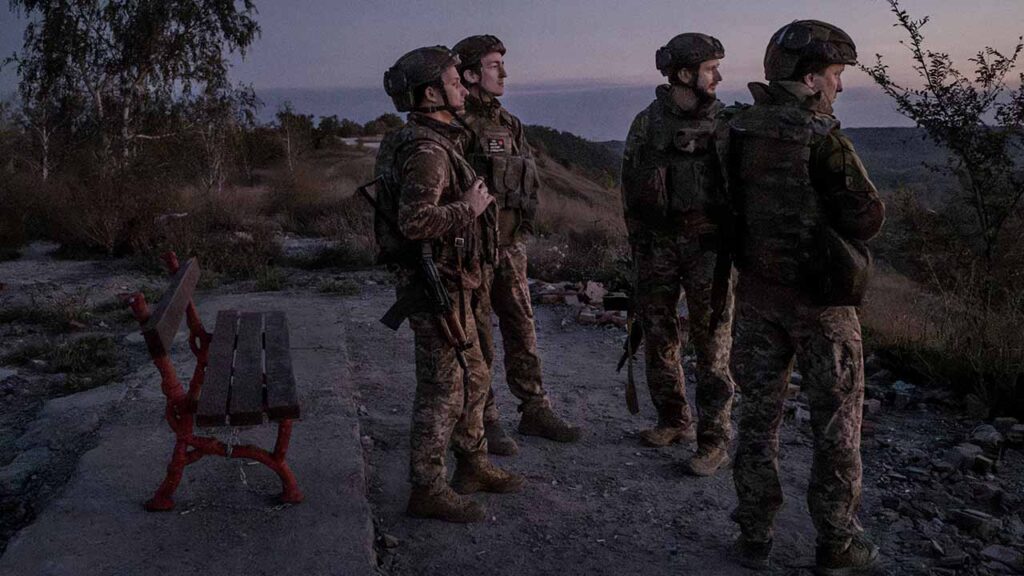
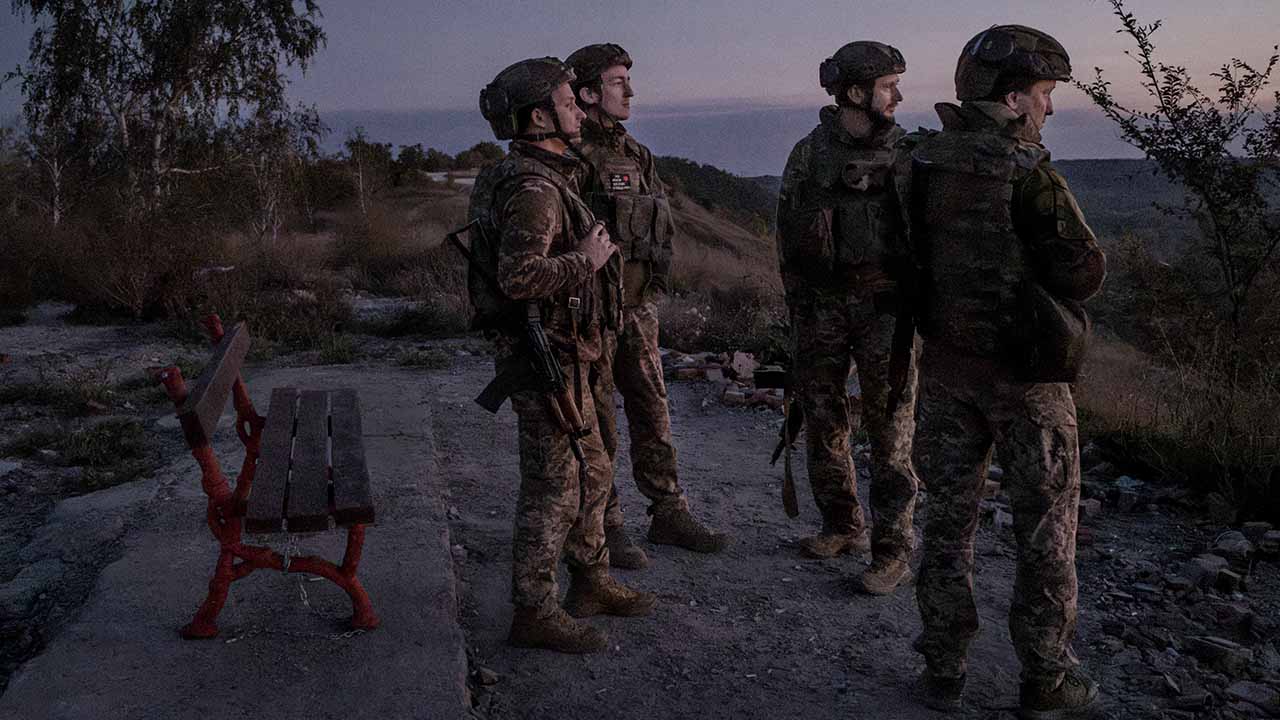
Talks earlier this year explored compromises, including pullbacks by both armies and establishing a neutral civilian administration, which both Russia and Ukraine declined. Since talks halted, the fighting turned in Ukraine’s favor. Ukraine has recaptured territory in critical areas.
The talks this week will explore whether offering Russia a role in shaping a postwar regional security architecture could soften Moscow’s demands for ending the actual war.
Some see even that approach as a concession to Russia. “Putin’s goal is to hold a new Yalta,” said Volodymyr Ariev, a member of parliament in the opposition European Solidarity party, referring to the post-World War II agreement that divided spheres of influence in Europe.
What role will Europe play?
Witkoff and Kushner met European officials in Brussels last week, before the planned three-way talks with Russia and Ukraine.
On Saturday, the European Union’s top diplomat, Kaja Kallas, said that “any agreement would require EU participation to be implemented.”
It will not be an easy sell in Europe. Poland and the Baltic nations oppose any reduction in NATO military forces in their countries. An effort by Russia in 2021 and early 2022 to negotiate a grand bargain on European security fell flat.
What might come next?
Many analysts don’t expect any breakthrough in talks until the spring, after Russia can assess the outcome of its winter bombing campaign.
In an effort to break civilian morale, Russia is knocking out heating, electricity and water infrastructure in Ukrainian cities as freezing weather sets in. Ukraine is targeting oil refineries and other petroleum facilities to whittle away at Russia’s oil-dependent economy.
Before the talks, both sides have stepped up bombardments. Russia fired 36 ballistic missiles overnight Saturday to Sunday, Ukrainian President Volodymyr Zelenskyy said. The barrage knocked out electrical power for about 600,000 people in central Ukraine, according to DTEK, an electrical company.
Analysts saw some hope for local ceasefires similar to an agreement promoted last month by Pope Leo XIV and Melania Trump, the first lady, to move civilians from the besieged town of Oleshky.
“The question is: “Has Putin recognized he has a problem?’” said William Taylor, a former U.S. ambassador to Ukraine, referring to reversals on the front.
For now, he said, that doesn’t appear to be the case, with Russia neither softening its demands nor showing signs of seeking a ceasefire. “There’s no indication of any interest,” he said.
—
This article originally appeared in The New York Times.
By: Andrew E. Kramer/Mauricio Lima
c.2026 The New York Times Company