
|
Getting your Trinity Audio player ready...
|
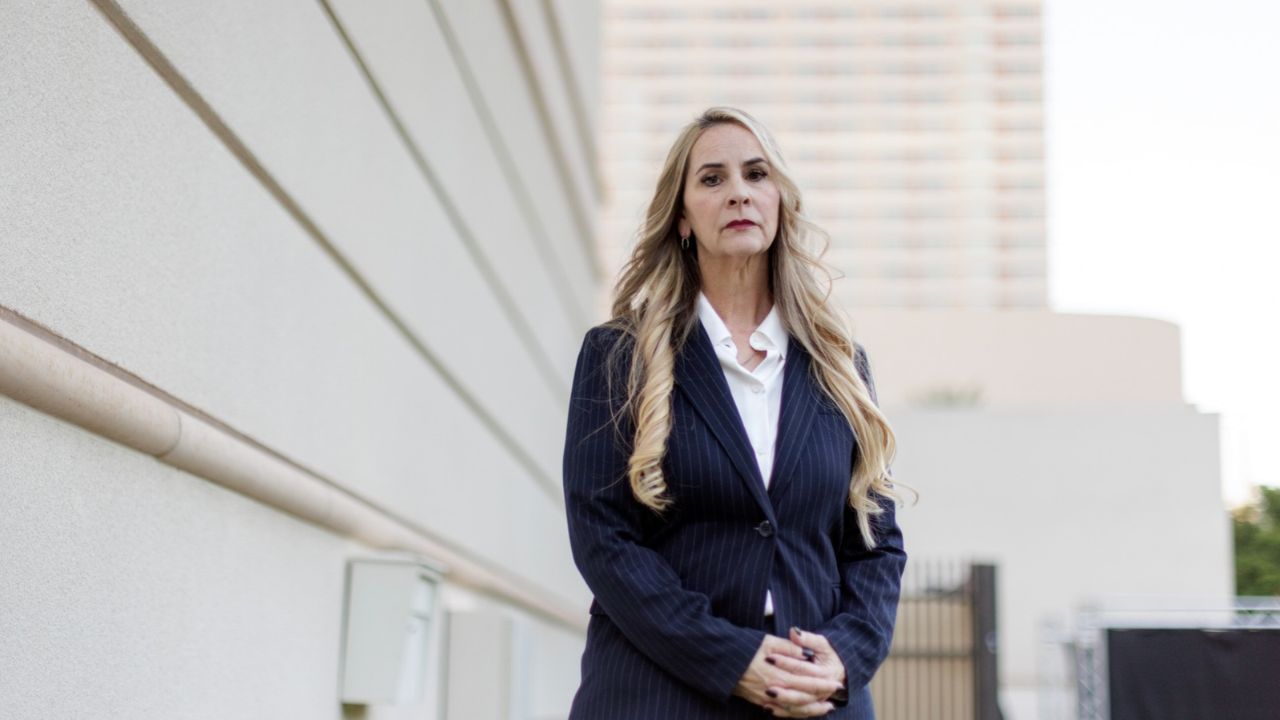
PHOENIX — Bernadette Greene-Placentia, a Democratic candidate for Congress, said Wednesday that she was repairing a damaged campaign sign in her district northwest of Phoenix this summer when two men attacked her.
The assailants sneaked up behind her in a parking lot, struck her on the head and raped her, according to a police report she filed with the Maricopa County Sheriff’s Office. She lost consciousness, she said, and woke up with one of the men on top of her.
Greene-Placentia said her memory of the episode was spotty, but she recalled kicking her attackers until they fled.

She said the assault took place in the predawn hours of Aug. 14 in Sun City, Arizona, a suburb of Phoenix.
After the attack, she said, she withdrew from her staff and family. For about two days, she did not respond to messages or phone calls, and she missed a campaign event.
“When it first happened, I didn’t want to tell anybody,” she said in an interview Wednesday. She initially resolved to not report the rape to the police or to discuss it publicly. “I was embarrassed that I couldn’t defend myself,” she said.
But back on the campaign trail, she said, her promises to fight for Arizonans if elected to Congress began to feel hollow. How could she make that pledge, she reasoned, if she was avoiding an opportunity to speak out on behalf of other survivors of sexual assault?
“It just flashed in my head, like, ‘Well, you’re not standing up for everyone, are you?’” Greene-Placentia said. “I cannot be a hypocrite.”
On Aug. 31, about two weeks after the assault, she reported it to the police.
She then shared her account with the Phoenix New Times, the city’s alternative newspaper, which published it Wednesday.
She said she was braced for the backlash that has become an unavoidable feature of modern politics. Greene-Placentia, a former long-haul trucker, feared that her campaign’s messaging around affordability and healthcare would be overshadowed. And she worried that voters would think her disclosure was a political gambit in her long-shot bid to flip a district that the incumbent, Rep. Abraham Hamadeh, a Republican, won by 13 percentage points in 2024.
“I don’t want my campaign to be about this,” she said. “But women need to know it’s OK to come forward.”
In a statement, Hamadeh said he had read Greene-Placentia’s account, and he urged the authorities to “investigate these serious allegations thoroughly, including finding all possible camera footage of the time and place, in order to prosecute the crime to the fullest extent of the law.”
“No American should become a victim of a crime in their own community,” Hamadeh said.
The Maricopa County sheriff’s detectives are still working to gather evidence, including possible video footage, in the case. A department spokesperson, Dave Moyer, said the investigation was ongoing and declined to comment further.
It’s unclear what physical evidence might exist to support Greene-Placentia’s account or whether detectives have identified any suspects.
Greene-Placentia said she did not seek medical care following the attack and did not undergo a sexual assault exam. She told the police she went home and took three showers and a bath. As she rinsed off, she noticed gravel from the parking lot in the base of the tub.
When officers asked if any of the perpetrators’ DNA might be found on the jeans or campaign shirt she wore that morning, Greene-Placentia told them that she had already washed the clothes. She did not get a good look at either attacker, she said, but described them as white men. One of them had small feet and was wearing black boots, she said.
Greene-Placentia at first told investigators that one of her attackers used a profanity that made her believe the assault was politically motivated, but she said Wednesday that she could not be sure what she had heard.
Craig Beckman, Greene-Placentia’s director of communications, was one of the first people she confided in, outside a campaign event a little more than 48 hours after the incident.
Beckman said he immediately knew something was wrong. “It was a shock to see her in this vulnerable state, to see her cry,” Beckman said.
Greene-Placentia’s staff members told her she could suspend her campaign or even drop out of the race, if she felt that would be best for her health. But she was emphatic.
“It never occurred to me to quit,” said Greene-Placentia, who resumed a jam-packed campaign schedule over the following weeks. “I was just like, ‘This happened; it sucks; let’s move on.’”
But the campaign, which operates on a shoestring budget, has made some security adjustments. For one, Greene-Placentia no longer installs or repairs campaign signs alone after dark, a habit she had adopted to avoid the punishing Arizona summer heat.
Now, whenever she does go out, she is accompanied by a member of her staff and brings with her one of her many firearms, which she said she is “very good” at using.
Nearly two months after the assault, she said her resolve to speak out has strengthened. She said she had at times been skeptical of the #MeToo movement and had occasionally doubted the accusers of powerful men. Now, she said, she understands.
“I apologize to every woman that I doubted and thank every woman for coming forward,” she said. “I’ll do anything I can to help more women come forward and recognize that there are people who will stand up for you.”
—
This article originally appeared in The New York Times.
By Reis Thebault/Anna Watts
c. 2026 The New York Times Company