
|
Getting your Trinity Audio player ready...
|
WASHINGTON — Voting by mail would become much more difficult, if not impossible, for tens of millions of Americans if the U.S. Postal Service is allowed to implement a restrictive rule governing mail voting that President Donald Trump has demanded.
The effects would likely be greater for Democratic voters, who vote by mail in higher numbers than Republicans, and in states where mail voting is universal or nearly so. Mail voting may not happen at all in states that resist the Trump administration’s demands for voter data.
The rule would particularly affect people in rural areas and older voters, who tend to cast ballots by mail in greater numbers. It could also deeply affect states where some of the most competitive races for House, Senate and governor will determine control of Congress and state governments.

Michigan, where 37% of votes were cast by mail in 2022, would be one epicenter, with hard-fought statewide contests and multiple battleground House races. California, which mails ballots to all voters, is expected to be central to Democratic efforts to win a majority in the House.
The rule is being challenged in several lawsuits, and it is on hold temporarily following a federal judge’s ruling on Thursday. The administration is appealing. Even if the Postal Service is permitted to proceed, it is unclear that it would have time to implement the plan before an election that is fewer than 70 days away.
For instance, the rule requires states to upload a list of voters to a federal mail ballot portal that is not yet online. Nearly two dozen Democratic-led states and Washington, D.C., have sued to block the proposed rule and said they will not comply with it.
If the agency were to move ahead, state and local officials would shoulder enormous costs in what would need to be a herculean effort to prepare election offices and educate voters in time for the midterm elections in November.
The most dramatic aspect of the proposed rule is a plan to deny services for election mail entirely in states that do not turn over voter data, which federal officials say they want to use to identify noncitizens on state voter rolls. The policy would upend mail voting in any state that does not comply, but the effects would be measurably greater in the smaller number of states that rely heavily on mail voting.
More than 1 in 3 Democrats voted by mail in 2024, compared with about 1 in 4 Republicans, according to estimates by the States United Democracy Center, which examined voting data in 32 states where it was available.
“It’s not that complicated,” said Marc Elias, the Democratic election lawyer, who said the new policy was a blatant effort to disenfranchise Democrats. “The administration knows that Democrats are more likely to vote by mail than Republicans. Donald Trump has demonized voting by mail and made that differential even greater.”
Election Administrators Fear Chaos
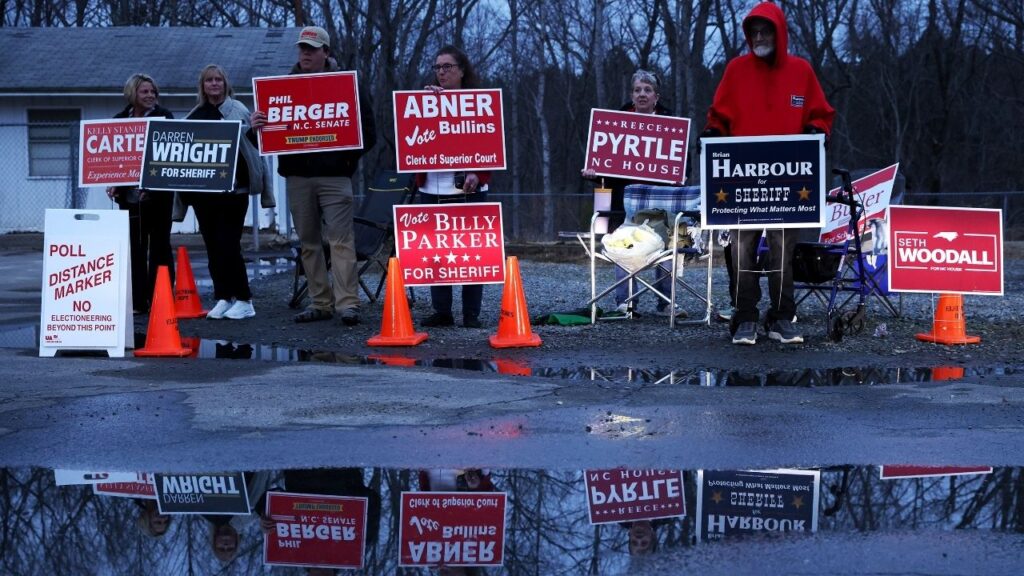
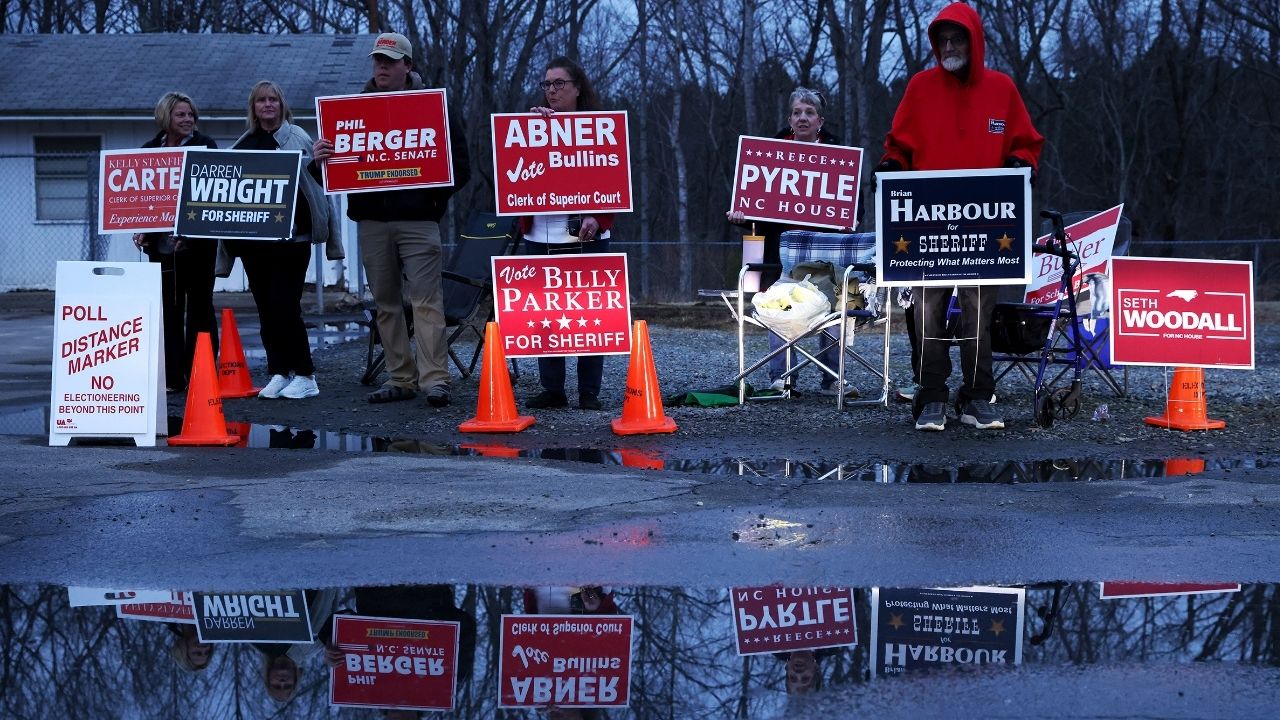
It is far from certain that the rule could be implemented this year, given outstanding legal and logistical challenges with fewer than 10 weeks before Election Day. North Carolina, where a highly competitive Senate race could help determine control of the chamber, is set to mail ballots to some voters starting next week. More states will soon follow.
President Donald Trump, who voted by mail himself in Florida’s primary this month, created the current uncertainty by signing an executive order in March that called on the Department of Homeland Security to compile state-by-state citizenship lists that could be used to help determine voter eligibility.
Last week, the Supreme Court ruled that the lawsuit was premature because the Postal Service had not yet finalized its rule. Now that the agency has done so, though, and a lower court has weighed in, the justices will likely be asked to rule again in the coming weeks, this time on the constitutionality of the plan.
Elections officials from both parties have said that forcing the counties and municipalities that run the nation’s elections to implement new rules in such a short time frame would inject chaos into the nation’s voting processes and could halt mail voting altogether.
Small-town clerks would have to purchase new machines to print the bar codes required under the new rule. All mail ballots — including some that in the past may have been hand-delivered from a local elections official to the local post office — would now have to be routed through a big-city mail sorting center, since only major hubs are able to process the new bar codes.
“People need to understand the changing of an election is somewhat like changing the course of an aircraft carrier. You can’t do it on short notice,” said Alan Hays, a supervisor of elections and a Republican in Lake County, Florida, where Trump received 62% of the vote in 2024. “Putting such an awesome responsibility on the U.S. Postal Service, with the track record that organization has, on such a short notice is unwise at best.”
Michigan: A Case Study
No state in the country is home to more critical elections this year or a wider partisan gap in mail voting than Michigan.
The state will administer one of the nation’s most competitive Senate races, a contest that is critical to Democratic hopes of taking back control of the chamber. It also has what is expected to be hard-fought, open-seat elections for governor and other statewide offices, along with four battleground House races. Majority control of both chambers of the narrowly divided state Legislature is also up for grabs.
Nearly 2 million Michiganders are now on the state’s permanent mail voting list, meaning that each election, officials automatically mail them ballots. And while Michigan voters do not register by party, there is a sizable gap between the number of votes for Democratic candidates and those for Republicans that are processed by mail, according to an analysis by the Massachusetts Institute of Technology’s Election Data and Science Lab.
In the last midterm election in 2022, about 57% of ballots cast for Democrats arrived by mail, compared with just 37% ballots cast for Republicans, MIT found. The gap was more pronounced in 2024, when Trump was on the ballot and regularly denounced mail voting on the campaign trail. That year, 60% of votes for then-Vice President Kamala Harris arrived by mail, compared with 34% of votes for Trump.
“Anything that obstructs a voter’s ability to vote hurts Democrats in Michigan,” said Lon Johnson, a former chair of the Michigan Democratic Party. “The more complications you have, the more people become suspect, the more they fall into Trump’s line of argument that voting and democracy is a system can be rigged.”
Jim Runestad, a state senator and chair of the Michigan Republican Party, said he was not aware of any discussions with Republican campaigns in the state about how they might alter their get-out-the-vote strategy if the rules on mail ballots changed before Election Day.
Runestad, who said he receives his ballot in the mail and typically returns it to his municipal clerk’s office, said he would prefer that people be required to vote in person on Election Day.
“I know that Republicans are more and more turning to mail-in voting in much larger numbers than they ever have before,” he said. “What ought to be of concern across the board for everyone is to make sure that there is no mischief.”
—
This article originally appeared in The New York Times.
By Reid J. Epstein/Travis Dove
c. 2026 The New York Times Company