
|
Getting your Trinity Audio player ready...
|
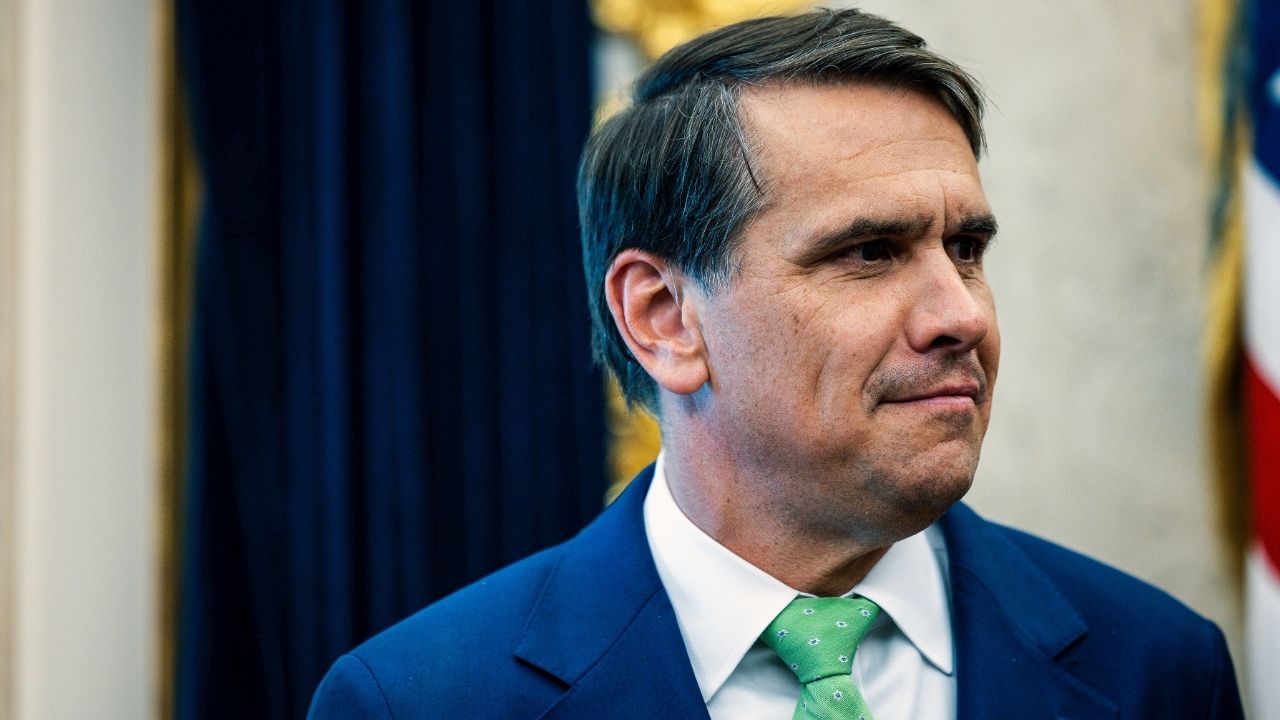
WASHINGTON — Todd Blanche, then the Justice Department’s No. 2 official, had been on the job only for a couple of months in May 2025, when he was handed a migraine in a Detective Columbo trenchcoat by the name of Edward J. Martin Jr.
Martin, a right-wing lawyer who championed the cause of the Jan. 6 rioters, had just been forced out as the acting U.S. attorney for the District of Columbia. The White House then inserted him into Justice Department headquarters, in part to oversee a task force to investigate claims that the Biden administration had targeted President Donald Trump and his allies.
Blanche, who once led Trump’s criminal defense team, did not believe that Martin, a provocateur with minimal prosecutorial experience, had the chops and know-how to do the job, according to current and former officials who requested anonymity to discuss private conversations.

“I am frustrated,” Blanche wrote to Martin, after less than a month on the job, documenting a relationship that swiftly descended from tense to testy.
He moved quickly to rein in Martin, scheduling a check-in meeting every Friday, according to a trove of internal Justice Department emails obtained by a government watchdog and provided to The New York Times in advance of Blanche’s confirmation hearing to be attorney general Wednesday.
Blanche, a methodical former federal prosecutor, also created an organizational plan for the weaponization group that assigned key investigative lanes to some of his own deputies. That ensured, among other things, that he had tight control over one of the most sensitive issues on his plate — demands from Trump and his supporters to identify, investigate and punish those who had once pursued them.
The multifaceted portrait of Blanche that emerges from 352 pages of documents obtained by American Oversight is of a Trump loyalist who is committed to executing the president’s agenda but also intent on keeping a firm grip on processes inside his building, perhaps because he has such limited control over forces beyond it.
Blanche’s cooperation in Trump’s retribution campaign, both as deputy attorney general and acting attorney general since the ouster in April of his predecessor, Pam Bondi, is his defining characteristic, in the view of critics. It will be a flashpoint in Blanche’s testimony before the Senate Judiciary Committee.
“Todd Blanche oversaw senior Justice Department officials pursuing politically charged investigations, convened recurring meetings of the so-called weaponization working group, and committed departmental resources to advancing President Trump’s efforts targeting political opponents, election administration and other high-profile vendettas,” said Chioma Chukwu, executive director of American Oversight, which obtained the documents through the Freedom of Information Act.
“Senators should judge him not by his assurances at a confirmation hearing, but by the record he has already built,” she said.
Blanche’s defenders argue that he has been a low-key, but important check on Trumpian excesses, slowing down or countering Martin and other Trump advisers, including a federal housing official, Bill Pulte.
The newly disclosed emails cover a relatively narrow, but nonetheless crucial, patch of a battleground in Blanche’s tenure at the department: how to enact Trump’s Day 1 executive order to “correct past misconduct by the federal government related to the weaponization of law enforcement and the weaponization of the intelligence community.”
During the first half of 2025, it appeared as if the department’s weaponization group would be a major, perhaps central, part of Trump’s drive to punish those who once held the power to hold him to account.
That is less the case now. Much of the action has migrated to U.S. attorney’s offices, including in Miami, where prosecutors have been grinding away in an effort to build what Trump loyalists describe as “grand conspiracy” by the Biden and Obama administrations, despite a paucity of evidence.
It is not clear, more than a year and a half into the administration, if the group will ever exercise the power supporters applauded and critics feared.
But at the time of Martin’s arrival last May, Blanche diverted a significant complement of top lawyers in the deputy attorney’s office to the group, records show. And people close to Blanche said it still remained an important vehicle to identify and address wrongdoing, even acts that fall below the threshold of criminality.
Two of his top aides were instrumental in overseeing the task force’s operations: Emil Bove, who served as the department’s enforcer before leaving for a federal judgeship in September; and Colin McDonald, a senior aide who was recently assigned to run the administration’s new fraud unit.
Others in Blanche’s office led teams responsible for digging up information on hot-button political issues — an FBI memo that targeted a conservative Catholic group in Richmond, Virginia; federal scrutiny of conservative school board members; and prosecutions of anti-abortion activists under the FACE Act, a 1994 law that prohibits obstruction and intimidation at women’s clinics.
One team listed on the internal roster, led by another Blanche aide, Paul Perkins, focused on a single person: Tina Peters, a pro-Trump Colorado elections official convicted and imprisoned for state election-related crimes, whose sentence was later commuted by the state’s Democratic governor.
Martin was given personal control of two investigations he had long championed: investigating the prosecutions of Jan. 6 rioters — even though all of those convicted, including violent criminals, received clemency from Trump — and a probe into President Joe Biden’s use of an autopen.
In early 2026, Blanche removed Martin from the anti-weaponization committee. Martin kept his second title as pardon attorney but was forced to move to a Justice Department satellite office across town.
The task force has accelerated its efforts since his ouster, according to senior department officials, releasing reports on purported bias against Christians and another criticizing Biden-era investigations of anti-abortion activists. Both have been criticized by Democrats as biased. A third, on the FBI report in Richmond, is expected soon.
The emails reveal a vivid contrast between the garrulous Martin — who revels in his image of a rumpled, inquisitive gumshoe of the right — and the more circumspect and strategic Blanche, who remains focused on a higher professional prize.
The two appeared destined to clash. Martin’s exchanges with senior department officials suggest he regarded their orders as suggestions.
In a May 30, 2025, email, Blanche accused Martin of discussing an unspecified investigation that may have been presented to a grand jury and of failing to clear an error-strewn statement sent to a reporter covering Martin’s link to an antisemitic activist.
“This is becoming a real problem, Ed,” wrote Blanche, then serving as the deputy attorney general — adding that it was the fourth time Martin had flouted media protocols.
Blanche accused Martin of violating the federal rule that prohibits government officials from discussing evidence presented to a grand jury.
“This is an investigation,” he wrote, adding: “Aside from the fact that talking publicly about investigations is a violation of DOJ policy, giving the media and the public a head’s up about what we are doing is not helpful to the investigation itself.”
—
This article originally appeared in The New York Times.
By Glenn Thrush/Tierney L. Cross
c. 2026 The New York Times Company