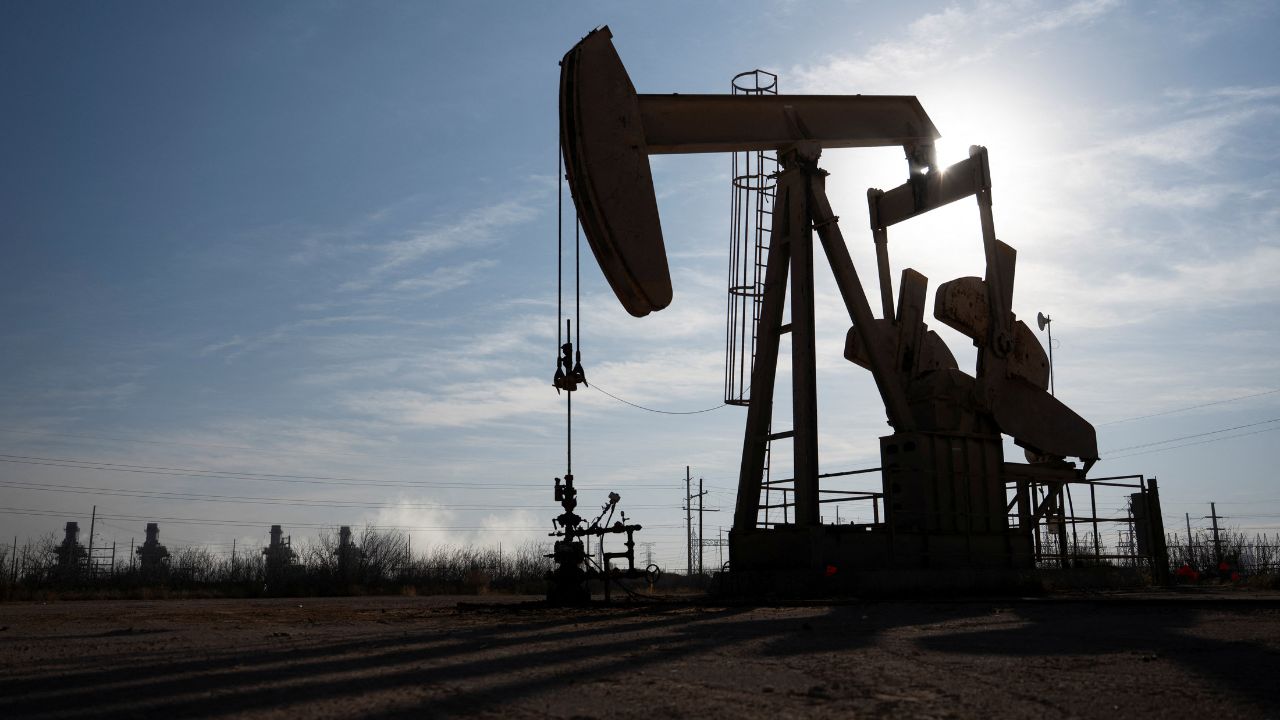
A pump jack operates near a gas turbine power plant in the Permian Basin oil field outside of Odessa, Texas, U.S. February 18, 2025. (Reuters/Eli Hartman)

Share
|
Getting your Trinity Audio player ready...
|
Oil prices fell 5% on Monday after U.S. President Donald Trump said Iran was “seriously talking” with Washington, signaling a de-escalation of tensions with the OPEC member, while a stronger dollar and milder weather forecasts also pressured prices.
Brent crude futures were down $3.28, or 4.7%, at $66.04 per barrel by 1:01 p.m. ET (1801 GMT). U.S. West Texas Intermediate crude fell $3.29, or 5.2%, to $61.82 per barrel.
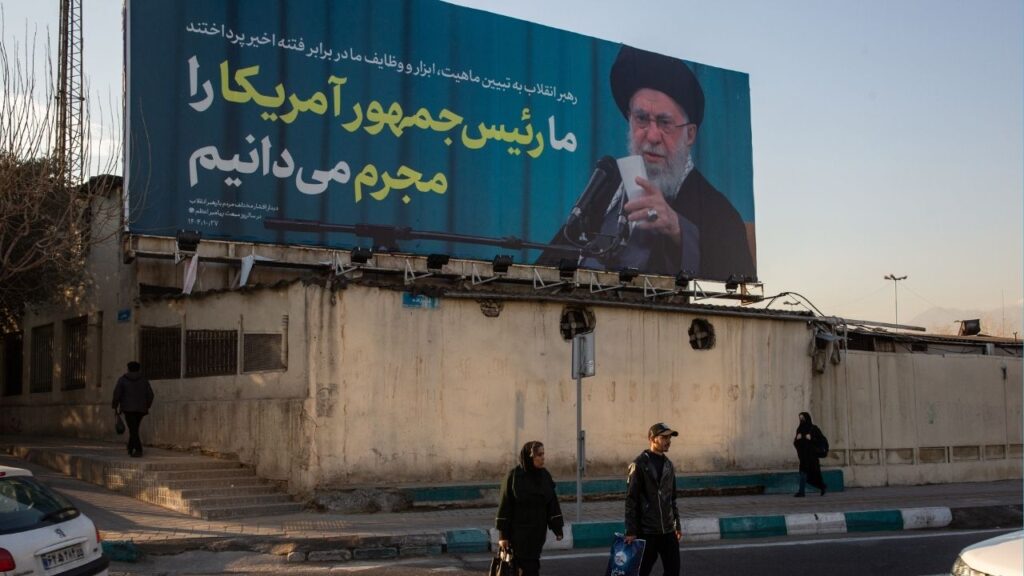
Iran and the U.S. will resume nuclear talks on Friday, officials from both countries told Reuters.
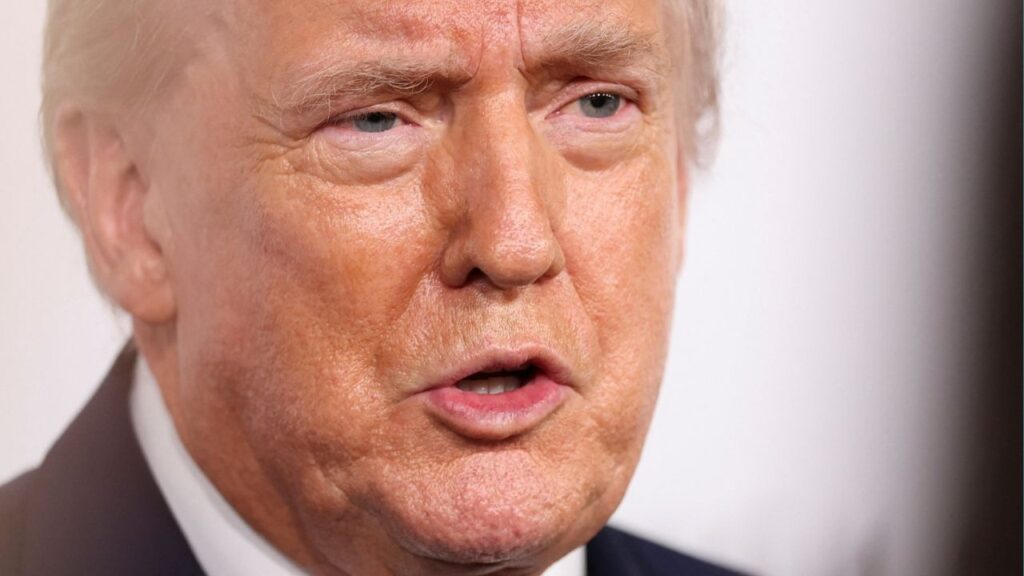
Trump told reporters on Saturday that Iran was “seriously talking”, hours after Tehran’s top security official Ali Larijani said arrangements for negotiations were underway.
The U.S. president had repeatedly threatened Iran with intervention if it did not agree to a nuclear deal or continued killing protesters. The threats underpinned oil prices throughout January, said Phillip Nova analyst Priyanka Sachdeva.
Oil prices were also under pressure due to strength in the dollar after Trump’s nomination of Kevin Warsh as the next Federal Reserve chair. A stronger dollar makes commodities such as oil and gold more expensive for foreign investors, weighing on demand.
Meanwhile, forecasts of milder weather in the U.S. were another bearish development for oil prices as diesel futures pulled back sharply, Ritterbusch and Associates said. U.S. futures prices for diesel, used in heating and power generation, were down nearly 7% on Monday.
Together with tensions in the Middle East, a polar vortex in the U.S. had helped U.S. WTI futures rise 14% and Brent gain 16% in January, PVM analysts said in a note.
With those issues fading in relevance, the focus is returning to a widely anticipated buildup of global oil inventories this year, they said.
At a meeting on Sunday, OPEC+ agreed to keep its oil output unchanged for March. In November, the grouping had frozen further planned increases for January through March 2026 because of seasonally weaker consumption.
—
(Reporting by Shariq Khan and Enes Tunagur in London; Additional reporting by Katya Golubkova in Tokyo and Sudarshan Varadhan in Singapore; Editing by Jan Harvey, Louise Heavens and David Gregorio)