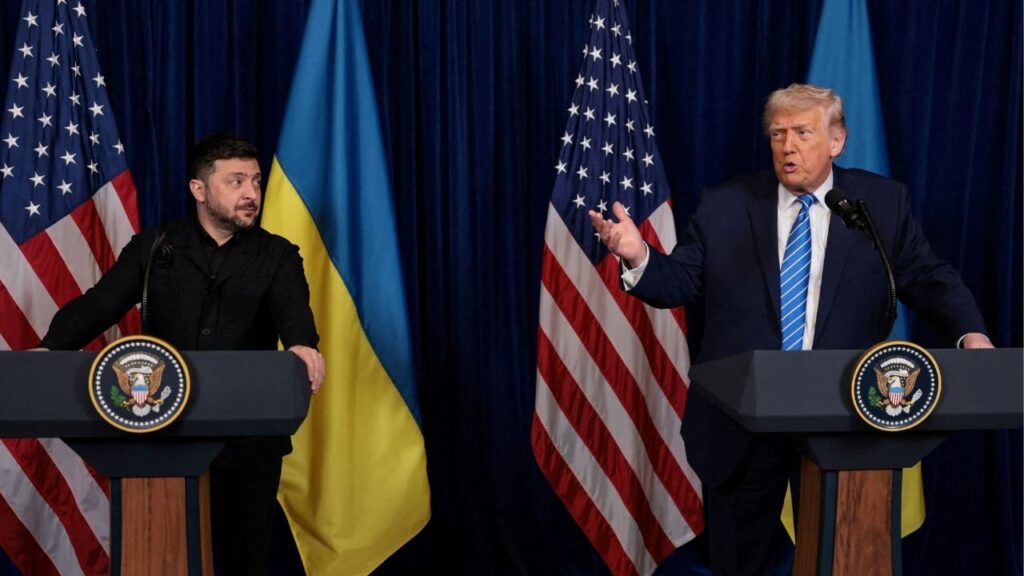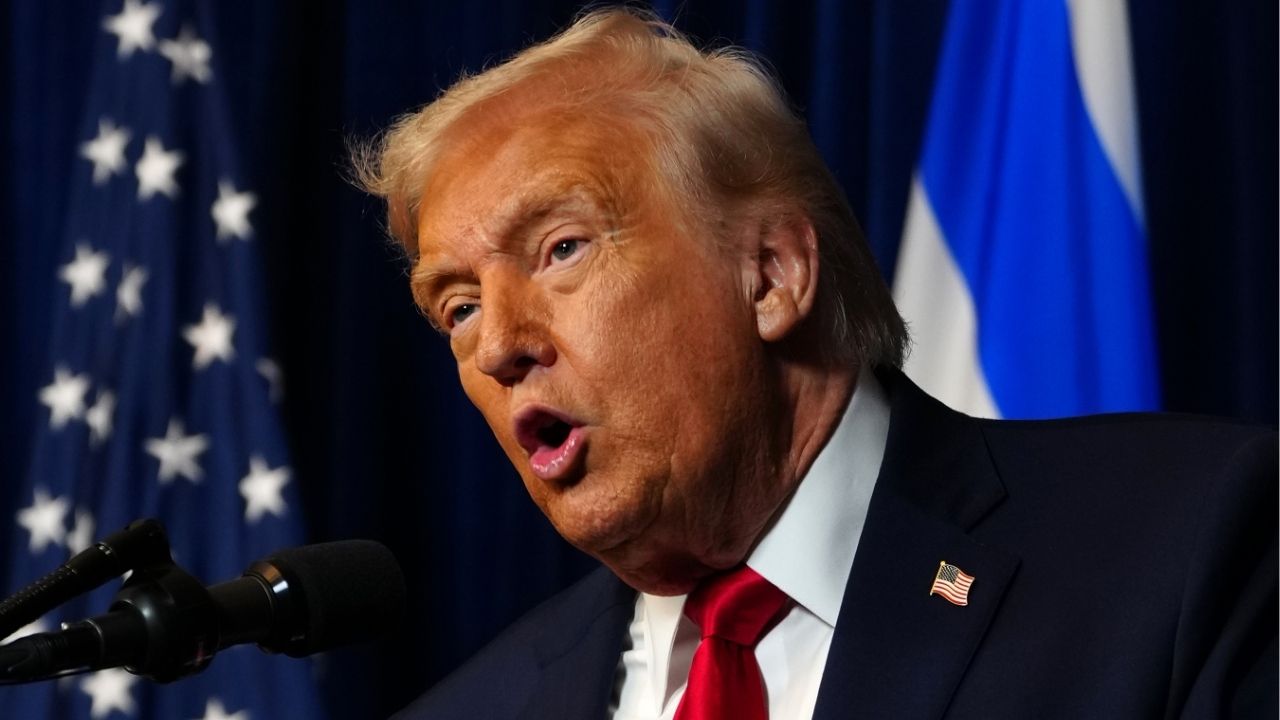
President Donald Trump speaks at Mar-a-Lago, during a visit with Israeli Prime Minister Benjamin Netanyahu, in Palm Beach, Fla., Dec. 29, 2025. The C.I.A. conducted a drone strike on a port facility in Venezuela last week, according to people briefed on the operation, a development that suggests an aggressive new phase of the Trump administration’s pressure campaign against the Maduro government has begun. (Tierney L. Cross/The New York Times)

Share
|
Getting your Trinity Audio player ready...
|
The CIA conducted a drone strike on a port facility in Venezuela last week, according to people briefed on the operation, a development that suggests an aggressive new phase of the Trump administration’s pressure campaign against the Maduro government has begun.
The strike was on a dock where U.S. officials believe Tren de Aragua, a Venezuelan gang, was storing narcotics and potentially preparing to move the drugs onto boats, the people said.
No one was on the dock at the time, and no one was killed, they said. But the strike is the first known U.S. operation inside Venezuela.
The details of the strike, which were reported earlier by CNN, fleshed out an attack that President Donald Trump had already discussed openly, despite the secrecy that typically surrounds CIA operations.
Speaking to reporters Monday, Trump declined to say how the attack had been carried out or by whom but confirmed the United States was responsible.
“There was a major explosion in the dock area where they load the boats up with drugs,” he told reporters at Mar-a-Lago, his club and residence in Florida. “They load the boats up with drugs. So we hit all the boats, and now we hit the area. It’s the implementation area, that’s where they implement, and that is no longer around.”
The Venezuelan government did not directly comment Monday on the strike or Trump’s remarks, but Diosdado Cabello, Venezuela’s interior minister, denounced months of “imperial madness” and “harassment, threats, attacks, persecution, robberies, piracy and murders.”
The White House and the CIA both declined to comment.
Trump has been warning for weeks that he was prepared to expand his pressure campaign against the government of Nicolás Maduro to land strikes. The CIA developed intelligence on a number of purported drug facilities in Venezuela and Colombia as part of the planning for an expanded campaign.
Until now, the U.S. has been pressuring Venezuela by conducting military strikes on boats it suspects of trafficking drugs and seizing oil tankers under sanctions. Those operations have taken place in international waters.
But the CIA drone strike took place inside Venezuela, likely on Wednesday. In a radio interview Friday, Trump said the strike had taken place two days before.
The intensifying campaign unites two particular targets of the Trump administration: Tren de Aragua and the Maduro government. While the Trump administration has alleged there are close ties between the two, intelligence agencies have cast doubt on those conclusions.
The U.S. has an indictment against Maduro that dates back to the first Trump administration. Earlier this year, the United States raised the reward for information leading to Maduro’s capture to $50 million.
The New York Times reported earlier this year that Trump had authorized CIA operations in Venezuela and ordered them to plan for a variety of potential missions.
The CIA regularly conducted drone strikes against terrorist targets in Pakistan, Yemen, Somalia and elsewhere during the Obama administration. But the agency is not known to have conducted strikes recently, leaving operations to the U.S. military.
It is not clear if the drone used in the mission was owned by the CIA or borrowed from the U.S. military. Military officials declined to comment Monday. The Pentagon has stationed several MQ-9 Reaper drones, which carry Hellfire missiles, at bases in Puerto Rico as part of the pressure campaign.
—
This article originally appeared in The New York Times.
By Julian E. Barnes and Tyler Pager/Tierney L. Cross
c. The New York Times Company
RELATED TOPICS:
Categories


An Anti-AI Movement Is Coming. Which Party Will Lead It?
Fresno Gym Fire Sends One Firefighter to Hospital