
|
Getting your Trinity Audio player ready...
|
SpaceX’s next-generation Starship spacecraft cruised around the globe on Saturday nearing the end of its 15th test flight and what the company hoped would be an unprecedented pinpoint return landing at the exact spot in Texas from which it launched.
Starship’s uncrewed upper stage is poised to re-enter Earth’s atmosphere after nearly a day in orbit and steer back toward its launch tower, then make an engine-controlled final descent into the embrace of giant mechanical arms designed to catch the vehicle as it hovers over the launchpad.
If successful, it will mark the first round-trip voyage of a vertically launched spacecraft to orbit and back to the very spot where it left Earth, achieving a key test of Elon Musk’s long-pursued goal of producing a fully reusable rocket system.

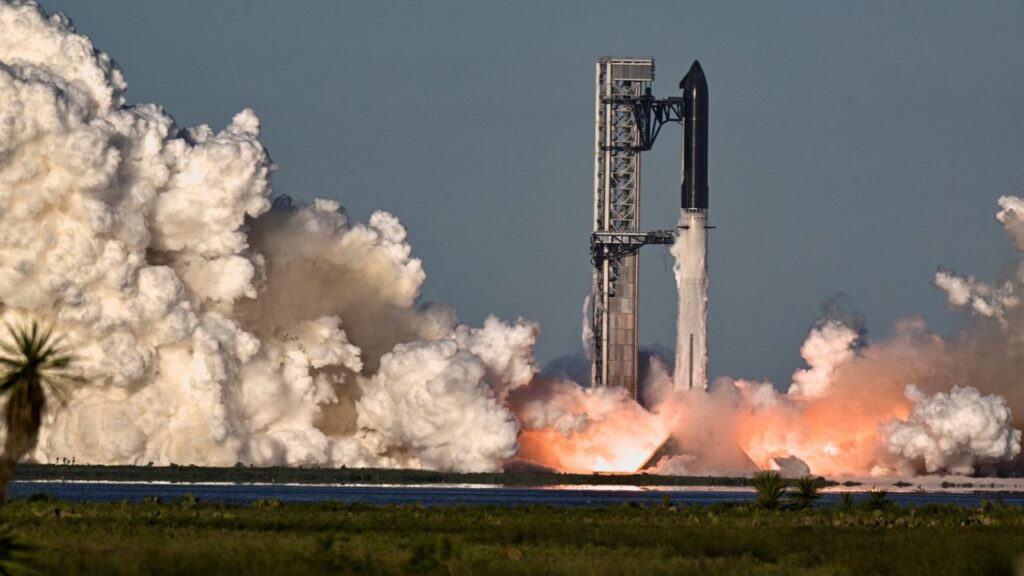
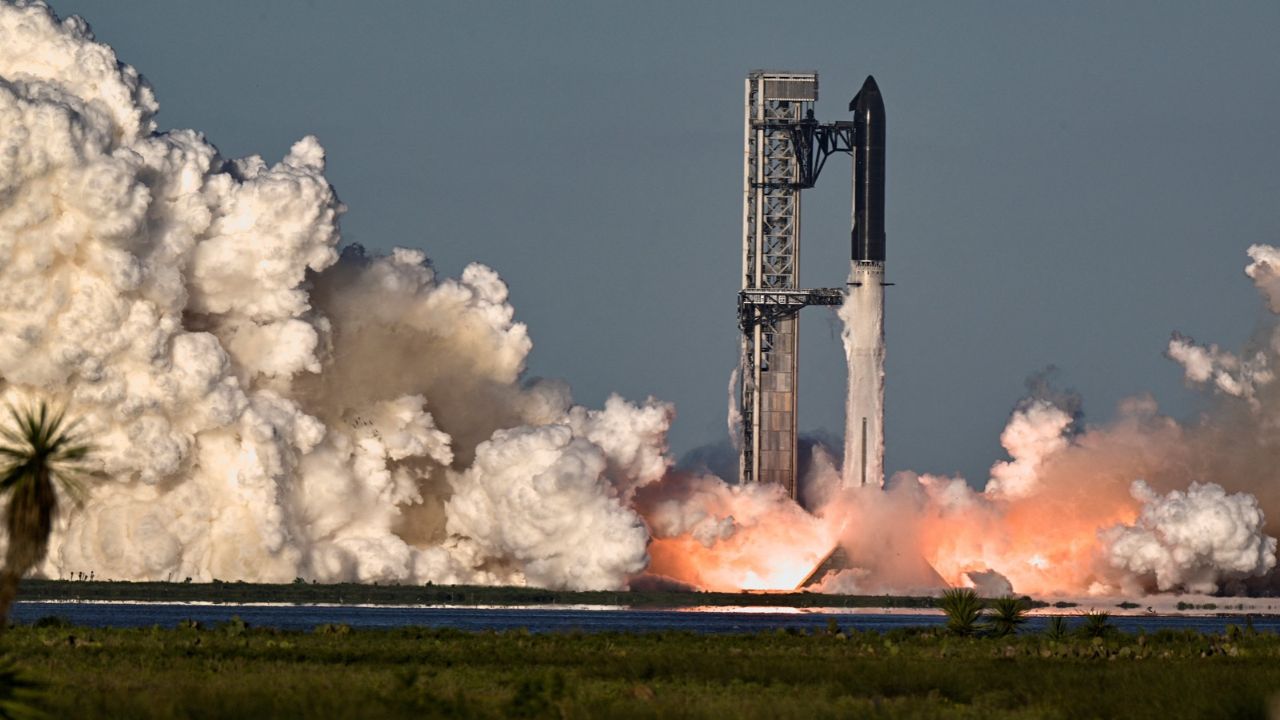
The towering two-stage rocket’s Super Heavy booster – the rocket’s bottom half – carried Starship to space on Friday, lifting off from SpaceX’s Starbase, Texas facilities. That booster had failed to return to the launch pad some 10 minutes after liftoff because of an onboard navigation issue, nixing SpaceX’s plan to recover both parts of the rocket for the first time.
Starship, cruising at an altitude of roughly 161 miles (260km), is expected to complete 14 orbits around Earth for a total flight time of 22 hours 32 minutes.
The 15th Starship flight since 2023 became the longest-lasting mission last night, lasting longer than the roughly three-hour trek in its 14th flight in September, when it reached orbit for the first time.
SpaceX has spent roughly a decade developing Starship, which billionaire CEO Elon Musk sees as the future workhorse for the company’s satellite business and ambitions to put humans on the moon and eventually Mars.
SpaceX’s dominance in the global launch industry has been centered on its workhorse Falcon 9 rocket, which has launched over 700 times since 2010. That rocket’s first stage is reusable, but its second stage – the part that delivers payloads into orbit – is discarded into the ocean after each flight.
Starship’s Super Heavy booster has been recovered on three previous test flights using the launch-tower catching system, the last such catch occurring in March 2025. The company has not made such a landing since, either because it planned to dunk it in the Gulf waters or because of an onboard glitch.
–
(Reporting by Joey Roulette in Brownsville, Texas; Editing by Nick Zieminski)