
|
Getting your Trinity Audio player ready...
|
Editor’s Note: GV Wire presents “dueling” op-eds on Measure S, the 30-year, half-cent sales tax successor to Measure C, which expires in mid-2027. Whatever your decision, make sure to vote in the Nov. 3 election. Voting is both fundamental and essential to democracy.

At its core, local government is about serving our communities. Fresno County residents are right to expect improved roads, safe routes for kids to get to schools, and effective transit options to get to work, to a medical appointment, or to college.
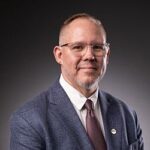
By Nathan Vosburg

Lynne Ashbeck
Opinion
Measure S is the only measure on the ballot that will allow the county and every city in it to have much-needed revenue to continue to improve our roads and transportation system.

We got into elected service to make our communities better. From Coalinga to Clovis and every community in between, most elected officials are there to do just that.
But in the midst of this Measure S campaign, there are a few voices that would lead you believe that the main purpose of elected office is to manufacture outrage by spreading falsehoods, hold meaningless press events just for the sake of social media material, improve their political resumes, or to appeal to partisan political leaders.
The Facts About Measure S
Here are the facts about Measure S.
Measure S is not a new tax. It is the same amount of sales tax we have been paying through Measure C since 1986. Your taxes are not going up.
The majority of Measure S funding — 65% to be exact — will go to local community and neighborhood roads. Cities and the county will be held accountable for raising the pavement quality of the worst roads in their communities first. Not last.
More kids will have safe routes to school than they do today with Measure S. In Mendota, for example, many kids cross a state highway to get to school. Neither of us serve the city of Mendota but none of us should accept unsafe conditions for those kids, our own kids or any kids who live in this county.
Inclusive Process Shaped Measure S
The process to arrive at Measure S was the most inclusive, open public debate we have seen in years. Measure S was shaped by the voices of more than 4,500 County residents and a citizen-led Steering Committee representing every community and every corner of the County. Every action of that Steering Committee was reviewed and approved at every step by the majority of the mayors and one County Supervisor who make up the Fresno County Council of Governments.
City Councils, including our own, Chambers of Commerce, and other civic organizations have come out in favor of Measure S.
The process was not hijacked by wackos, socialists, or “those people.” (That our elected leaders would ever use language like that to describe their constituents is another problem all together. Calling people names gets you sent home from school. In Fresno County, it gets people elected.)
What the opponents didn’t like was not the process but, by their own admission, they didn’t like the people around the table, something they freely admitted in public settings.
Measure S dedicates 25% of the revenue to transit, exactly 1% more than the current Measure C. For the 10 million individual trips taken on Fresno FAX last year or the free fare trips for Clovis students or seniors, we suspect they would respectfully disagree with the characterization that “no one rides the bus.” You may not ride the bus. But many of your neighbors do.
Measure S has strong citizen oversight, opportunities for future innovation and technology changes we cannot even imagine today, and spends just over 1% for administration. It is a wise use of taxpayer dollars. There are absolutely no monies diverted to community organizations with “social justice agendas.”
As you decide, consider this.
Opponents Spread Fear, Perpetuate Politics of Failure
The Measure S opponents have done little but spread fear. Their version of “civic leadership” is simply more of the same community-dividing tactics that has helped keep Fresno County from fully participating in California’s success for generations. Pitting urban vs. rural, haves from have-nots, ethnic group against ethnic group continues leadership for failure.
The real numbers are:
— 65% local roads and 25% transit
— 5% regional connectivity (including 1% for the airport)
— 4% innovation
— 1% administration
We are both lifelong Republicans. We both serve from the belief that making decisions that are good for every community is part of our commitment to Fresno County. Without fear, without name-calling, with a clear-eyed sense of the magnitude of the challenge and of the importance of ensuring the futures of our communities.
Some decisions in local government are hard. Occasionally, decisions in local government are easy. Measure S is easy. It is good for Clovis, Coalinga, and every county community.
Please vote “yes” on Measure S.
About the Authors
Nathan Vosburg is the mayor of Coalinga, and Lynne Ashbeck is a Clovis City Councilmember.

In 1986, the voters of Fresno County approved a 20-year, half-cent sales tax for transportation improvements throughout Fresno County. In 2006, voters extended Measure C for another 20 years. Collectively these two measures have transformed transportation throughout the county.
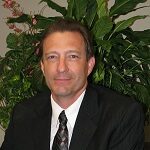
By Tony Boren

Mike Leonardo
Opinion
Measure C leveraged state and federal funds to build the Fresno-Clovis urban freeway system and extended that system south on State Route 41 toward Riverdale, east on State Route 180 toward Sanger, and west toward Mendota. Measure C also expanded and improved local streets and roads throughout the county and provided funding for road repairs, safety improvements, and public transit.
Measure C has been incredibly good for Fresno County but will expire on June 30, 2027.
A coalition of special interest groups developed their vision of a replacement for Measure C. “Measure S” is on the ballot this November. Proponents claim it will fix our roads and improve safety. The problem is that there is no guarantee it will do either.
Measure S Has No Project List
The 1986 and 2006 Measure C expenditure plans made specific promises about what they would accomplish. Pick up either of those documents and you will find a list of specific projects and programs Measure C would deliver. And they did just that — Promises Made, Promises Kept.
Measure S has no specific list of projects. It has programs, but each of those is lacking specifics on what they will accomplish and how they will be measured. Unlike the two Measure C authorizations, each of which was for 20 years, Measure S will remain in place for 30 years. We taxed ourselves and our kids with Measure C. Measure S will tax our grandkids.
More troubling is what Measure S proposes to accomplish, and what it ignores. Measure C invested about $400 million in transit services. Between 2006 and 2024, transit ridership as a percentage of all trips declined from 2% in 2006 to less than 1% in 2024.
Adding money to the transit system does not result in increased ridership. Transit agencies need a new model of providing services to increase ridership. Measure S does not do that. Measure S increases transit spending to almost $2 billion (and likely close to $2.5 billion) without any evaluation of how those services could be improved.
Second, Measure S significantly reduces the funding available for improving our major roads and highways. The current Measure C invests about 30% or almost one-third of total revenue in improving our major streets and highways. Measure S drops that to 4%.
Under Measure S, Congestion Will Worsen and Safety Will Drop
In addition, Measure S functionally precludes using any funds to increase capacity on our roads and highways. Over the last 40 years, we have invested billions of dollars in improving our streets and highways by leveraging state and federal funding for the projects. Measure S abandons that investment. Without continued Measure funding for our roads and highways, congestion will worsen, bottlenecks will increase, and safety will decline.
It is critical that we continue to invest in these systems to reduce congestion and improve safety. There could be as many as 400,000 more people that will call Fresno County home over the next 20 to 30 years. Imagine adding that many trips to our transportation system without continuing to invest in improving and managing it.
Finally, Measure S claims it will fix existing streets and roads. Maybe. Measure S does provide substantial revenue that could be used to improve road conditions but does not have any requirements that agencies receiving that money spend it improving roads. Plus, Measure S includes many ancillary requirements that divert road funding to things like separated bicycle lanes, landscaping, road diets, and complete streets elements.
As transportation experts, we cannot support Measure S. Fresno County can do better. Vote “no” on Measure S. Through your vote, tell the elected officials they need to try again. Let’s get a real replacement of Measure C on the 2028 ballot.
About the Authors
Tony Boren spent 30 years at the Fresno Council of Governments, which is responsible for transportation planning in Fresno County, including 15 years as executive director before retiring.
Mike Leonardo, a former local Caltrans director and chief engineer for Caltrans, has over 40 years of transportation experience. He spent six years with the city of Clovis and ended his career as executive director of the Fresno County Transportation Authority, the agency responsible for delivering the promises of Measure C.